admin
admin
* Oil prices tumble as US-Iran peace talks could resume, easing supply concerns
* US inflation data comes in below forecasts
* Dollar falls to level last seen at start of the war (Updates to afternoon New York trading)
NEW YORK, April 14 (Reuters) – The dollar fell on Tuesday and was poised for a seventh straight daily decline as investors grew optimistic that a peace deal between the U.S. and Iran could be on the horizon, while a reading on U.S. inflation came in cooler than expected. U.S. President Donald Trump said talks to end the Iran war could resume in Pakistan over the next two days, after the collapse of weekend negotiations prompted Washington to impose a blockade on Iranian ports.
“You have very clear guidance coming from the Trump administration that they’re looking for an exit ramp here and that’s playing into market expectations that there will eventually be a symbolic deal between the U.S. and Iran that allows attacks to cease and for Iran to let the strait reopen,” said Karl Schamotta, chief market strategist at Corpay in Toronto.
“The second thing that’s important, at least in the context of the foreign exchange markets, is that there’s just generally a lack of conviction – traders are not willing to place large directional bets on anything happening, given that they can be whipsawed or wrong-footed by the next tweet from the White House.”
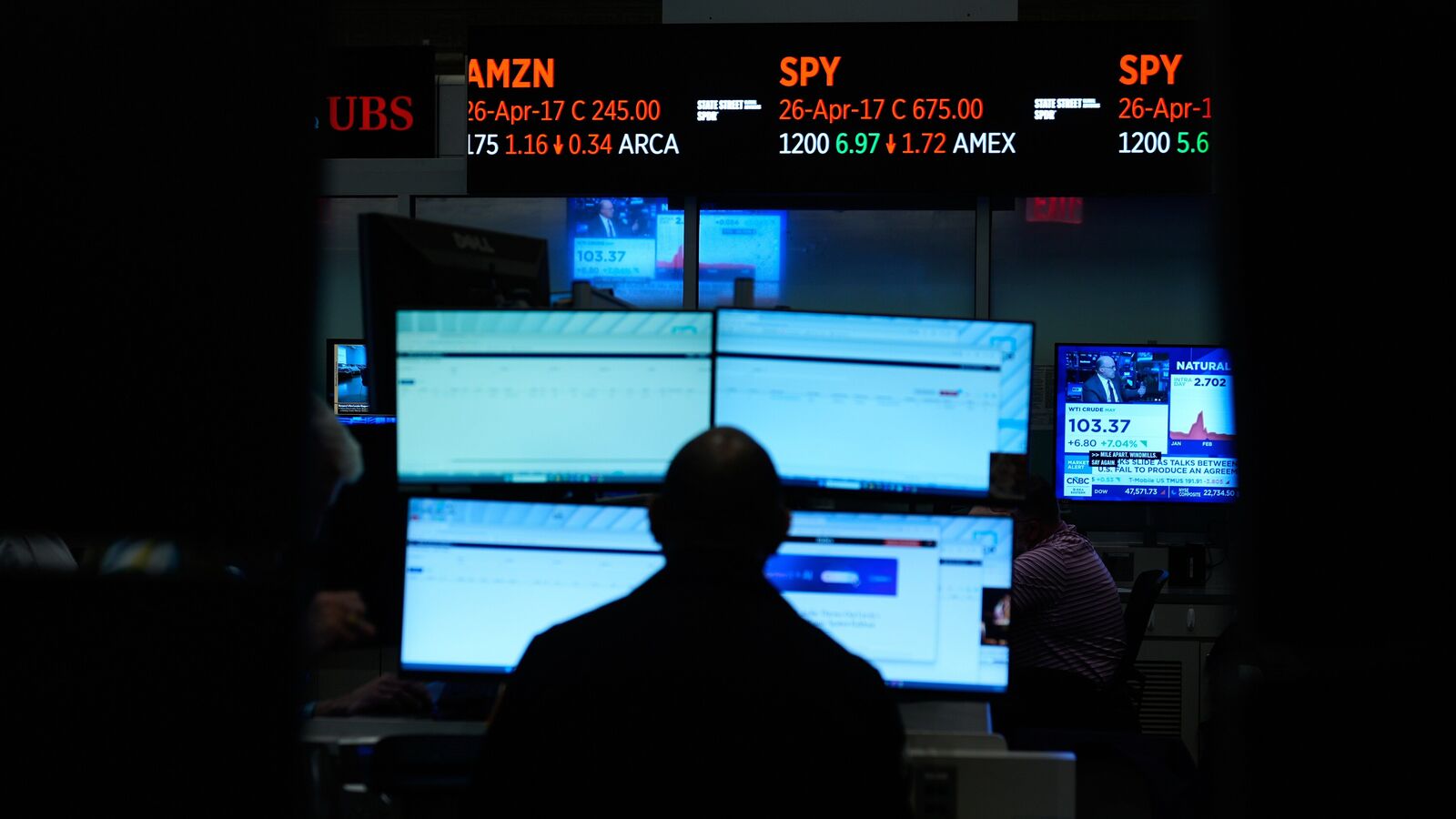
OIL PRICES TUMBLE ON PEACE PROSPECTS U.S. crude tumbled 7.11% to $92.04 a barrel and Brent slumped to $95 per barrel, down 4.39% on the day. The dollar index, which measures the greenback against a basket of currencies, dipped 0.26% to 98.08, with the euro up 0.33% at $1.1796. The index had dropped as low as 97.968 on the day, its weakest since March 2, the first trading day after the U.S.-Israeli war with Iran began.
The greenback has fallen more than 2% during its seven-session streak of declines, its longest since a nine-session skid that ended on December 3, when investors were largely expecting at least two rate cuts from the Federal Reserve this year. Chicago Federal Reserve President Austan Goolsbee said interest-rate cuts may need to wait until 2027, depending on how long oil prices stay high.
INFLATION DATA COOLER THAN FORECAST The dollar extended declines after data from the U.S. Labor Department showed the Producer Price Index (PPI) for final demand rose 0.5% last month, short of the estimate of economists polled by Reuters calling for a 1.1% increase, after a downwardly revised 0.5% gain in February.
In the 12 months through March, the PPI advanced 4.0% after increasing 3.4% in February. European Central Bank (ECB) President Christine Lagarde said on Bloomberg TV that the ECB had not made its mind up on whether to raise interest rates as the fallout of the Iran war on the euro zone’s economy is still unclear.
Sterling strengthened 0.48% to $1.3569 against the dollar after reaching $1.3589, its highest since February 17, while the dollar was down 0.45% against the Japanese yen, at 158.72. Bank of England interest-rate setter Megan Greene said it could take months to see how much long-lasting damage is caused to Britain’s economy by the energy price spike, but expected new price pressures to be a bigger risk than a downturn in demand. The chance of a rate hike this month by the Bank of Japan, once seen as a strong possibility, has receded, with policymakers divided as the war keeps markets volatile and muddies the economic outlook, sources told Reuters.
(Reporting by Chuck Mikolajczak; additional reporting by Sophie Kiderlin in London and Satoshi Sugiyama in Tokyo; Editing by Shri Navaratnam, Kevin Buckland, Barbara Lewis and Chizu Nomiyama)