admin
admin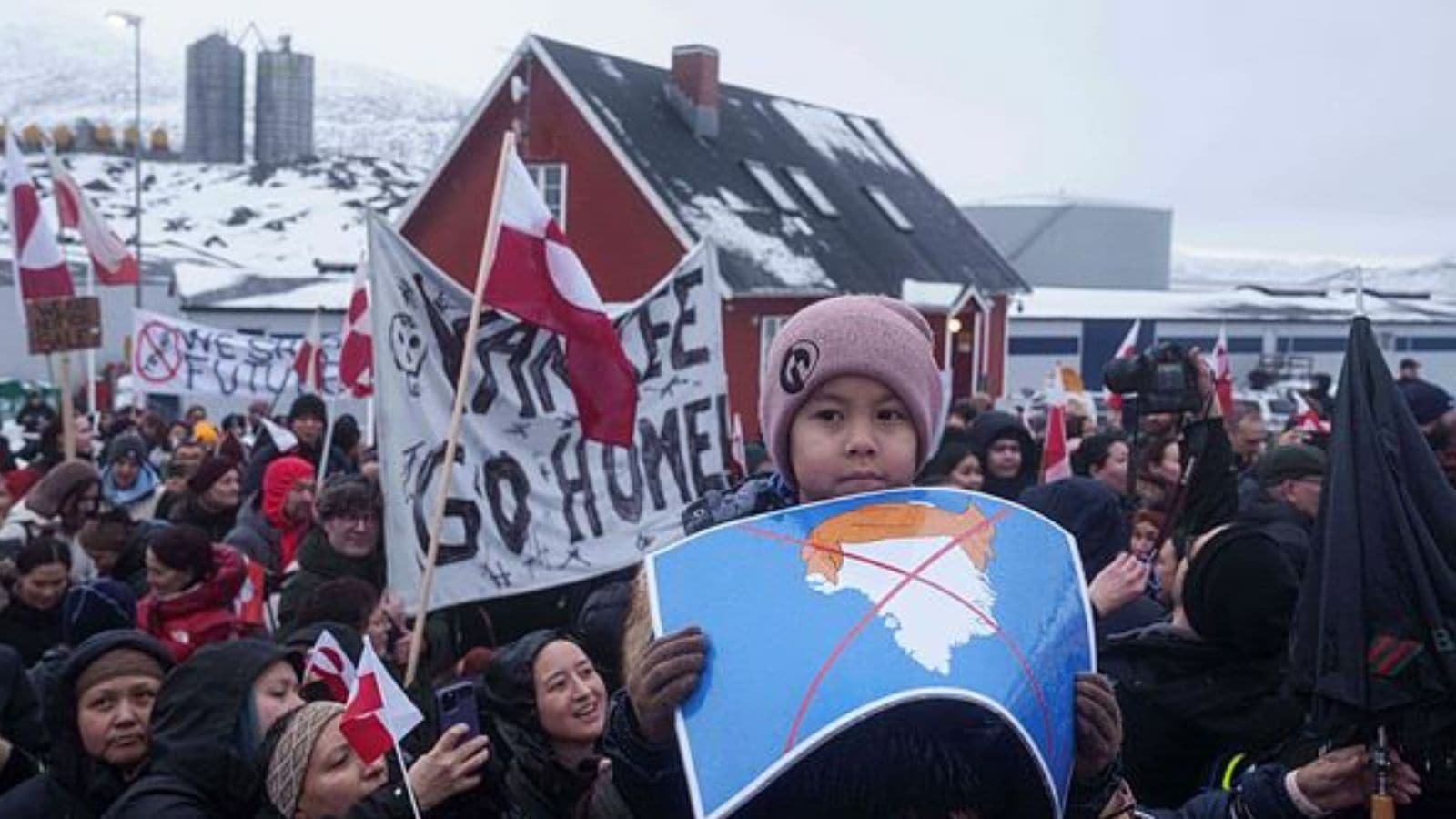
European leaders have strongly criticised US President Donald Trump after he imposed 10% tariff on European allies over opposition to his plan to acquire Greenland. Trump has also warned of a further hike in teh import duty that could seriously damage transatlantic relations.
French President Emmanuel Macron said Europe would not be intimidated. In a post on X, he stressed that France’s position was rooted in international law and national sovereignty.
France is committed to the sovereignty and independence of nations, in Europe and elsewhere. This guides our choices. It underpins our commitment to the United Nations and to its Charter.
It is on this basis that we support, and will continue to support Ukraine…
— Emmanuel Macron (@EmmanuelMacron) January 17, 2026
“No intimidation or threat will influence us neither in Ukraine, nor in Greenland, nor anywhere else in the world,” Macron wrote.
He added that tariff threats were “unacceptable” and said Europeans would respond “in a united and coordinated manner” if they were carried out.
In a post on Truth Social, Trump said an additional 10% import tariffs would come in effect on February 1 on goods from Denmark, Norway, Sweden, France, Germany, the Netherlands, Finland and Great Britain — all already subject to tariffs by Trump. Trump said he would raise the tariffs of up to 25% on goods from several European countries unless the United States is allowed to purchase Greenland, an autonomous territory within the Kingdom of Denmark.
UK Prime Minister Keir Starmer also rejected Trump’s move, saying it was “completely wrong” to target allies with trade measures.
Story continues below this ad
“Our position on Greenland is very clear – it is part of the Kingdom of Denmark and its future is a matter for the Greenlanders and the Danes,” Starmer said, adding that Arctic security should be handled collectively through NATO. Applying tariffs on allies, he said, went against that shared security effort.
Our position on Greenland is very clear – it is part of the Kingdom of Denmark and its future is a matter for the Greenlanders and the Danes.
We have also made clear that Arctic Security matters for the whole of NATO and allies should all do more together to address the threat…
— Keir Starmer (@Keir_Starmer) January 17, 2026
Sweden’s Prime Minister Ulf Kristersson echoed the concerns, saying Europe would not give in to pressure.
“We will not let ourselves be blackmailed,” he said on X, adding that only Denmark and Greenland had the right to decide Greenland’s future. Kristersson said Sweden was in talks with EU partners, Norway and the UK to agree on a coordinated response.
We do not allow ourselves to be blackmailed. Only Denmark and Greenland decide in matters concerning Denmark and Greenland. I will always stand up for my country, and for our allied neighbors. This is an EU issue that concerns many more countries than those currently pointed out. Sweden now has intensive…
— Ulf Kristersson (@SwedishPM) January 17, 2026
European Council President António Costa said the EU stood “in full solidarity with Denmark and the people of Greenland”. He warned that tariffs would “undermine transatlantic relations and risk a dangerous downward spiral”, while stressing that dialogue with Washington remained important.
Territorial integrity and sovereignty are fundamental principles of international law. They are essential for Europe and for the international community as a whole.
We have consistently underlined our shared transatlantic interest in peace and security in the Arctic, including…
— António Costa (@eucopresident) January 17, 2026
Meanwhile, thousands of people marched in Greenland, waving national flags and chanting “Greenland is not for sale”, in a clear public rejection of Trump’s takeover threat.
Trump has argued that Greenland is vital to US national security and has linked the proposed tariffs directly to forcing a deal. European leaders, however, have insisted that sovereignty, international law and unity will guide their response.
TRADE DEALS UNDER THREAT?
Saturday’s threat could derail the tentative deals Trump struck last year with the EU and Great Britain, which set baseline levies of 15% on European imports and 10% on most British goods.
Story continues below this ad
Trade expert William Reinsch warns the biggest risk is Trump’s move to treat some EU members differently, potentially prompting the European Parliament to reject the US trade agreement altogether.
On Friday, Trump hinted at imposing tariffs on Greenland without citing any legal basis, underscoring how he’s turned tariffs into a go‑to weapon to pressure both adversaries and allies into meeting his demands.