admin
admin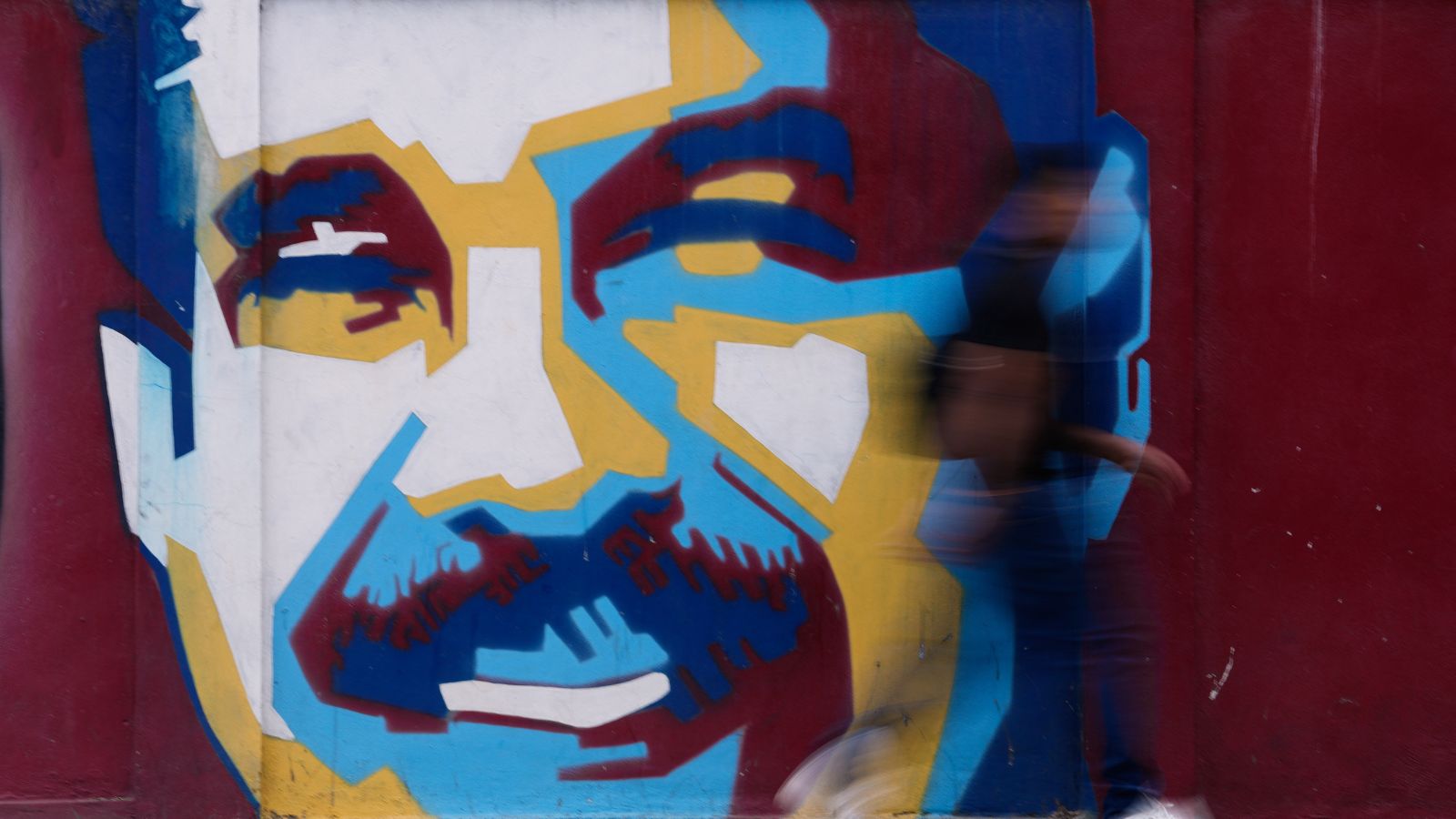
A day after the United States captured and flew out Venezuelan President Nicolas Maduro in a stunning military operation with the stated aim of fighting “narco-terrorism”, many questions remain unanswered. US Secretary of State and top Trump aide Marco Rubio answered them on Sunday, including if Cuba was the next target, why only Maduro was captured and the rest of his administration left in place, and what comes next for Venezuela.
The intervention by Washington in the South American nation came after weeks of increasing military buildup in the area and rising political back and forth between Maduro and US President Donald Trump. It was the Republican leader who announced the operation on Saturday in a post on his Truth Social Platform.

“The United States of America has successfully carried out a large scale strike against Venezuela and its leader, President Nicolas Maduro, who has been, along with his wife, captured and flown out of the Country. This operation was done in conjunction with U.S. Law Enforcement. Details to follow. There will be a News Conference today at 11 A.M., at Mar-a-Lago. Thank you for your attention to this matter! President DONALD J. TRUMP,” he wrote in the post.
- 01
Will US attack Venezuela’s ally Cuba next
Will US expand its scope of operations and hit Venezuela’s ally Cuba next. US Secretary of State Marco Rubio spoke on this but didn’t directly address the issue.
“His (Venezuelan President Nicolas Maduro) internal security apparatus is entirely controlled by Cubans,” Rubio said while speaking to NBC’s Meet the Press. “It was Cubans that guarded Maduro. He was not guarded by Venezuelan bodyguards. He had Cuban bodyguards. In terms of their internal intelligence — who spies on who inside to make sure there are no traitors — those are all Cubans.”
But he had a word of caution for Cuba. “I think they’re in a lot of trouble, yes,” Rubio said. “I’m not going to talk to you about what our future steps are going to be and our policies are going to be right now, in this regard, but I don’t think it’s any mystery that we are not big fans of the Cuban regime.”
- 02
Was the attack done to capture Venezuela’s oil reserves?
Venezuela boasts the world’s largest proven crude oil reserves on the planet. It is a different matter that the actual output is much less, contributing less than 1 per cent to global supply. Rubio was asked and his reply was that the oil industry in the Carribean nation is “completely destroyed”.
“As far as oil goes … (Venezuela’s) oil industry is completely destroyed. It’s destroyed all those oil fields that used to produce a lot of wealth for their country and their people. Those things are decrepit. They’re bankrupt,” Rubio said. “They need to be reinvested in it’s obvious, you they do not have the capability to bring up that industry again. They need investment from private companies who are only going to invest under certain guarantees and conditions,” he said.
- 03
When will elections be held in Venezuela?
One of the justifications for the US action was that Maduro’s continued reign since last year was never recognised by other major countries. With the protege of Hugo Chavez now out of the country, and standing trial on Monday, questions are raised about when will fresh elections be held. Rubio said the US wanted to see Venezuela transition to a democracy but added that “we have short term things that have to be addressed right away”.
“We all wish to see a bright future for Venezuela, transition to democracy. All these things are great, and we all want to see that,” he told journalists on NBC’s Meet the Press.
Over at CBS, he was more blunt, saying “there has to be a little realism here.”
“They’ve had this system of Chavismo in place for 15 or 16 years, and everyone’s asking, why 24 hours after Nicolas Maduro was arrested, there isn’t an election scheduled for tomorrow? That’s absurd,” he said.
- 04
Why was only Maduro deposed
The “narco-terrorism” charges were against the complete administration run by Maduro. Even as he was taken out of the country, his lietenants from Vice-President Delcy Rodriguez — also charged with “narco-terrorism” — to key defence officials such as Defence Minister Vladimir Padrino Lopez and Interior Minister Diosdado Cabello — both indicted by the US and carrying bouties of $15 million and $25 million, respectively — remain in power. So why was only Maduro deposed?
In his answer, Rubio chose to highlight the complexity of the operation.
“They’re already complaining about this one operation. Imagine the howls we would have from everybody else that we actually had to go and stay there four days to capture four other people,” Rubio said on CBS’ Face the Nation. “We got the top priority,” he said.
“It is not easy to land helicopters in the middle of the largest military base in the country — the guy lived on a military base — land within three minutes, kick down his door, grab him, put him in handcuffs, read him his rights, put him in a helicopter and leave the country without losing any American or any American assets. That’s not an easy mission,” Rubio said. Padrino Lopez and Cabello have , respectively. Cabello, like Maduro, was charged with “narco-terrorism.”
- 05
Why was Nobel winner Opposition leader Machado not allowed to take over power?
US President Donald Trump had answered this question a day earlier when he said he wasn’t confident that María Corina Machado, who was awarded the 2025 Nobel Peace Prize, had enough support to lead the country.
Rubio explained that most of the Opposition wasn’t inside the country.
“The immediate reality is that unfortunately and sadly, but unfortunately, the vast majority of the opposition is no longer present inside of Venezuela. We have short-term things that have to be addressed right away,” Rubio said on NBC’s “Meet the Press.” Rodriguez, the acting president, was likely to be “more compliant” now that Maduro wasn’t there, Rubio said.