admin
admin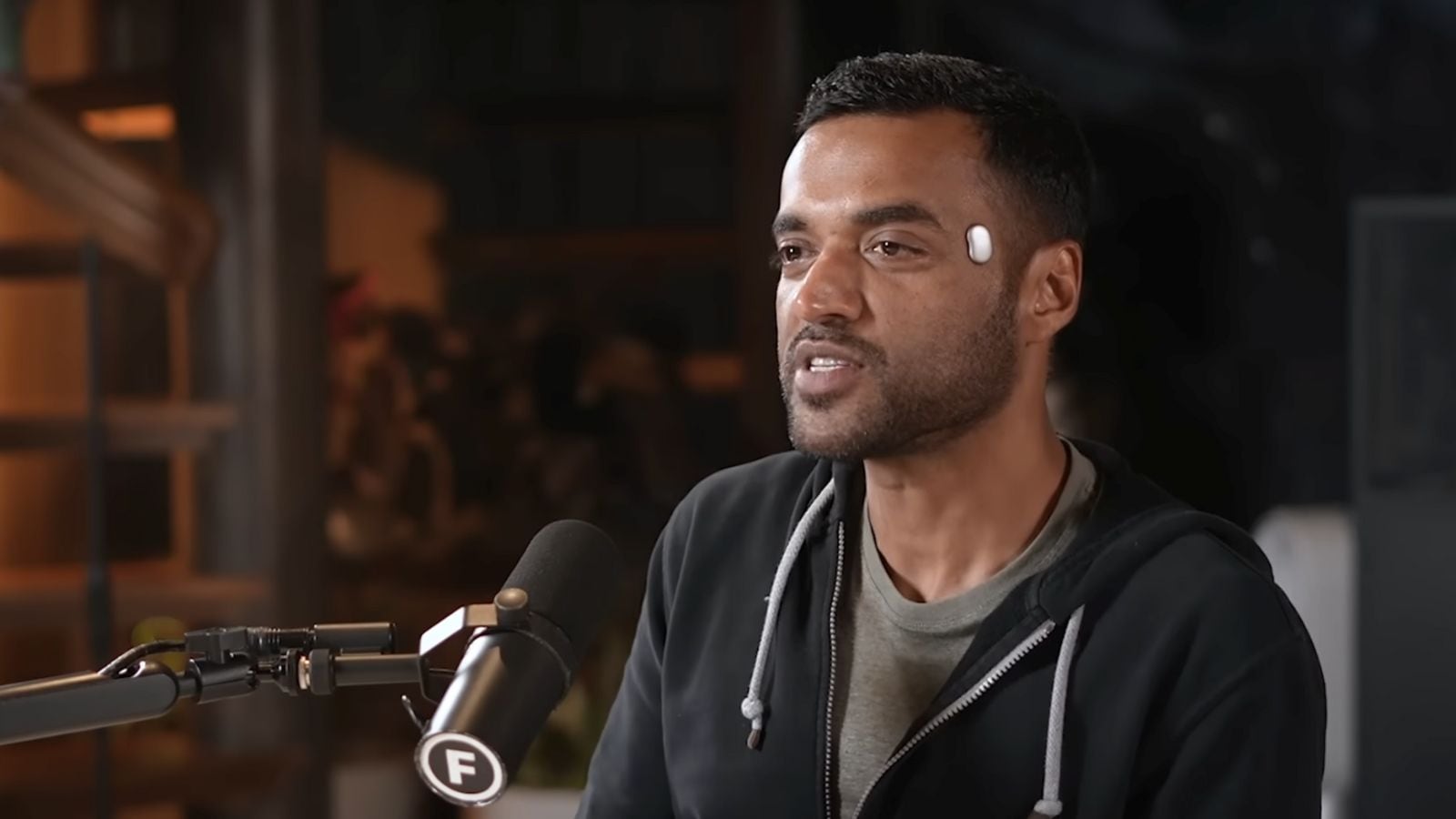
Zomato founder and CEO Deepinder Goyal recently drew public attention after appearing in a podcast wearing a small device fixed near his temple. The gadget named Temple has triggered curiosity among people.
According to several reports, Temple is an experimental wearable health device developed under a private research initiative backed by Goyal. The makers claim that the device is called Temple because it is worn on the temple region of the head.
The Temple wearable is part of Deepinder Goyal’s personal research initiative, Continue Research, which he is funding independently. According to media reports, Goyal has committed around $25 million (approximately Rs 225 crore) of his own capital to the project. The funding supports long-term research into ageing and brain health, with Temple positioned as one experimental component of this broader, non-commercial effort.
What does Temple do?
The tiny device is reportedly designed to continuously measure blood flow to the brain and non-invasively, focusing particularly on circulation when a person is upright, moving, or sitting for long durations. The core idea behind the device stems from what Goyal has described as the “Gravity Ageing Hypothesis.”
Under this hypothesis, the constant pull of gravity over decades may reduce effective blood circulation to the brain, potentially influencing ageing, cognitive decline, and neurological health. Temple aims to track minute fluctuations in cerebral blood flow and oxygenation, generating real-time data that could help researchers understand how posture, activity and lifestyle affect brain health over time.
Goyal claimed that he has been wearing the device for nearly a year as part of ongoing testing. The device is not currently available for sale and is positioned as a research prototype, not a medical product.
Is Temple a medical device?
Multiple reports assert that Temple is yet to have regulatory approval as a medical device. It has not been certified to diagnose, prevent or treat any disease, and hence at present it is not a medical device
Story continues below this ad
Reportedly, physicians and neuroscientists cited in these reports suggest that comprehensive or reliable evaluation of brain health cannot be obtained solely by looking at blood flow close to the temple region. Experts also note that wearable sensors cannot replace advanced imaging techniques like MRI or PET scans, which are usually required to obtain accurate measurements of cerebral blood flow.
Also Read: How Apple can make its smart glasses ‘different’ from Meta’s Ray-Bans
According to the report, medical professionals have described Temple as an intriguing device, yet they have also advised against exaggerating its current capabilities. Currently, there is no scientific proof that the Temple data can prevent neurological disorders, improve cognition, or predict ageing.
Critics contend that in the absence of clinical trials or published studies, Temple continues to be a personal experiment instead of a health remedy. At the same time, supporters say the device reflects a broader trend of founders exploring long-term health, longevity, and self-quantification, especially as wearable technology becomes more sophisticated.
Story continues below this ad
Goyal has not announced a commercial launch timeline for Temple. However, some reports suggest it will remain a closed research project, with data being collected to test underlying hypotheses rather than to offer consumer-facing features.