admin
admin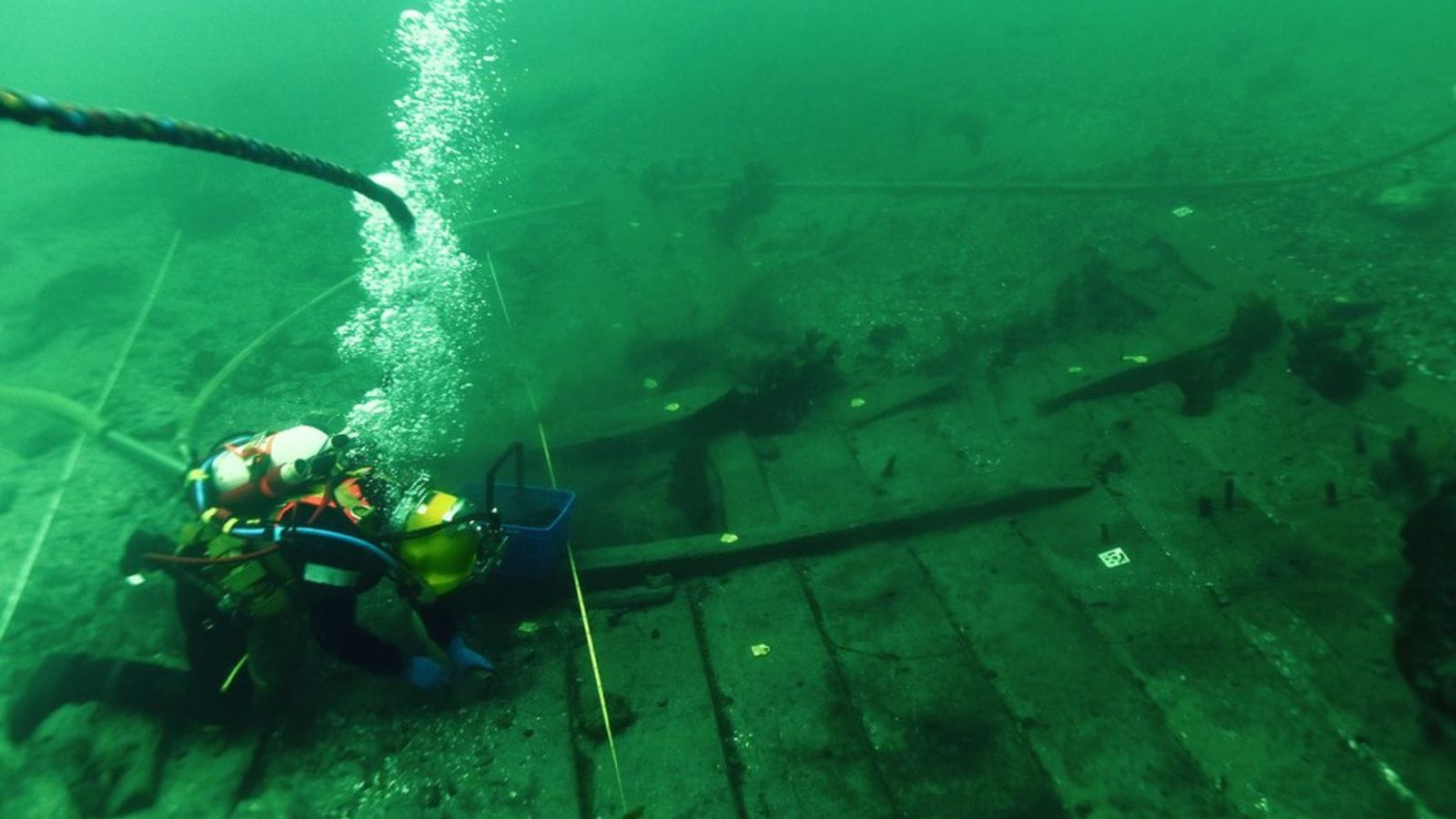
After spending nearly six centuries hidden beneath the waters near Copenhagen, a remarkable medieval ship has resurfaced, offering fresh insight into how trade once shaped northern Europe. Maritime archaeologists from Denmark’s Viking Ship Museum have uncovered what is now believed to be the largest cog ever found, a massive cargo ship from the early 15th century that highlights the scale, ambition, and organisation of medieval trade.
The ship was discovered in the Sound, the narrow stretch of sea between Denmark and Sweden, during underwater surveys linked to the development of Copenhagen’s new Lynetteholm district. From the very first dive, archaeologists sensed the wreck was unusual. As layers of sand and silt were carefully cleared away, the outline of an enormous vessel slowly appeared. Further excavation confirmed their suspicion: this was no ordinary shipwreck, but a record-breaking cog.
Named Svaelget 2 after the channel where it was found, the ship measures around 28 m in length, 9 m in width and stands about 6 m tall. Built around 1410, it could carry up to 300 tonnes of cargo, making it the largest known example of its kind anywhere in the world. According to the excavation’s lead archaeologist, Otto Uldum, the find marks a major moment in maritime archaeology, offering a rare chance to study how the biggest trading ships of the Middle Ages were constructed and operated.
A medieval giant built for trade
The sheer size of Svaelget 2 tells a wider story about the society that built it. Vessels of such magnitude demanded organised trade routes and markets, as well as investment. Archaeologists believe that this ship represents a period when traders were confident enough to transport common goods on a massive scale, as they were aware that there would be a market for such goods in other regions.
Cogs were famous for being efficient cargo carriers and could be sailed by relatively small crews, even when heavily loaded. Large examples like Svaelget 2 were used for long and hazardous journeys, including routes from what is now the Netherlands, around Skagen, and through the Sound to reach major Baltic trading towns. These ships carried bulk goods such as timber, salt, bricks and basic food items, making large-scale trade cheaper and more practical than ever before.
Analysis of the ship’s timber has revealed just how interconnected medieval Europe already was. The study revealed that the outer planks were made of oak wood from Pomerania, which is now Poland, while the internal frames of the ship were from the Netherlands. This indicates that the ship was built in the Netherlands, and this was possible due to advanced supply chain systems that existed over 600 years ago.
Life on board and rare preservation
What makes Svaelget 2 especially valuable is its exceptional state of preservation. Found at a depth of 13 m, the wreck was protected by sand that shielded much of the ship from decay. One entire side of the vessel, from keel to upper edge, has survived something never seen before in a cog discovery. Archaeologists also uncovered rare remains of the ship’s rigging, offering new clues about how sails, masts and ropes were arranged on vessels of this size.
Story continues below this ad
For the first time, the excavation also provides physical proof of the wooden “castles” often shown in medieval drawings of cogs. Remains of a timber-built stern castle were found, confirming these elevated structures were real and used by the crew for shelter. Another significant find was that of a galley made of bricks, where the sailors could prepare hot meals over an open fire. This was accompanied by cooking vessels made of bronze, bowls of ceramics, and food such as fish and meat.
Personal belongings like shoes, combs, painted wooden bowls, and rosary beads have also been found. This provides a glimpse into the life of the sailors on board the ship. The sailors brought elements of their lives with them on board.
Although there is no sign of the cargo on board, it is believed that it may have floated away with the ship. The lack of weapons and evidence of battle reinforces the fact that Svaelget 2 was a merchant vessel and not a warship. Svaelget 2 is not only an important shipwreck, but it is also a significant indication of the progression of a society towards full-scale trade.
© IE Online Media Services Pvt Ltd