admin
admin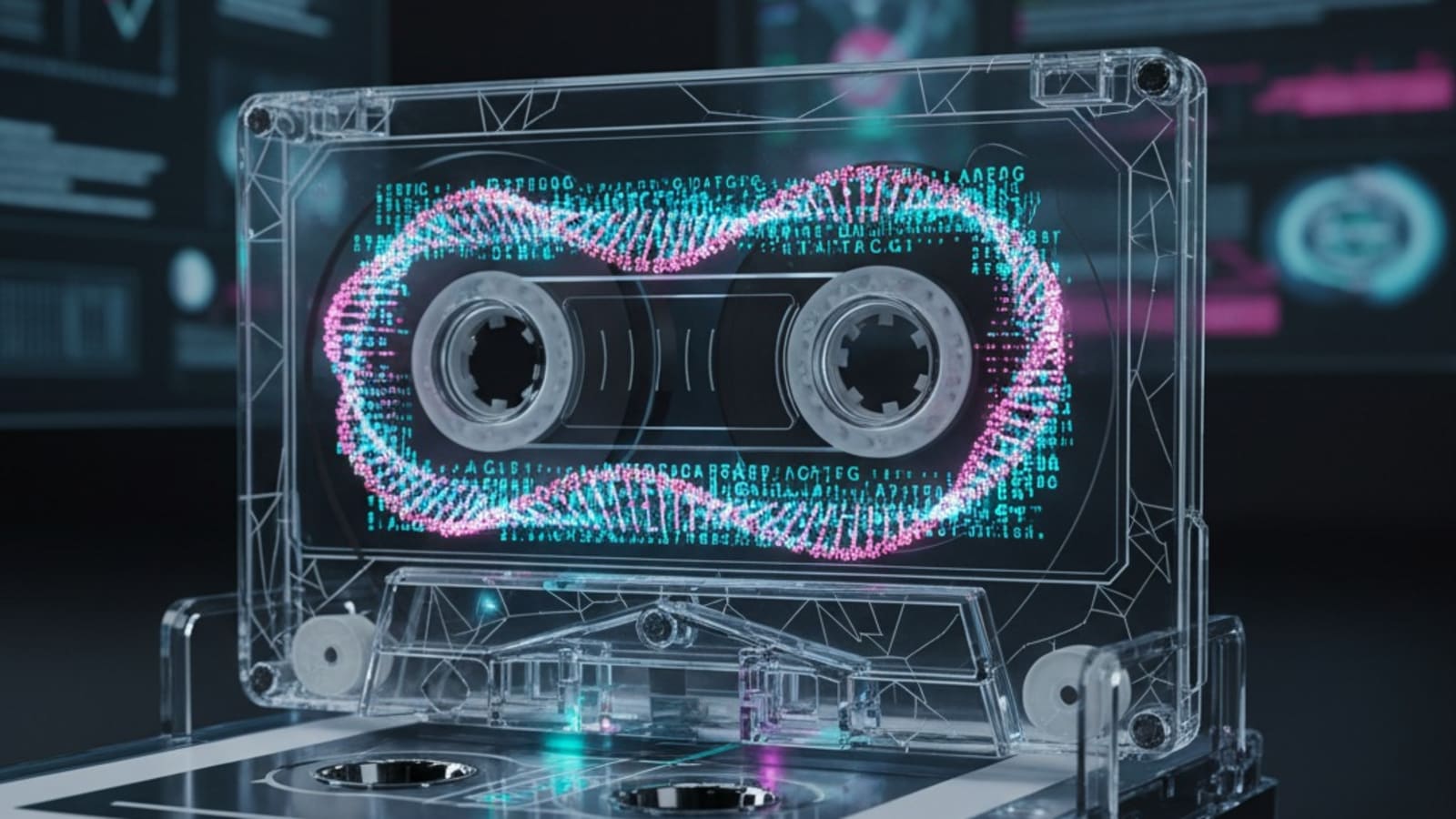
A team of researchers in China has come up with a new twist on a classic technology: a DNA-powered cassette tape that can hold enormous amounts of data, according to TechSpot. Xingyu Jiang, a professor at the Southern University of Science and Technology in Guangdong, led the team that developed this hybrid of old and new. Instead of the traditional polyester strip coated with magnetic particles, the DNA cassette loads a long plastic tape with strands of synthetic DNA programmed to carry digital files.
Each DNA strand on the tape uses the four familiar biological bases – A, T, C, and G – to encode information. The result is a storage medium that looks like a cassette from the outside but can handle data on a scale that magnetic tape never could. The researchers report the tape has thousands of addressable partitions, up to 1,570 processed every second. Storage density is high, with up to 28.6 milligrams of DNA per kilometre of tape and built-in copy redundancy for reliability over the long term.
How much can it store and what comes next
The DNA cassette’s total capacity is listed at 36 petabytes. For comparison, standard cassettes stored up to 12 music tracks per side. According to the team’s results, this new medium can fit over 3 billion songs if each file takes about 10 megabytes. To increase stability, the DNA strands are coated in a zeolitic imidazolate “armour,” which helps protect against breakdown and could keep information safe for hundreds of years.
The system also includes a cassette “drive.” Instead of playing music, this gear can randomly access and work with data stored on the synthetic DNA, including recovering, deleting, or manipulating files. In the researchers’ tests, it took about 50 minutes to recover an incomplete image, though the team says full restoration will need what they call “next-generation” sequencing tools.
DNA as a storage material offers extremely high theoretical density, with the study citing a possible 455 exabytes per gram. While the technology still faces hurdles like high costs and slow retrieval speeds, this experiment offers a glimpse at what could be possible in the future with data storage demands surging worldwide.