admin
admin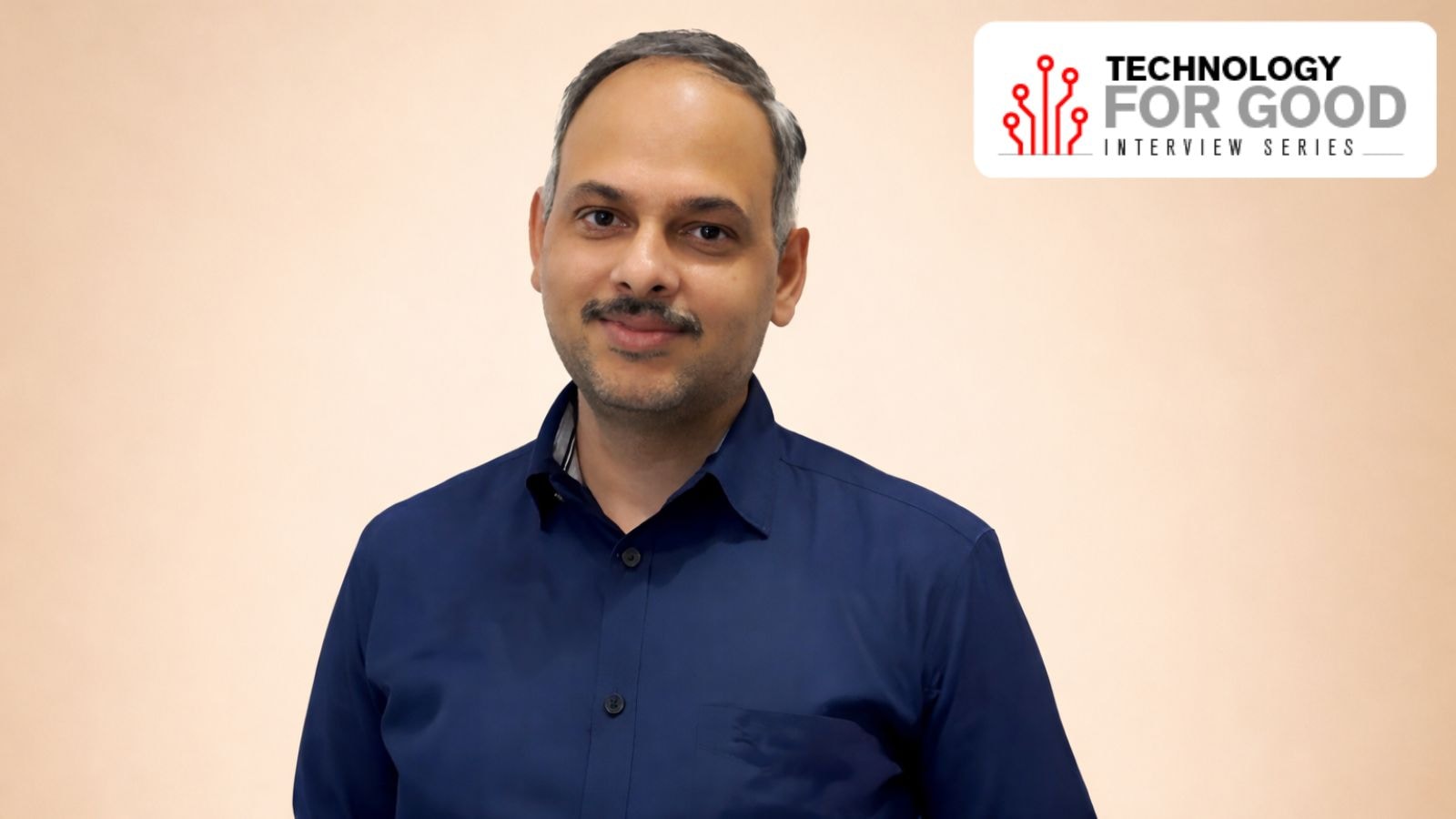
Raghu Dharmaraju is the CEO of ARTPARK (AI & Robotics Technology Park) at the Indian Institute of Science (IISc), Bengaluru.
Seed-funded by the Government of India under the National Mission on Interdisciplinary Cyber-Physical Systems (NM-ICPS), ARTPARK fosters innovations in AI and robotics by bringing together researchers, startups, industry, and government ecosystems. They drive deep-tech projects and research in areas such as industrial automation, mobility, agriculture, healthcare and education.
Raghu holds a B.Tech from IIT Madras, an M.S. from the University of Massachusetts, Amherst, and an MBA from Cornell University.
He spoke to indianexpress.com on ARTPARK’s journey, the opportunities in AI and robotics, the startups that are making an impact, and the challenge of physical AI. Edited excerpts:
Venkatesh Kannaiah: Tell us about ARTPARK, its history and its journey.
Raghu Dharmaraju: The National Mission on Interdisciplinary Cyber-Physical Systems created around 25 hubs to focus on various thematic areas, and we were identified as one of the top hubs for robotics and AI systems.
We began our activities in 2020 and so far have invested in about 30 companies. The very first set of startups, about five or six, has already attracted follow-on investments.
We are not a typical incubator or accelerator. We consider ourselves as an innovation and venture builder. It means we often start very early, sometimes before a full team is formed, or even before there is a team at all.
Story continues below this ad
We help bring such teams together to go after specific problems or concepts that may have been initiated by a technologist, often as an innovator-in-residence. Over time, this becomes an innovation project, which then evolves into a for-profit or non-profit venture. If it is for-profit, it goes out into the world as a startup. If it is non-profit, it can continue under our umbrella as a digital public good. In all cases, there is a team and a clear articulation of that team.
We recognise that this kind of deep-tech journey requires sustained support, and we support it with grants.
Venkatesh Kannaiah: Do these researchers, startups or students come to you from IISC Bengaluru or from all across India?
Raghu Dharmaraju: Only about one-third of our funnel comes from IISc. And the rest comes from across India. When we talk about a funnel, there are really multiple funnels. There is an ideas or concepts funnel, and there is also a talent funnel.
We sit at the meeting point of these. Sometimes we start with the talent, and they have a concept that gradually takes shape and eventually becomes a startup. At other times, there is a known need or problem, and we are fortunate enough to identify innovators-in-residence who can take that forward.
Story continues below this ad
So it is not always very linear, that there is an individual with a fully formed concept and technology, and everything proceeds smoothly from there. That rarely happens.
Venkatesh Kannaiah: Where do you get these problem statements, and do you get them from government departments too?
Raghu Dharmaraju: Sometimes the ideas come from the innovators themselves, and at other times, they come from industry.
In certain cases, especially in defence, they may come from the government. Similarly, in areas like AI for social impact, the challenges often arise from public sector needs, such as public health issues or recurring disease outbreaks.
Venkatesh Kannaiah: Tell us about your programmes and what they seek to achieve.
Raghu Dharmaraju: Our programmes are what we call innovation programmes. Typically, projects start at around Technology Readiness Level 3 or 4, and we aim to take them to Technology Readiness Level 6 or 7.
Story continues below this ad
This involves a combination of support mechanisms. One is providing facilities. We have facilities for robotics and AI to prototype, test, and even do small-scale manufacturing. We are also a 5G testbed. For example, we have a small GPU cluster that teams can use. In addition, being a stone’s throw away from the Peenya Industrial area allows us to do certain kinds of prototyping very quickly.
The second, and perhaps the most important, is enabling collaborations with potential customers. We call this the co-creation effort. This happens through mentorship networks and structured collaborations.
If you want to do difficult things, it is not going to happen with Rs 50 lakh or even Rs one crore. These efforts require several crores of what you might call pre-commercial R&D. Before commercial players are willing to put money in, we have to support the work substantially.
Venkatesh Kannaiah: Can you tell us about some of your startups and the problems they are solving?
Raghu Dharmaraju: Ours is tech for good — both for-profit and non-profit. I’ll start with the for-profit side.
Story continues below this ad
One of our startups is Twara Robotics, which makes robotic arms for manufacturing. They have designed, developed, and built robotics components such as actuators and soft grippers. They also went on to design, develop, and build full robotic arms, attracting investment from reputed industry players.
There is Comrado Aerospace. They have built a hybrid vertical take-off and landing drone with a range of over 100 kilometres and an endurance of about six hours. It is useful for surveillance applications. This is a fairly large drone. It is now in pilot deployment with the defence forces.
There is ZenteIQ, which is building what are called scientific foundation models, which are foundational AI models for engineering design. Think of applications like thermal analysis or computational fluid dynamics. These kinds of tools are used across engineering domains — whether you are designing a building, an aircraft, or other complex systems. ZenteIQ is one of the teams that won the IndiaAI Mission’s foundation model challenge.
There is Qosmic Labs, which is developing tech for ground stations and satellite communications. Typically, satellite communications rely on radio frequencies, which are a relatively narrow pipe. This company has developed an optical, laser-based communications technology that increases throughput many-fold.
Story continues below this ad
There is FLO Mobility, which has built automated construction-site AMRs or autonomous mobile robots for material handling. Think of it as a small truck or trolley. You load the material, and it automatically navigates large construction sites. It runs on wheels and can use the temporary lifts that are installed at construction sites to move between floors.
There is DexSent Robotics, started by a recent PhD graduate from IIT Gandhinagar. They are working on a dexterous gripper. Think of it as a three-fingered hand that can be attached to a robotic arm. With three fingers, you can do quite interesting things — you can pick up a cherry, a flask, or many other objects. There are many tasks on manufacturing floors that require this level of dexterity, but where humans cannot be present 24 hours a day.
Venkatesh Kannaiah: Tell us about your innovations/startups which are solving interesting social problems.
Raghu Dharmaraju: On the social impact side, we have worked on building virtual assistants for frontline health workers. Think of this as a WhatsApp-based chatbot.
It is multi-modal and multi-lingual — multi-modal in the sense that it supports both speech and text. It can handle Hindi as well as local languages and dialectical variations. This is a non-profit effort under our umbrella. Government programmes are using it in places like eastern Uttar Pradesh.
Story continues below this ad
We have also been funded by Google, through IISc, to create large open-source datasets, especially for speech. One such effort is called Project Vaani,an initiative we built from scratch in collaboration with Professor Prashanth Ghosh at IISc.
Through this effort, we have discovered aspects of our cultural heritage, including food items and names we may not have heard of otherwise.
Vaani is a non-task-specific dataset. It is used by various groups to improve their models and can fit into any conversational AI system, including government programmes for conversational AI and automatic speech recognition. Research has shown that there are real district-to-district differences in model performance. Without that diversity in the data, the models simply do not learn.
Another example of our work is a dengue outbreak prediction system being developed and piloted in partnership with the Government of Karnataka. It is operational as a pilot. An important aspect of this work is that these models are never static. You cannot freeze them. Climate patterns, mobility patterns, and other factors keep changing, so the models have to be updated every season.
Story continues below this ad
We are also working on heat-health risk models. In the summer of 2024, for example, we saw heatwave-related deaths being formally recorded in large numbers for the first time. Temperature alone is not enough; you also have to factor in humidity, wind, and other variables to understand the actual health risk. We are working towards increasing the granularity of these predictions and are also aiming for a seven- to ten-day forecast window.
We also work on data standards and benchmarking requirements. For instance, if someone claims to have an AI system for interpreting X-rays for TB, how do you benchmark it? How do you know it is good enough to deploy? We work on defining the data standards and requirements needed for that.
We have also created a platform for environmental surveillance. It allows a sample to be tracked end to end — from the point where it is collected from the environment, whether that is soil, milk, water, or anything else, through testing for pathogens or other indicators, and finally through sequencing.
These efforts span multiple verticals and are driven by stakeholder needs.
As for how it is used, these platforms are not meant for direct end customers. Many of the things we do are not consumer-facing. They are used by institutions, laboratories, and programmes rather than individual users.
Venkatesh Kannaiah: How do you select these problems?
Raghu Dharmaraju: So, typically, our approach is this: the government already runs large-scale programmes aimed at societal impact. We build innovations into these large-scale, already-scaled systems to improve their effectiveness.
That is the general thinking. What is the existing system, and what is the AI product that can help make that system work better?
We also ask whether such technology is strategically important for India. So we need to build our own capabilities.
Venkatesh Kannaiah: Your thoughts on the AI and robotics ecosystem in India?
Raghu Dharmaraju: We have the raw talent. What we often lack are the facilities and the substantive investments needed to do this work. And I think that is where we have started to play a fairly significant and somewhat unique role.
When you come here, you have access to prototyping facilities, expertise, funding, and talent — all in one place. Most of the incubation ecosystem in India is relatively light-touch and does not provide this kind of integrated support.
I also think the venture-building approach is largely missing. Typically, the model assumes that a startup already exists or comes to you, and then you help it. There are plenty of incubators, but innovation and venture building is a different approach altogether.
Venkatesh Kannaiah: What is the biggest challenge you are trying to solve?
Raghu Dharmaraju: The biggest challenge we are trying to solve is Physical AI. This is AI that goes into robots. There is a physical system, but it is the intelligence that sits on top of it. Humanoids are a good example. Physical AI is really what we want to go after.
To make it simple, when I ask you to pick something up, you automatically shape your hand in a certain way and pick it up. If it is a soft mango or a strawberry, you would be careful not to crush it. But how do you teach a robot to do this?
The older way of doing physical AI was to give very precise instructions. For a fixed, predictable task, that works. But the moment there is even a small amount of unpredictability, robots tend to fail.
So how do you teach this? That is where physical AI comes in. Like all AI, it relies on training. Image recognition, for example, works by showing thousands of images of cats and dogs and labelling them. Over time, the system learns to tell the difference.
Similarly, how do you teach a robot to wash a vessel or fold a piece of cloth? These are extremely hard tasks. You cannot realistically give precise instructions for every situation. Instead, you have to build physical AI, where the intelligence emerges from the combination of software, hardware, and learning.
Venkatesh Kannaiah: So is the challenge mainly about ingesting enormous amounts of data?
Raghu Dharmaraju: It is partly that, but not only that. There is innovation in training, in the model architectures, in the computational power required, and in the amount and quality of data. All of these aspects come together. That is why physical AI is such a big challenge.
I believe physical AI is the next frontier. And it is not just about robots. There is a broader concept called Industry 5.0. We have heard of Industry 4.0. Industry 5.0 is about extending human capabilities by infusing tasks with AI, in a human-centred way. Advanced robotic systems that embody physical AI are a core part of Industry 5.0.
Venkatesh Kannaiah: Which of your startups are working in the Physical AI space?
Raghu Dharmaraju: Kinesthetiq is one example. There is Strider Robotics, which builds quadruped robots/robotic mules that can go into dangerous or high-altitude environments. This could be mining, oil and gas, or defence — situations where you would prefer not to send people into hazardous conditions. These quadruped robots can carry sensing equipment, conduct surveillance or inspection, and return safely. These quadruped robots are currently in pilot stages.
In fact, physical AI shows up across many of our startups. Anywhere there is physical movement, robotics and AI are involved. Drone startups, for example, are also deeply rooted in physical AI.
There is also a very early-stage company called Vishwasis Aerospace. Professor Radhakant Pari, who was involved in developing guidance, navigation, and control mechanisms for Chandrayaan-3, is a co-founder. He is now working on bringing what he calls physics-informed AI to drones.
The challenge they are trying to solve is: how do you land a drone in windy conditions, on a moving vehicle or a boat that is pitching on waves? That requires extremely precise physical intelligence to come together.
Venkatesh Kannaiah: Is it that many developed economies already have these technologies and may not want to share them?
Raghu Dharmaraju: It is more complex than that. In some cases, we do have access to open-source models and research outputs because much of this has emerged from global research ecosystems. There is also a growing realisation among some players that collaboration can create more value overall.