admin
admin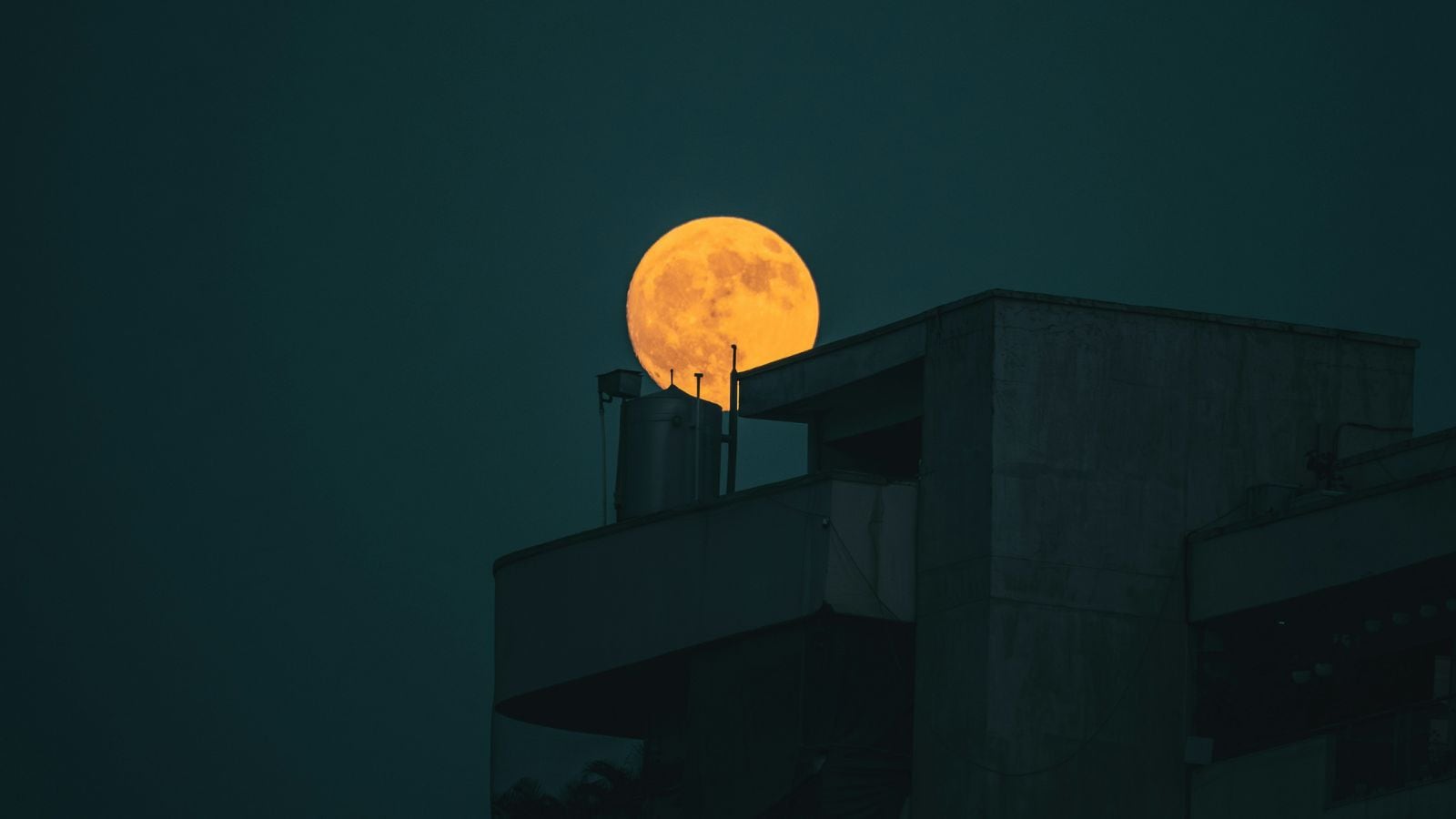
A packed sky calendar awaits stargazers in 2026. The upcoming lunar year will feature many stunning close encounters of the crescent moon and planets, as well as a number of supermoons, a spectacular total solar eclipse, and a “blood moon” complete lunar eclipse. The majority of these events are ideal for watching with the naked eye, but you can get a closer look with telescopes and binoculars.
The dates for the upcoming year’s moon-gazing events are as follows.
1. The year’s first supermoon
On January 3, 2026, at dusk, the year’s first supermoon will be visible. January begins with a visual treat as the Wolf Moon rises as a supermoon. Appearing noticeably larger and brighter, it marks the first of three supermoons in 2026 and the final chapter in a run that began at the end of 2025.
2. “Ring of fire” annular solar eclipse
On February 17, 2026, during the daytime,e a Solar eclipse will occur. A dramatic annular solar eclipse will see up to 96% of the Sun’s centre hidden by the Moon, leaving a glowing ring. The full annular phase will be visible only from remote Antarctic research stations, while a partial eclipse will be seen across Antarctica and parts of southern Africa and Argentina.
3. Crescent Moon and Mercury
February 18, 2026 (after sunset)
Just after sunset, a razor-thin crescent Moon will appear close to elusive Mercury, low in the western sky. With the Moon only about 2% illuminated, binoculars will help reveal this rare pairing, with Venus shining below and Saturn higher above.
4. “Blood Moon” total lunar eclipse
March 2–3, 2026, late at night till early in the morning. There are frequently three total moon eclipses. The last of the three will occur in early March 2026 and will be the last until 2029. There were two in 2025, one of which dazzled North American skywatchers. From areas of western North America, Australia, New Zealand, East Asia, and the Pacific, the full Worm Moon will pass into Earth’s shadow during this occurrence, turning into a reddish-orange “blood moon” lasting 58 minutes.
Story continues below this ad
5. Crescent Moon and Venus
On March 20, a 5%-lit waxing crescent moon will hang above the bright planet Venus, providing a chance to see a young moon near a brilliant planet approximately 45 minutes after sunset. Bring a pair of binoculars and locate a clear western horizon.
6. Crescent Moon, Venus and the Pleiades
On April 19, an hour after sunset, look west for a breathtaking view of Orion’s descending stars as a 9%-lit waxing crescent moon approaches the Pleiades, also called the “Seven Sisters” star cluster, with brilliant Venus below.
7. Total solar eclipse
On August 12, 2026, as seen from eastern Greenland, western Iceland, and northern Spain, the moon’s silhouette will perfectly hide the sun for up to 2 minutes, 18 seconds—possibly its greatest trick of all, even though it won’t be visible. There will be a tiny partial solar eclipse in North America and a profound partial eclipse throughout all of Europe.
8. Partial lunar eclipse
North America, South America, Europe, and Africa will be able to witness the second lunar eclipse of 2026, but it won’t be as spectacular as the first in March. The moon will reach Earth’s core shadow in space, but only 4% of it will do so, making the lunar surface predominantly reddish. The edge of Earth’s shadow will progressively migrate across the moon and back again, which is always a magnificent sight, even though there won’t be totality.
Story continues below this ad
9. Moon in the Beehive Cluster
The Beehive Cluster, a stunning cluster of stars best seen with binoculars, will be right beneath a waning crescent Moon on September 8, 2026, just before dawn, creating a lovely pre-sunrise scene in the eastern sky.
Also Read: Moon missions and solar spectacles headline 2026 space calendar
10. Moon in conjunction with Saturn
On September 26, Saturn will be visible in the night sky, but it will be most apparent when the Moon passes nearby in the east, right before the Moon is full.
11. Crescent Moon and Jupiter
With only 10 arc seconds (three-thousandths of a degree) separating the moon and Jupiter, this is a rare and unique sight. It is best viewed in the east approximately 90 minutes before sunrise, when the moon will be about 20% illuminated and “Earthshine” will be visible on its night side, closest to the massive planet.
Story continues below this ad
12. Crescent Moon with Mars and Jupiter
For much of the first half of 2026, Mars won’t be visible in the night sky, but by October, it will be visible in the southeast before daybreak. A 43%-lit waning crescent moon will approach the Red Planet on November 2, 2026, with Jupiter slightly below.
13. The closest supermoon since 2019
There will be three supermoons in 2026: on January 3, November 24, and December 23, but one stands out. The closest full moon near Earth since 2019 will occur on December 23. It will surpass the supermoon on February 19, 2019, by roughly 60 miles (100 km) at a distance of only 221,668 miles (356,740 km), making it the largest and brightest full moon in almost eight years. But on February 10, 2028, and March 30, 2029, two supermoons will get much closer.