admin
admin
Amid mounting pressure to prove that the billions of dollars in AI investments will pay off, OpenAI is embracing advertising, beginning with trials to show ads within ChatGPT in the coming weeks.
The initial ad trials will be rolled out in the United States first before expanding globally, OpenAI said in a blog post on Friday, January 16. The ads will appear for logged-in ChatGPT users on its free tier, as well as subscribers of its $8 per month ChatGPT Go plan that was announced in the US on the same day. To be sure, ChatGPT Go is already available in IndiaFrance, and other countries. It offers slightly higher limits on prompt and image generation.
ChatGPT Plus, Pro, and Enterprise subscribers will not be shown ads, however. OpenAI has also said that ads within ChatGPT will not affect its responses.
OpenAI’s decision to start testing ads in ChatGPT marks a significant shift for one of the world’s most widely used AI products, which boasts more than 800 million weekly active users, most of whom have never parted with cash to use the AI chatbot service which is expensive to build and run.
While the ads are being introduced on a trial basis, the move highlights how advertising remains an attractive revenue model even in the AI era, a familiar path previously taken by social media platforms and search engines. For consumers, it raises potential concerns about business incentives taking priority over user experience.
In the past, OpenAI CEO Sam Altman has acknowledged the harms of the social media era, particularly the societal impact of addictive algorithms. “Ads plus AI is sort of uniquely unsettling to me. I kind of think of ads as a last resort for us for a business model,” Altman had said during an event at Harvard University in 2024.
However, in a blog post announcing the ad trial, Fidji Simo, OpenAI’s CEO of applications, wrote, “People trust ChatGPT for many important and personal tasks, so as we introduce ads, it’s crucial we preserve what makes ChatGPT valuable in the first place. That means you need to trust that ChatGPT’s responses are driven by what’s objectively useful, never by advertising.”
Story continues below this ad
“We do not optimise for time spent in ChatGPT. We prioritise user trust and user experience over revenue,” Simo added.
OpenAI’s subscription play
Since its founding, OpenAI has operated as a non-profit-controlled organisation with a for-profit arm under a capped-profit structure. But in October 2025, OpenAI announced it has completed its transition into a for-profit public benefit corporation (PBC) with the original non-profit entity holding a 26 per cent equity in the PBC.
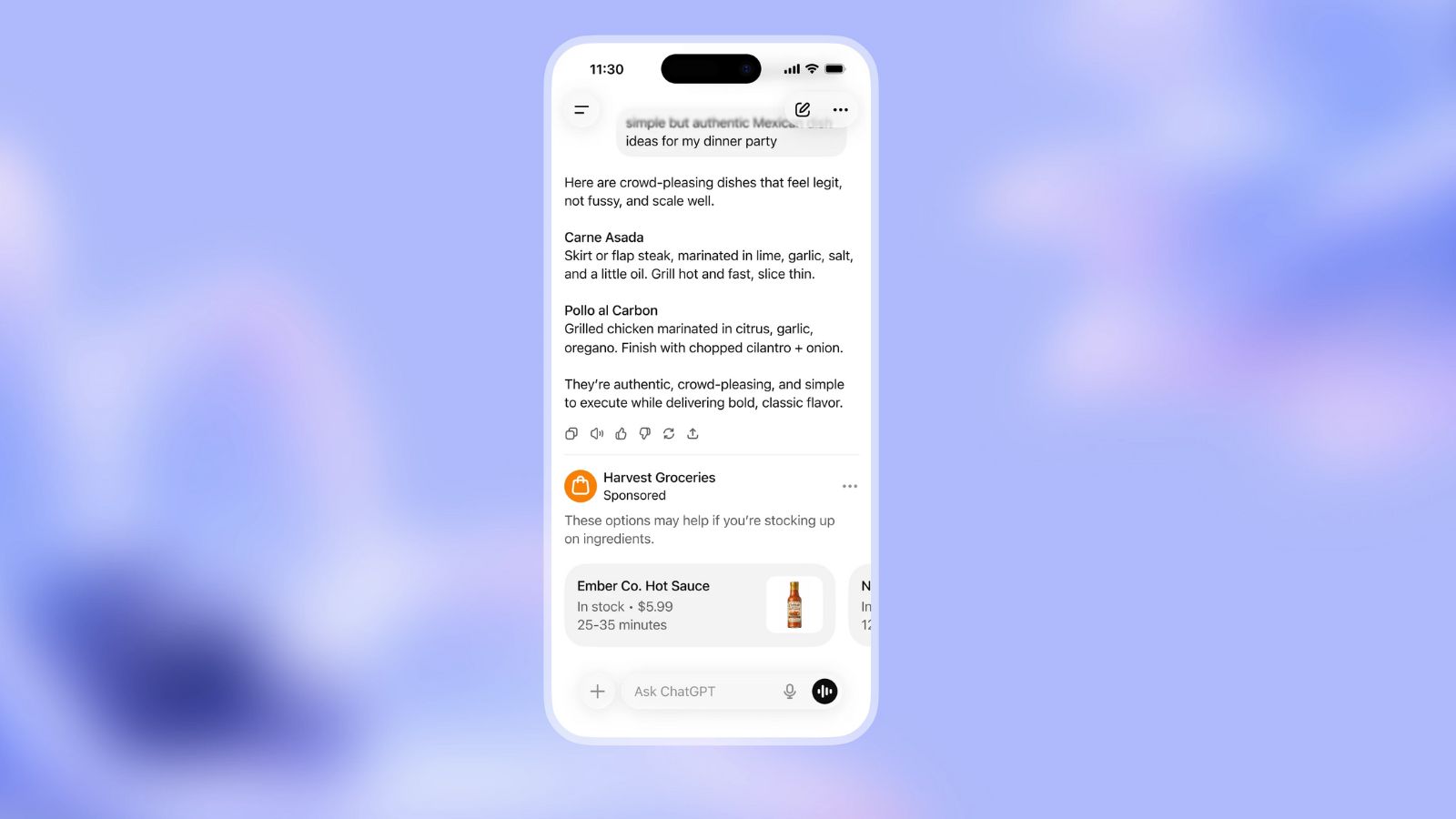 How ads will appear within ChatGPT. (Image: OpenAI)
While the company’s revenue figures are not publicly disclosed, OpenAI is said to have generated around $4.3 billion in revenue over the first half of 2025, The Information reported, citing financial disclosures to shareholders. Here is how OpenAI has likely been generating revenue so far:
Enterprise and B2B subscriptions: OpenAI provides access to its frontier AI models under licensing agreements with businesses for enterprise adoption. It has also launched a business-focused version of its AI chatbot services under a separate plan called ChatGPT Enterprise with custom pricing.
Story continues below this ad
Developer and API usage: Another way OpenAI monetises its generative AI models is through API (Application Programming Interface) access that allows developers to build on top of these models. For instance, API access to its latest and most advanced GPT-5.2 model costs $1.750 per 1 million input tokens and $14 per 1 million output tokens.
Individual subscriptions: Besides ChatGPT Enterprise, OpenAI also provides paid access to its AI chatbot through ChatGPT Go (Rs 399/month), ChatGPT Plus (Rs 1,999/month), ChatGPT Pro (Rs 19,900/month), and ChatGPT Business (Rs 2,599/user/month) for smaller enterprise teams.
Strategic deals and other revenue: OpenAI also generates revenue through partnerships and collaborations with other organisations. For instance, Apple and OpenAI inked a deal in 2024 that enables the iPhone maker’s Siri voice assistant to tap into ChatGPT’s expertise to answer complicated questions. However, the exact terms of such deals are not publicly disclosed.
In November last year, Altman said that OpenAI is on track to generate more than $20 billion in annualised revenue run rate in 2026, with plans to generate revenue totalling $110 billion by 2030. It is further projecting around $2 billion in revenue from “new products” this year, which includes ads or shopping-related revenue, rising to more than $10 billion in 2027.
Story continues below this ad
His remarks came after OpenAI inked more than $1.4 trillion-dollar worth of infrastructure deals to build out data centres that it said was needed to meet growing demand. The eye-watering figure raised questions from investors and others in the industry about how OpenAI is planning to pay for it.
OpenAI’s ad strategy could diversify source of revenue
The introduction of ads in ChatGPT has long been on the cards. It is the most obvious way for any consumer platform that has reached this scale to make any real money considering that a majority of its more than 800 million weekly active users are not paid subscribers. Additionally, OpenAI is offering its Rs 399 per month ChatGPT Go plan free of charge for one year to users in India as part of a limited promotional offer.
Ads within ChatGPT will appear directly below the AI chatbot’s answer in a separate, clearly labeled box.
For instance, if a user asks ChatGPT for dishes to serve at a dinner party, they will receive the standard AI-generated response from the chatbot. Underneath the response, they might also see an ad for a hot sauce bottle or other grocery items relevant to the suggested recipes. “You’ll be able to learn more about why you’re seeing that ad, or dismiss any ad and tell us why,” OpenAI said.
Story continues below this ad
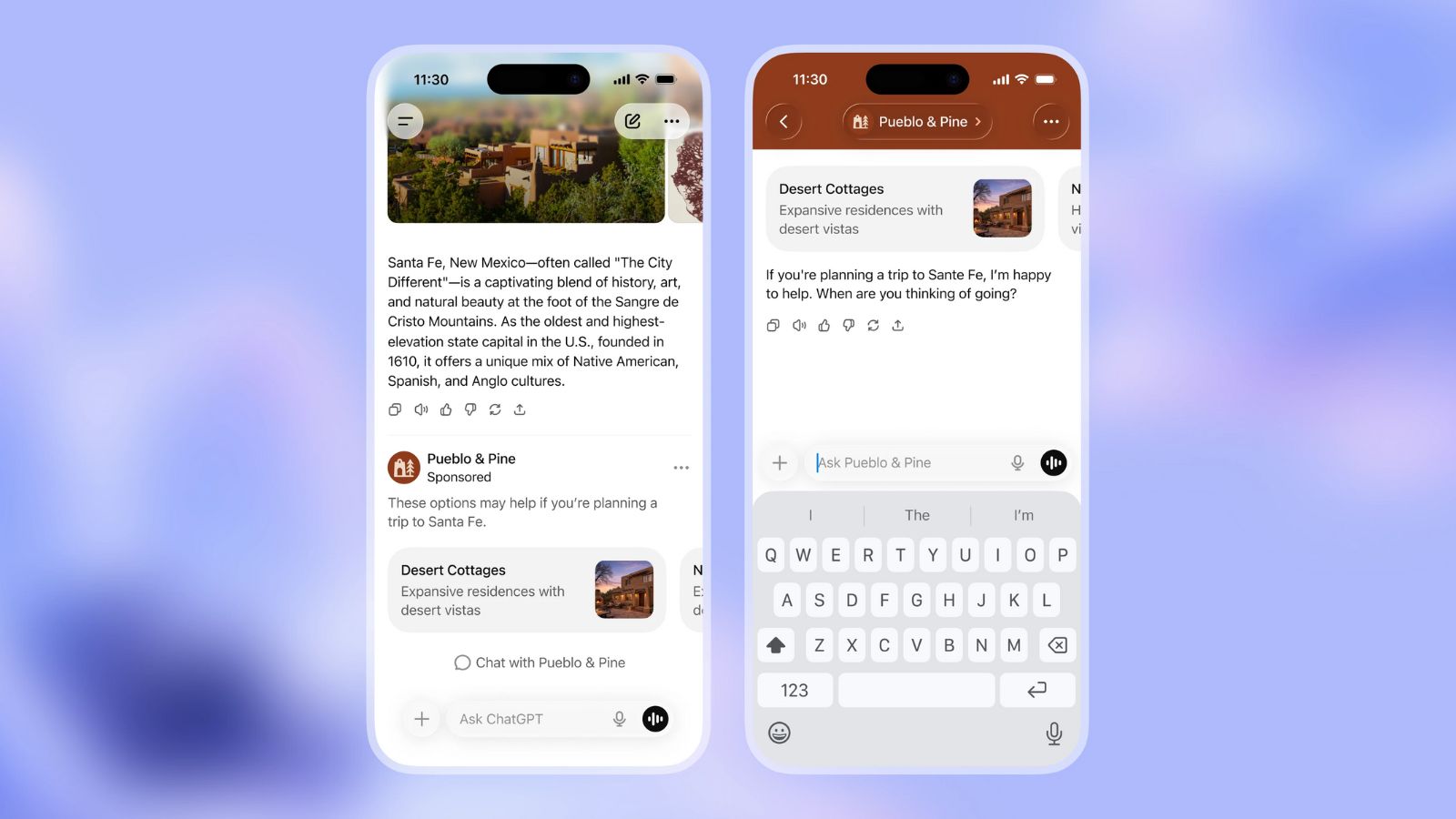 How ads will appear within ChatGPT. (Image: OpenAI)
OpenAI is also exploring more interactive ad experiences within ChatGPT. “Conversational interfaces create possibilities for people to go beyond static messages and links. For example, soon you might see an ad and be able to directly ask the questions you need to make a purchase decision,” Simo said in the blog post.
For businesses, OpenAI said it plans to share more about how they can advertise within ChatGPT in the coming weeks. As for its investors, the ad trials give OpenAI something positive to show them considering that the Microsoft-backed startup is looking to raise a staggering $100 billion at a valuation of $830 billion, as per a report by The Wall Street Journal.
OpenAI is also looking to monetise ChatGPT’s massive user base at a time when it faces competitive pressures from rivals such as Google Gemini. The startup has been playing catch up with the search giant since the roll-out of Gemini 3, with Altman declaring an all-hands, code red late last year. At the time, reports also suggested that OpenAI had temporarily paused its advertising plans.
What rules will govern ads within ChatGPT?
OpenAI has laid out certain principles that will guide its approach to showing ads within ChatGPT. The company has said it will not sell user data or expose their conversations with ChatGPT to advertisers. Unlike with targeted ads, advertisers will not be able to see information about a user’s age, location, or interests.
Story continues below this ad
ChatGPT advertisers will have access to aggregate ad performance metrics such as how many times an ad was shown in ChatGPT and how many users clicked on the ad, as per a report by Wired.
However, it is unclear what data OpenAI will collect on users to serve relevant ads. Since ChatGPT users can personalise the chatbot by asking it to remember certain personal traits and hobbies, some of that personalisation data may reportedly be used to serve ads. “You can turn off personalisation, and you can clear the data used for ads at any time,” OpenAI said.
“During our test, we will not show ads in accounts where the user tells us or we predict that they are under 18, and ads are not eligible to appear near sensitive or regulated topics like health, mental health or politics,” the company added.
While OpenAI has said it will not share users’ chat logs with advertisers, there have been glitches that have leaked such information. In 2024, a user found that his chat transcript with ChatGPT containing personal details about his relationship was part of a data set of one million ChatGPT user conversations gathered consensually by researchers to document how people are interacting with the chatbot.