admin
admin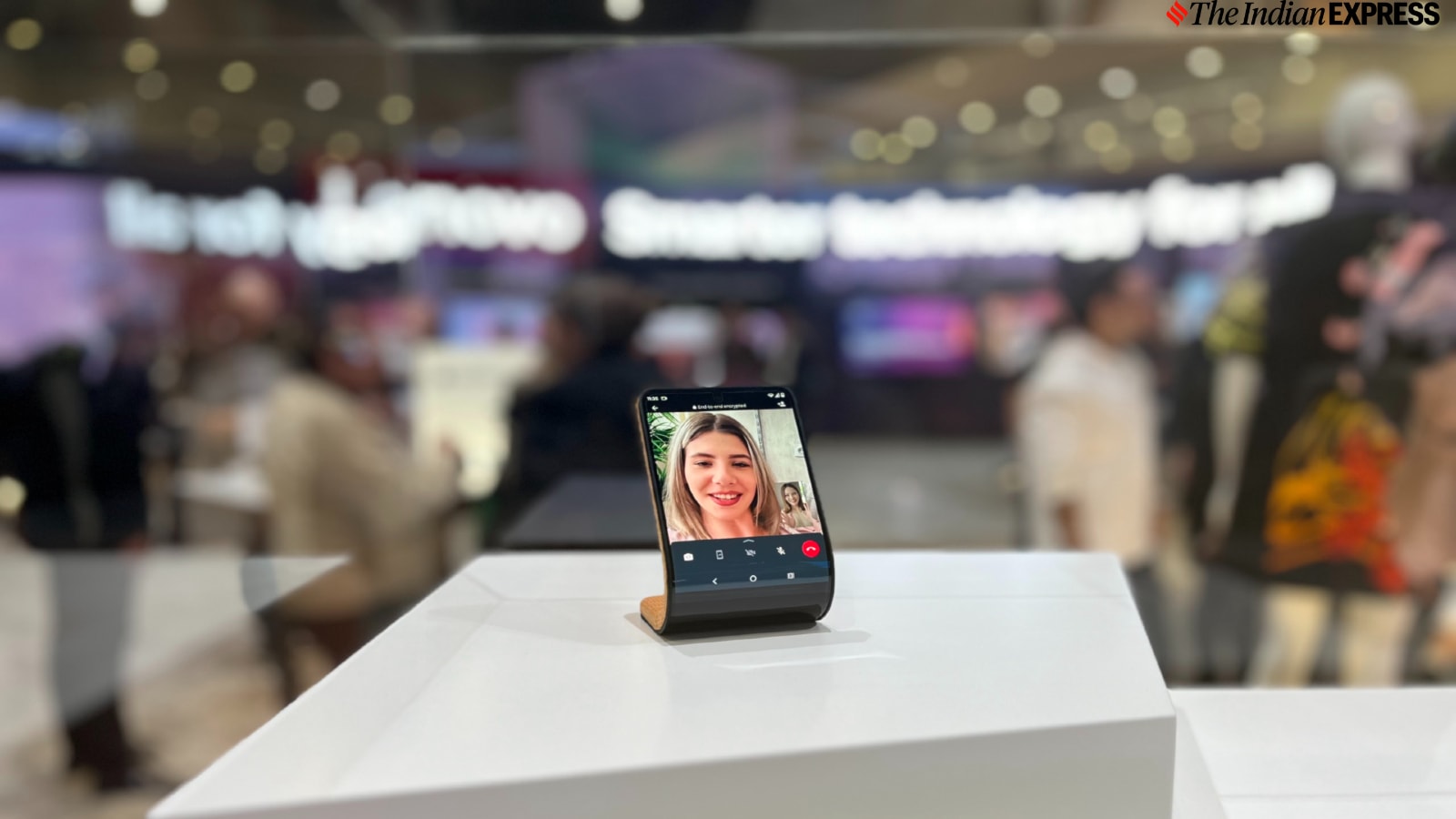
When a friend and I recently got into a heated debate about artificial intelligence and its impact, I didn’t take sides. Instead, I countered his arguments with facts, even as he grew emotional and claimed that AI was the greatest enemy of humans.
At the beginning of last year, I had already predicted that AI would be everywhere, and I was right. As a tech journalist, it comes naturally to me to observe key trends, anticipate the future, and form opinions. That said, it’s not my job to sell you something; influencers and YouTubers are already doing that very well.
However, if AI defined 2025, this year is likely to be more decisive and unexpected, as artificial intelligence moves beyond chatbots and smartphones to create entirely new product categories — ones that had been teased for years but never truly materialised from a consumer perspective.
But 2026 isn’t going to be about a single trend. It will be shaped by a mix of ideas, some of which may or may not work, but would stay and could shape the personal technology market and social media.
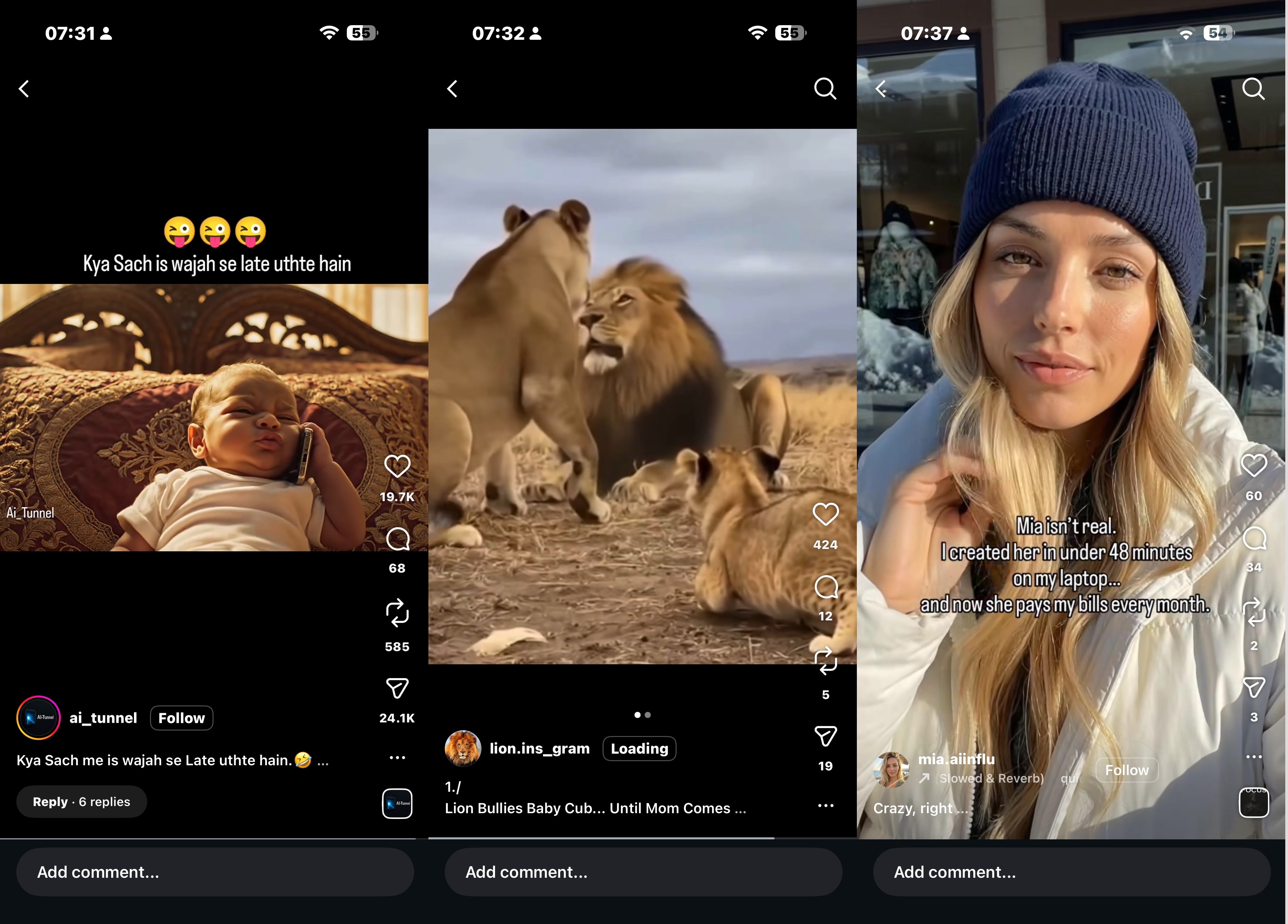 AI-generated content now dominates our social media feeds. (Screenshot taken on the iPhone Air)
Get used to AI videos on social media. They are here to stay
I was scrolling through Instagram the other day when my eyes landed on a video featuring two babies engaging in playful banter (precisely the kind of content that gets maximum views in India) portrayed as a girlfriend and boyfriend. I must have watched a few of those short videos before realising they were generated by artificial intelligence, and only after paying close attention did I notice subtle changes that were barely visible without a side-by-side comparison.
Since then, AI-generated videos have taken over my feed, especially clips of cartoony cats dancing to songs from Dhurandhar. I remember I joined Instagram (not officially, but through an invisible account) to watch videos of lion cubs, and now there are AI-generated versions of those videos as well, mostly funny and harmless.
With platforms themselves encouraging AI videos, and tools like OpenAI’s Sora capable of generating videos of virtually anything in just a few minutes, millions of users will inevitably be fooled into thinking AI-generated videos are real. In India, hardly any such videos carry warning labels, making them almost indistinguishable from reality. That could pose a real problem, blurring the lines of what people can trust.
Story continues below this ad
This raises a serious question: it won’t be about whether you can tell the difference between what is real and what is not, but whether AI-generated videos change our relationships with other humans and affect how we perceive the world around us.
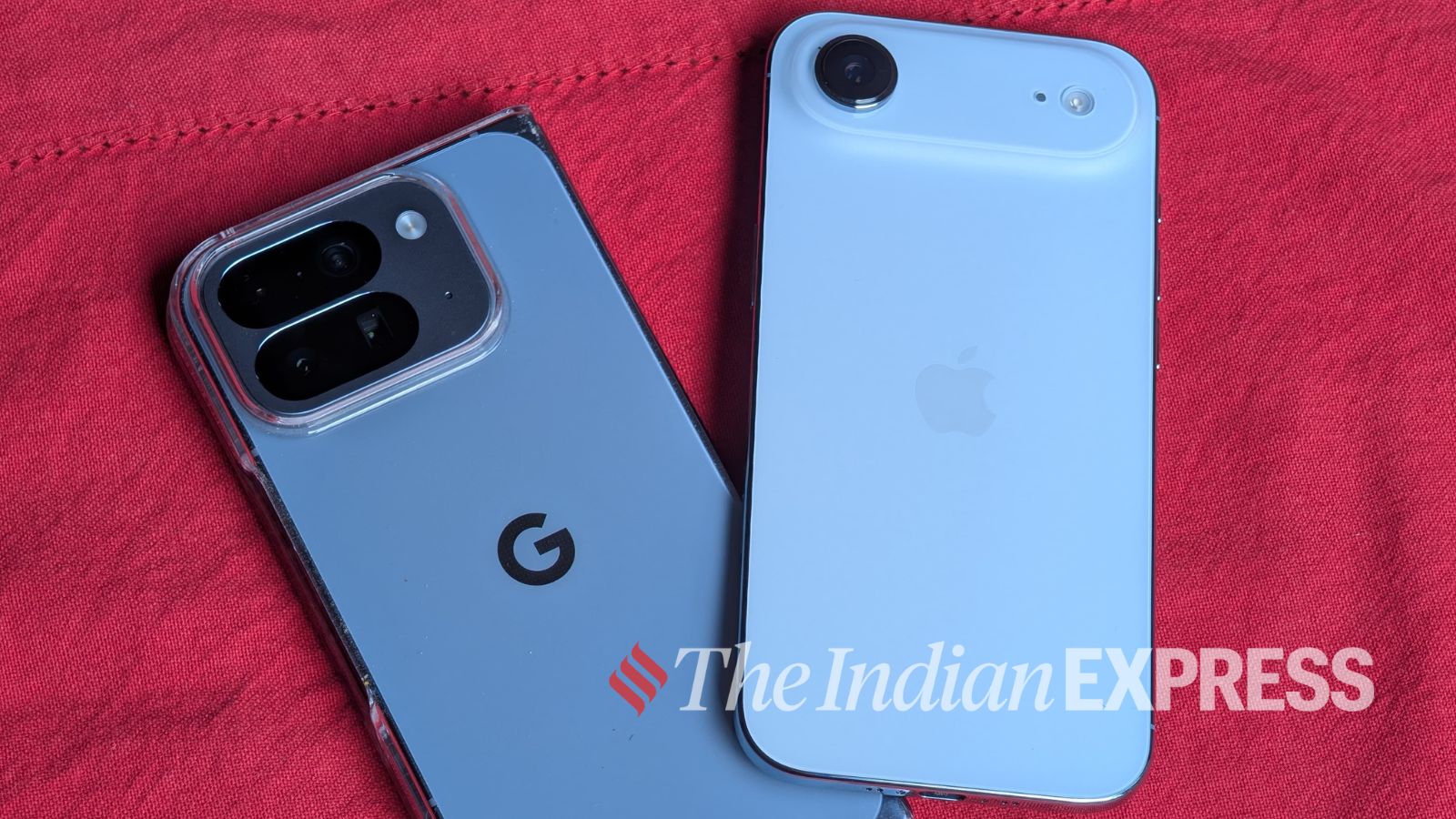 The average selling price of smartphones in 2026 is expected to rise, accoriding to experts. (Image credit: Anuj Bhatia/Indian Express)
Pay more for smartphones and laptops
The year has just begun, and I am already receiving feelers from my sources about an increase in smartphone and laptop prices, and it won’t be short-lived. The trend could continue for almost the entire year. For average buyers, phones already cost a month’s salary, and although many Indians purchase them on EMIs, ownership still comes at a hefty cost.
Given the current shortage of memory chips, higher memory costs are likely to be passed on to consumers, which, in turn, will drive up the average selling prices of smartphones. This is primarily due to a shortage of memory chips, particularly dynamic random-access memory (DRAM), which is used in AI data centres and is also critical for smartphones. Lately, DRAM prices have surged as demand has outstripped supply, pushing up component costs.
The biggest memory chip suppliers are prioritising data centre and AI companies that are flush with cash, and this shortage is expected to last until at least 2027. I am told that most smartphones launching early this year will be more expensive, though companies are likely to sweeten deals with tempting cashback offers and EMIs.
Story continues below this ad
I have also heard that smartphone prices, especially in the low- to mid-range segment, will rise once companies exhaust their existing stock. It is also possible for smartphone brands to launch phones with stripped-down RAM. Laptops, particularly gaming-focused models that are memory-hungry, may also see higher price tags.
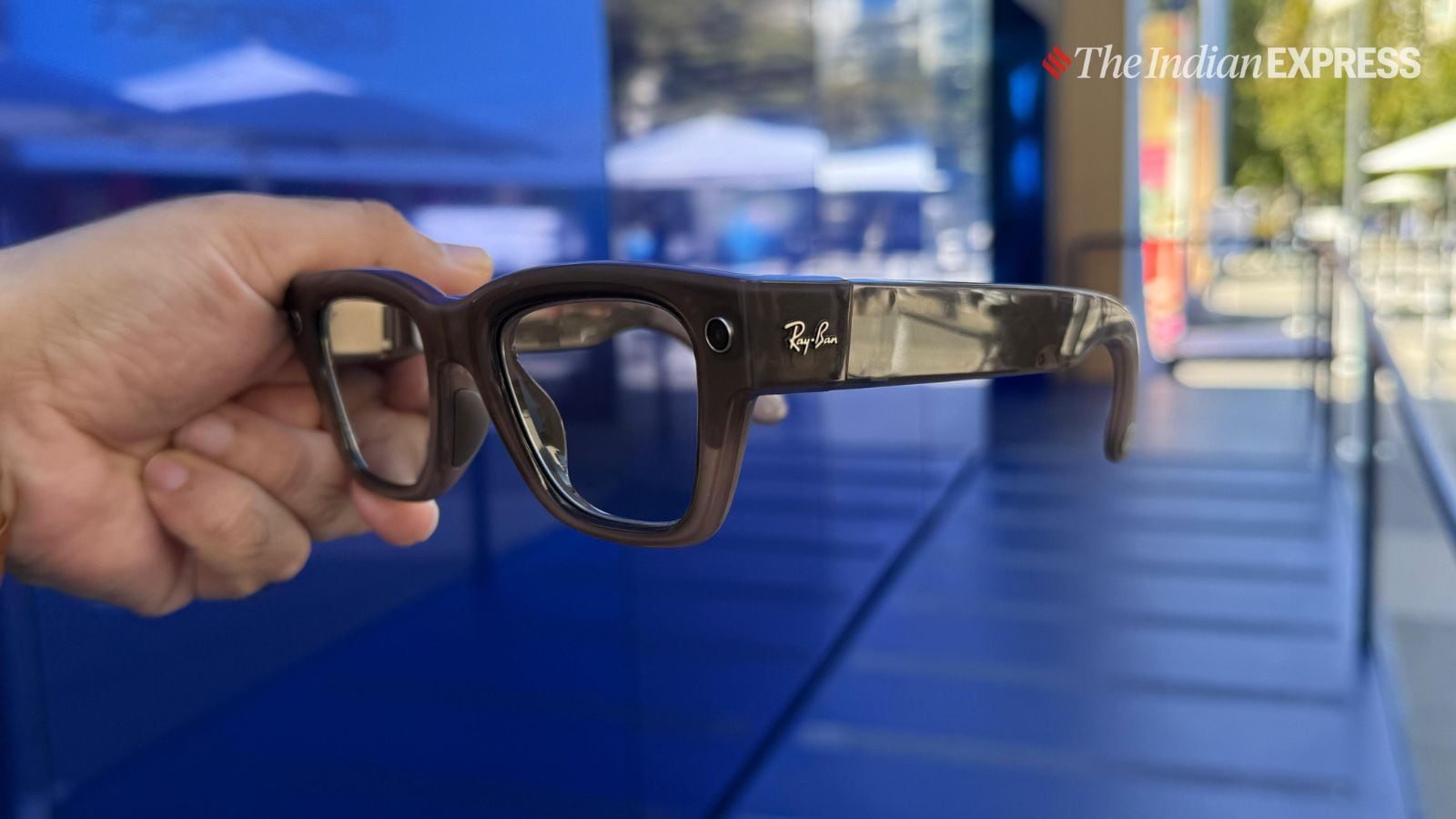 Silicon Valley is pinning its hopes on smart glasses, believing they could one day replace our smartphones. (Image credit: Anuj Bhatia/The Indian Express)
Smart glasses are coming for your face
Enough of apps and the debate over whether to add a telephoto lens to a smartphone or how thin a phone can be. For 2026 and beyond, tech companies are pumped up to find ways to sell smart glasses for your face.
While mixed-reality headsets never really took off and augmented reality glasses are still years away from becoming mainstream, in the immediate future (especially throughout this year) I foresee tech companies going all in on smart glasses, offering different capabilities such as small heads-up displays, AI features, built-in cameras, audio-only, and both tethered and wireless designs across varied price points, from mainstream and affordable to luxury.
Meta has already proved that there is a market, even if still a tiny one, for smart glasses with its Ray-Ban and Oakley models. Others will follow suit and launch new smart glasses, ideally designed to be worn all day, every day. Just don’t expect smart glasses to replace your smartphone yet.
Story continues below this ad
However, tech companies are already plotting strategies to sell basic smart glasses that work as companions, much like your earbuds, smartwatch, or smart ring, and eventually reach a stage where they become as capable as a smartphone.
Right now, whether you agree or not, smart glasses are exactly where feature phones once were, and it may take a long time before they become as advanced as modern smartphones.
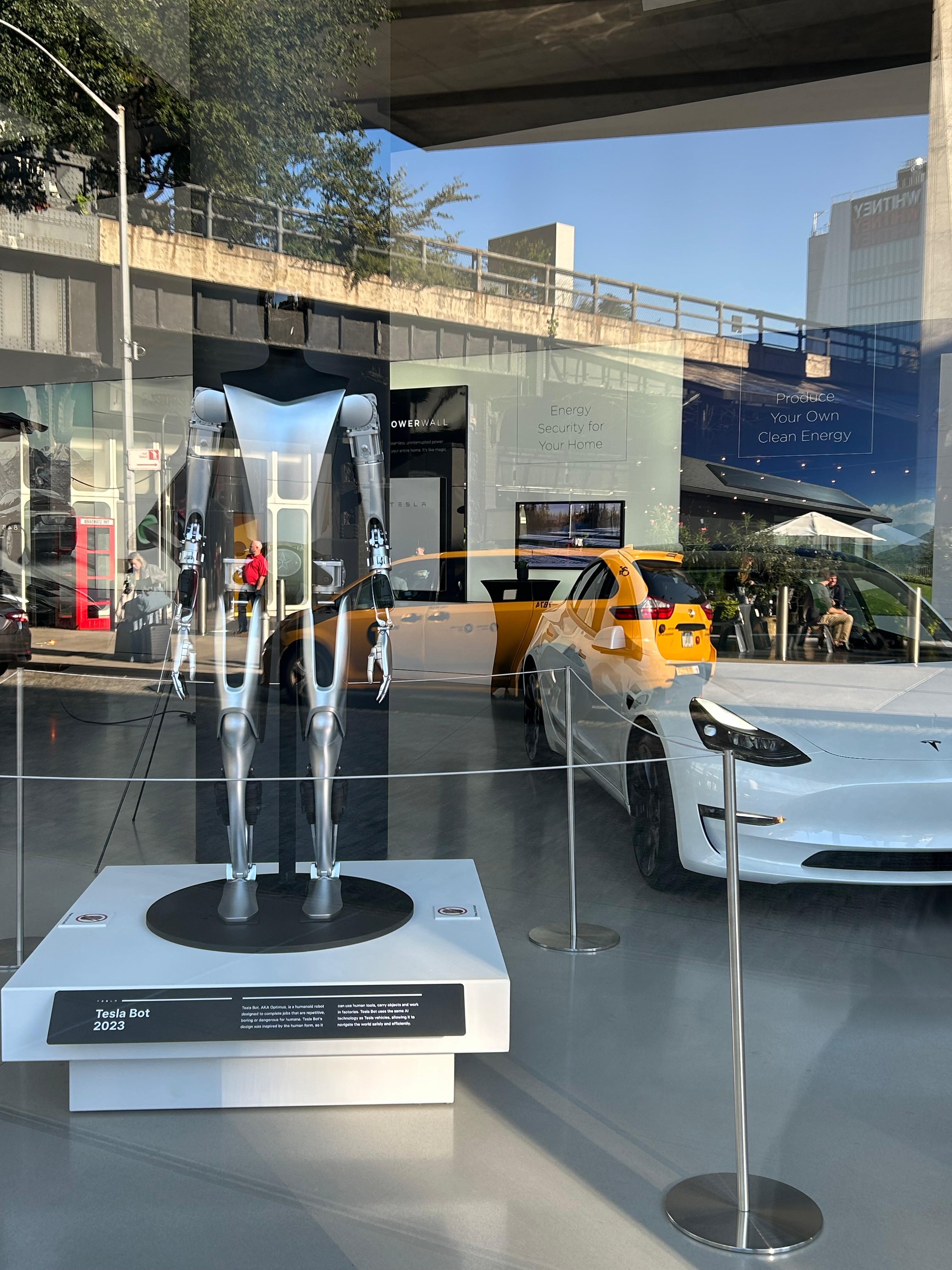 An Optimus humanoid robot on display at a Tesla store in the Meatpacking District in New York. (Image credit: Anuj Bhatia/The Indian Express)
Robots to invade homes
I may sound a bit futuristic, but this time I will take the side of Elon Musk. As the billionaire CEO has been saying for years, he envisions a world filled with humanoid robots. While that may not happen anytime soon, as mainstream adoption is still years away, there is growing interest among Silicon Valley companies and European startups in seriously considering humanoids as the next big thing.
This also ties into how China has made humanoid robots a strategic priority in its tech battle with the US, though that’s a discussion for another day. For now, early investments in humanoids are likely to begin with experiments aimed at bringing home robots to consumers. Think of what Amazon did with Astro (a screen on wheels powered by the company’s Alexa voice software) a few years ago.
Story continues below this ad
The idea is to build robots with advanced cameras and computer vision software that can navigate homes much like self-driving cars. We will likely start hearing from the world’s biggest tech companies and consumer appliance makers about how they plan to bring AI-infused home robots as early as CES 2026, which takes place in Las Vegas in early January.
Evidently, Apple is also interested in personal robotics, and is rumoured to be working on a tabletop AI companion described as an iPad on a movable robotic arm. It’s one space I am personally excited about, after seeing a humanoid robot in Shenzhen, China, last year.
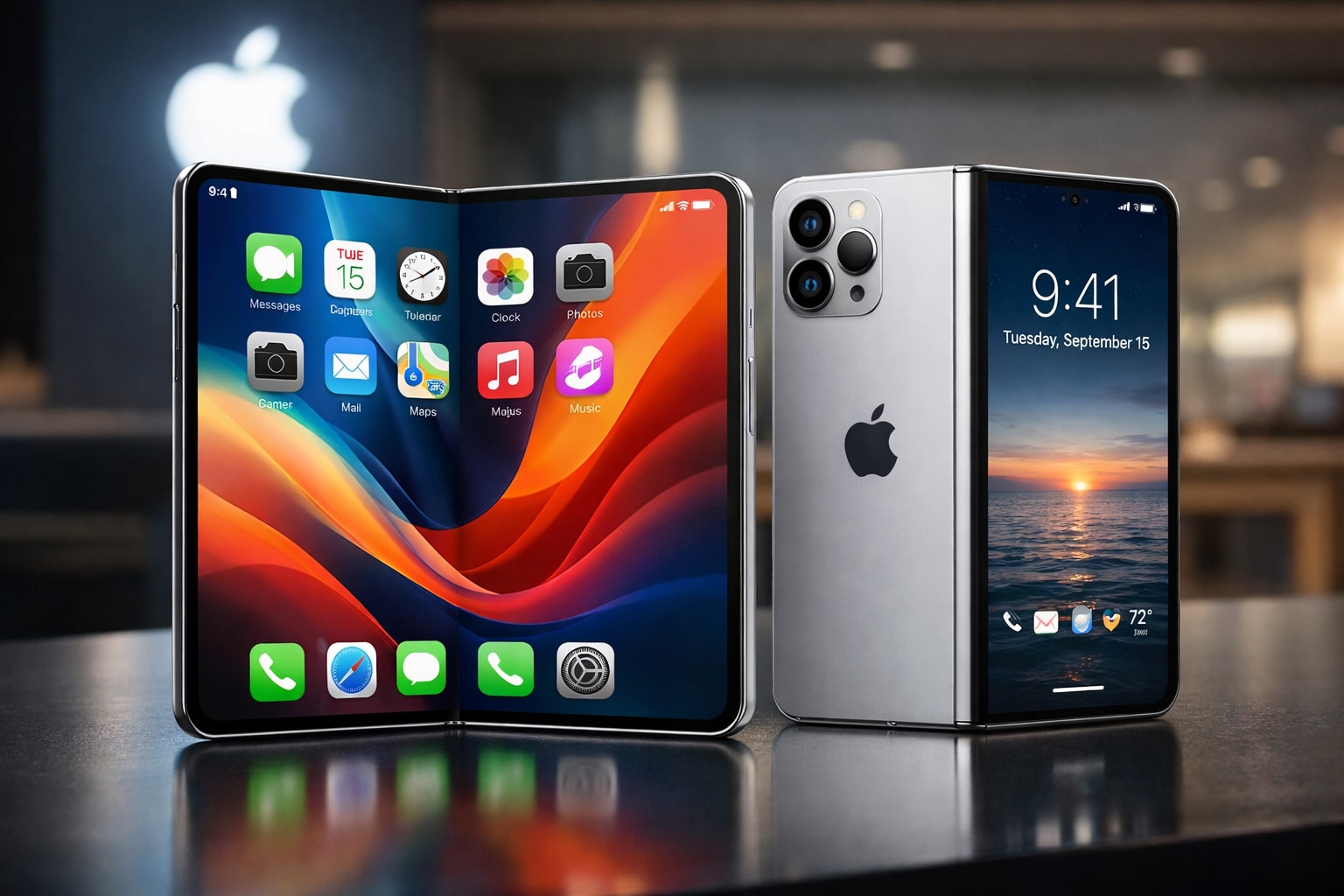 Apple has a real opportunity with the iPhone Fold, though questions remain about how it manages to differentiate it from the competition. (Image created by ChatGPT)
Foldables to get a second chance
Let’s get it straight: foldables are an interesting product category, but I hardly see them as being very different from current smartphones. This may not sit well with many consumers, especially those who have invested in expensive foldables — I myself use a Pixel 10 Pro Fold and a Galaxy Z Fold 7.
The main problem with foldables is the software, which, needless to say, holds them back and raises questions about whether the high price is justified. It’s definitely not the chunky, heavy build, an issue Samsung has largely solved or the price point, which Motorola has addressed more aggressively in recent years. Yes, the screen crease issue persists, and I hope it, too, gets resolved with the upcoming foldables.
Story continues below this ad
Personally, the user interface on foldables still underwhelms. I am pinning my hopes on Apple, which could finally solve the UI problem and improve how apps behave on a larger screen when it launches its first foldable this year – assuming the rumours turn out to be true.
One way to address the software issue on a foldable iPhone would be to borrow elements from both iOS and iPadOS. It would be great to see desktop-grade apps that aren’t available on the iPhone, proper full-window multitasking, and optimal external display support on the iPhone Fold. That would be a dream iPhone for me, and I would be ready to leave my iPhone Air for it.