admin
admin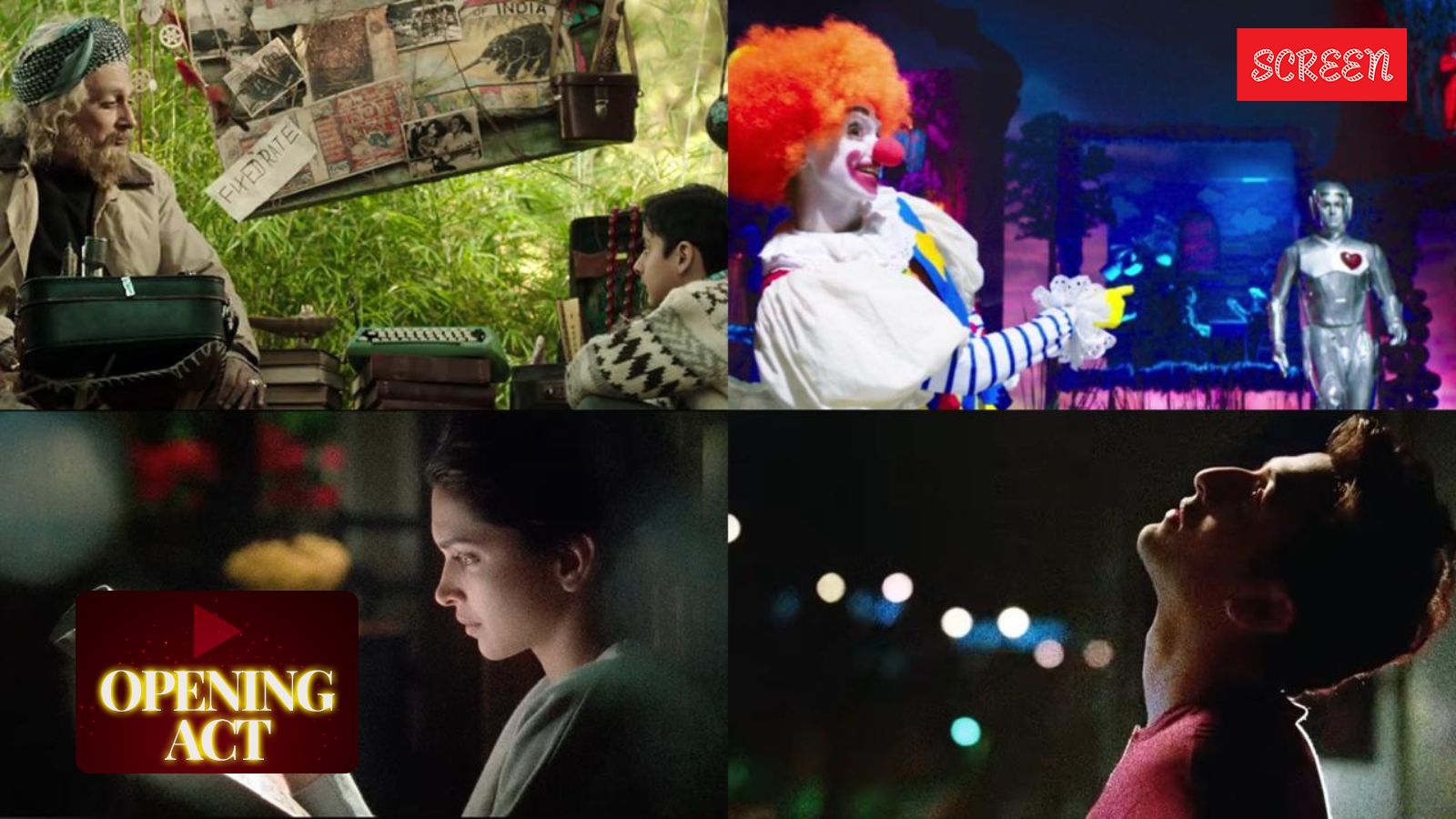
“Why always the same story?” The question trailed Imtiaz Ali like a shadow as he began working on his sixth film. His fifth with his creative backbone, editor Aarti Bajaj; his third with AR Rahman, whose music always gave his ideas its bloodstream; and his second with Ranbir Kapoor, the muse who mirrored his emotional voltage better than anyone else. The film was Tamashawhich inevitably, became the very thing he was accused of repeating. A man divided between instinct and intellect; a boyish soul who finds himself only by losing himself first, a character who discovers his voice at the precise point where love fractures and then, unexpectedly, reconstitutes. It was as simple as it was imperfect, as rich as it was messy. It was as Ali as a film could be: never neat, always contradictory, perpetually searching. A film that, by retelling the familiar arc for the umpteenth time, turned the criticism back on the world and asked, in complete defiance: “Why must the same story always feel like a crime?”
Story continues below this ad
Because, after all, aren’t all stories the same? This is the question he plants right in the glorious fifteen-minute opening of Tamasha. We see young Ved (Yash Sehgal) stealing a few notes from his parents to pay a fakir who trades in tales the way others trade in breath. He is an unreliable narrator, a wandering raconteur (Piyush Mishra), who drifts freely through myth and history: one day recounting Ram and Sita, the next wandering through Troy with Helen and Paris. His stories slide into one another, sometimes by accident, sometimes by design. When Ved objects, the fakir shrugs and says, “The story has to be told… just enjoy the story.” At another moment, he tosses out a litany of names, “Moses or Musa, Hindu or Indus, Jesus or Isa, Jamuna or Yamuna?”as if to show how thin the borders between stories really are. Ved spends hours listening to him and slowly the point settles in: it doesn’t matter how a tale is dressed or where it begins. Because, after all, they all circle the same set of human truths.

What also becomes clear is how deeply this early chaos of stories shapes Ved himself. He grows into a portrait assembled from clashing narratives. Myths, epics, romances. All tugging in different directions. Throughout the latter half of the film, Kapoor plays him as a composite of every tale he absorbed from the fakir: a man made of borrowed voices, contradictions, and half-remembered archetypes. Even his name carries this tension. Ved, whose mirror-opposite is Dev, a man split between two selves. He can be the dutiful, office-going Ved, drained of colour. And he can also slip, instinctively, into the loose charm of Dev Anand. The film introduces him as a lifeless robot onstage, running on a treadmill, (a blunt metaphor for the race of life), caught between dil and world. His heart appears opposite him in the form of the clown: a free, rule less spirit embodied with startling ease by Deepika Padukone. Together they form a pair, the Robot and the Clown, locked in their private duel.
Story continues below this ad
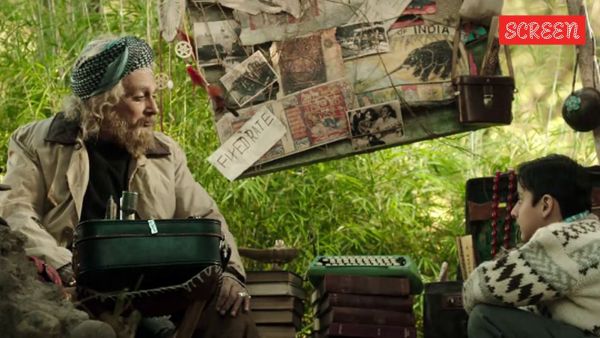 We see a young Ved, completely captivated by the tales spun by the eccentric Fakir Baba.
Also Read | In Dhadak 2’s opening, Shazia Iqbal rewrites the politics of love at first sight as she interrogates the mythology of Shah Rukh Khan
In this very opening shot, if you look closely at the stage behind them, the stories keep bleeding into each other: the Ramayana unfolding on one side, Romeo confronting Juliet on the other. The Robot and the Clown aren’t simply narrating their own tale; they’re carrying every story that has ever shaped them, folded seamlessly into their performance. Perhaps that is why the song that plays throughout the opening is called 'Chali Kahani'because aren’t stories just memories after a point? Perhaps that is why young Ved’s imagination runs without restraint. One moment he is in his Catholic school, watching a line of choir boys singing Joy to the World. The next, that same procession has transformed in his mind into Samyukta’s searching for Prithviraj with a varmalaall within the same church. His mind refuses boundaries: the mythical and the mundane collapse into one plane. In the school corridors he imagines Sohni and Mahiwal; in his thoughts he blends the birth of Krishna with the story of Musa. At one point he sees a pining Sita embroidering Ram’s name on a piece of cloth, and then suddenly the image shifts into Tara (Padukone) yearning for Ved, long before we officially meet her.
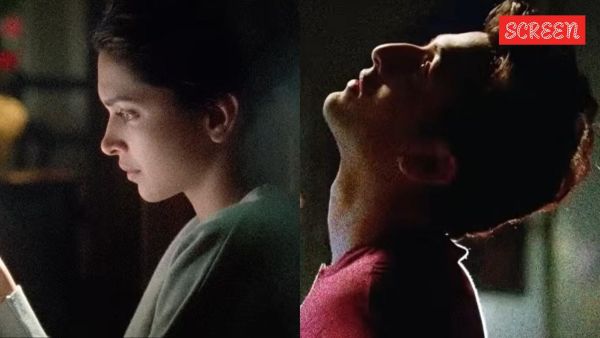 Before Ved and Tara even step into the story officially, the opening scene offers fleeting glimpses of the fate that awaits them.
Before we, the audience, know where this story is heading, and before he, as a child, has any inkling of his own future, we glimpse a vision of the man he will become, longing for the woman he has yet to meet. Without realising it, he is already composing his own epic, one that will reveal itself in ways he cannot yet fathom. Here, Bajaj and Ali aren’t simply teasing the destination; they’re posing a more intriguing question: not where will this story arrive, but how will it get there? As with all great cinema, the journey matters more than the destination. And as with all great cinema, it does not matter what the story is, or how many times it has been told; what matters is who is telling it.
Opening Act is a column where Anas Arif breaks down some of the greatest opening scenes in film and television.