admin
admin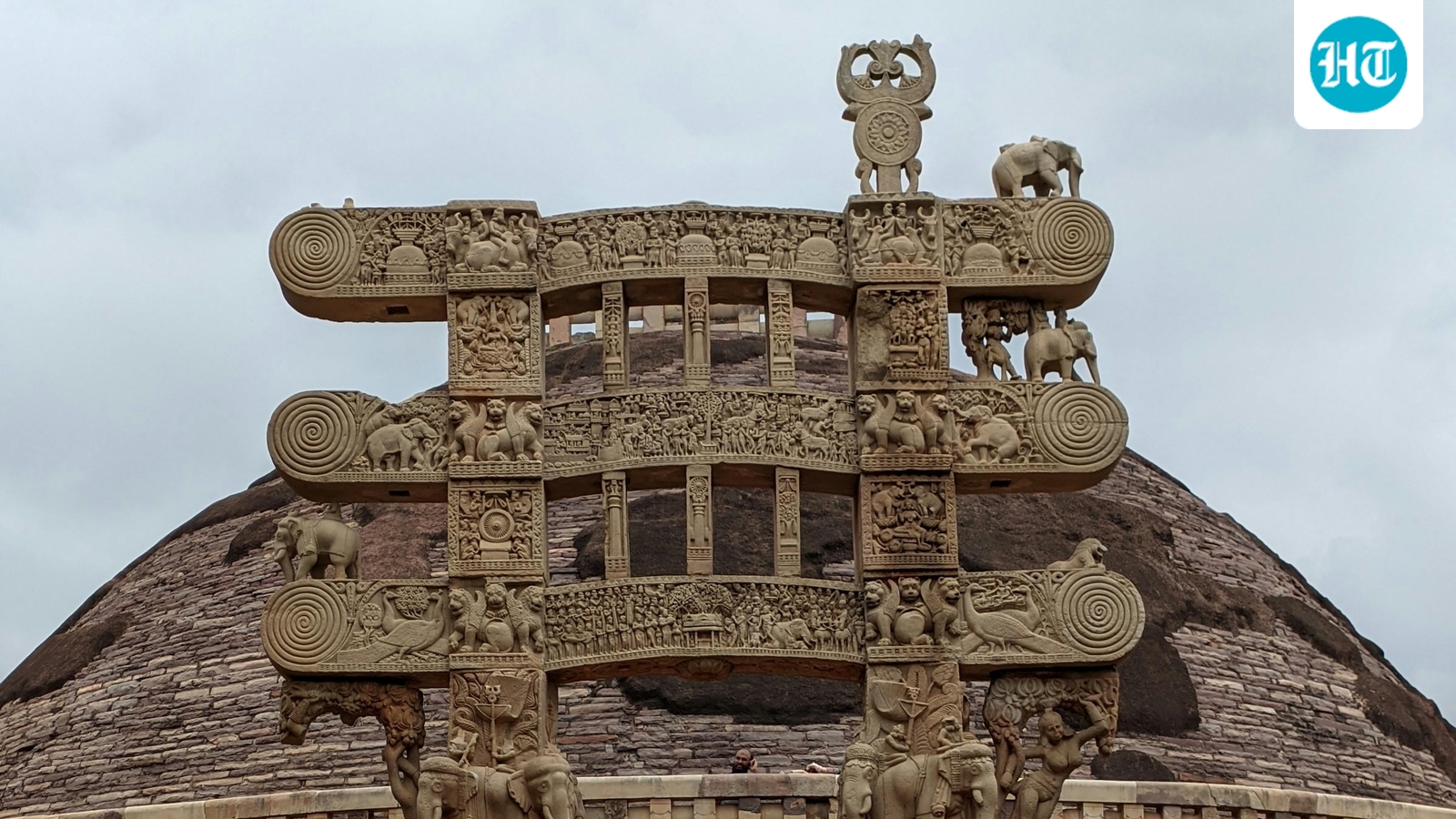
India is home to a civilization that is millennia old, and hence, it is dotted with wonderful monuments that stand as a testament to its undying culture. While invasions and wear and tear have taken a toll on many of these, there are still enough monuments in the country to remind people of its great heritage and the skill of the craftsmen.
Here is a look at the 11 oldest man-made monuments still standing in India.
11 oldest man-made structures in India
Bhirrana, Haryana
This little-known place houses the oldest available remains of a human settlement going back to even pre-Harappan years. While reduced to ruins, the outlines of this settlement are still visible and present a striking view into the very distant past of this country, as far back as 9000 years, as per FOAID India.
Dholavira, Gujarat
While Harappa and Mohenjo-Daro are no longer accessible to Indian travellers within the country’s boundaries, Dholavira is an equal, if not better, specimen of that period’s cities. Estimated to be around 4,500 years old, this site in Gujarat shows the advanced planning that went into cities of that period.
Lomas Rishi Cave, Bihar
This cave presents the oldest extant example of the rock-cut style of architecture, and it dates from the 3rd century BC. These caves were used by Ajivika monks and have a beautifully carved arch at their entrance, as per Outlook Traveller.
The Great Stupa of Sanchi, Madhya Pradesh
This ancient monument was erected in the Mauryan period and houses the remains of prominent Buddhist monks. Believed to have been created by the orders of Emperor Ashoka, this stupa is estimated to be around 2,300 years old.
Ajanta Caves, Maharashtra
These spectacular caves were carved between the 2nd century BC and the 6th century CE. It houses beautiful sculptures and frescoes dedicated to Buddhist themes. These caves have been carved into the side of a vertical cliff.
Udayagiri Caves, Madhya Pradesh
These caves are located near Sanchi but present a very different type of architecture. Inside one of these caves is the famous statue of Varaha with Goddess Earth, depicted as a young woman, sitting on its horns. These caves and the related monuments were created by Gupta rulers in the 4th-5th century.
Elephanta Caves, Maharashtra
Located on Elephanta Island, these feature breathtaking Shaivite sculptures. Belonging to the 5th-6th century CE, these have managed to retain their enchanting quality.
Mahabalipuram Temple, Tamil Nadu
One of the grandest and most opulent examples of Dravida architecture, the set of monuments at Mahabalipuram was created around the 8th century AD. They were carved from rock and created at the instance of Pallava rulers of the region.
Virupaksha Temple, Karnataka
This temple in Hampi dates back to the 7th century to some accounts, and is one of the oldest temples where religious services are still in operation. It is dedicated to Lord Shiva and might have undergone several refurbishments over the centuries.
Also Read: 5 international destinations Indians are choosing this winter: From mountains of Georgia to beaches of Vietnam
Rani ki Vav, Gujarat
One of the most unique sites in the world, this is a step well that has been richly decorated with beautiful carvings dedicated to various Hindu deities. It dates from the 11th century and managed to avoid damage due to being submerged under sand for centuries.
Dilwara Temples, Rajasthan
The unique temples in the Sirohi district of Rajasthan date from around the 11th century AD and are one of the finest examples of Jain-themed architecture in India. They were created by the Chalukya Dynasty and are dedicated to Jain Tirthankars.
Also Read: Explore superb coastal road trip routes in South India this December: East Coast Road, Gokarna to Mangaluru drive
FAQs
Which state of India hosts both the Elephanta Caves and the Ellora Caves?
Both Ellora and Elephanta Caves are located in the state of Maharashtra.
Which emperor is credited with the construction of the Sanchi Stupa?
Emperor Ashoka of the Mauryan Dynasty is considered the patron of the Sanchi Stupa.
What is the Dilwara set of temples dedicated to?
The Dilwara temples are dedicated to Jain tirthankars.