admin
admin
Workplace recruitment policies today are becoming more inclusive, prioritising skill and experience. But is the physical space ready to accommodate people who may work a little differently, such as neurodivergent individuals?
According to Harvard Healththe term ‘neurodivergent’ usually refers to autism spectrum disorder, as well as other neurological or developmental conditions, such as ADHD or learning disabilities. But a lack of proper workplace infrastructure can lead to the exclusion of neurodivergent people, which in turn affects their mental health, productivity and overall morale.
HT Lifestyle reached out to experts to understand why offices need to be more inclusive, along with some practical steps management can take to make the interiors more accommodating.
Why do offices need to be more inclusive?
Clinical psychologist Dr Deeksha Athwani from Fortis Hospital Mulund, Mumbai, clarified a very important misconception. She said, “Neurodivergent people do not have deficiencies; rather, they process information, sensory input, and social cues differently.”
To make neurodivergent employees feel included, she recommended three parameters that help lessen anxiety and cognitive overload while enabling them to perform at their best: flexible schedules, sensory-friendly environments, and clear communication.
The psychologist further explained how an inclusive workplace benefits employees in multiple ways. She said, “Stress levels drop, emotional control improves, and strengths like creativity, focus, and pattern recognition emerge when environments adjust to a variety of neurocognitive needs.” This means with an inclusive and accessible workplace design, everyone benefits, and no one is excluded, which subsequently increases employee productivity and supports overall well-being as well.
6 tips for making workplaces more inclusive
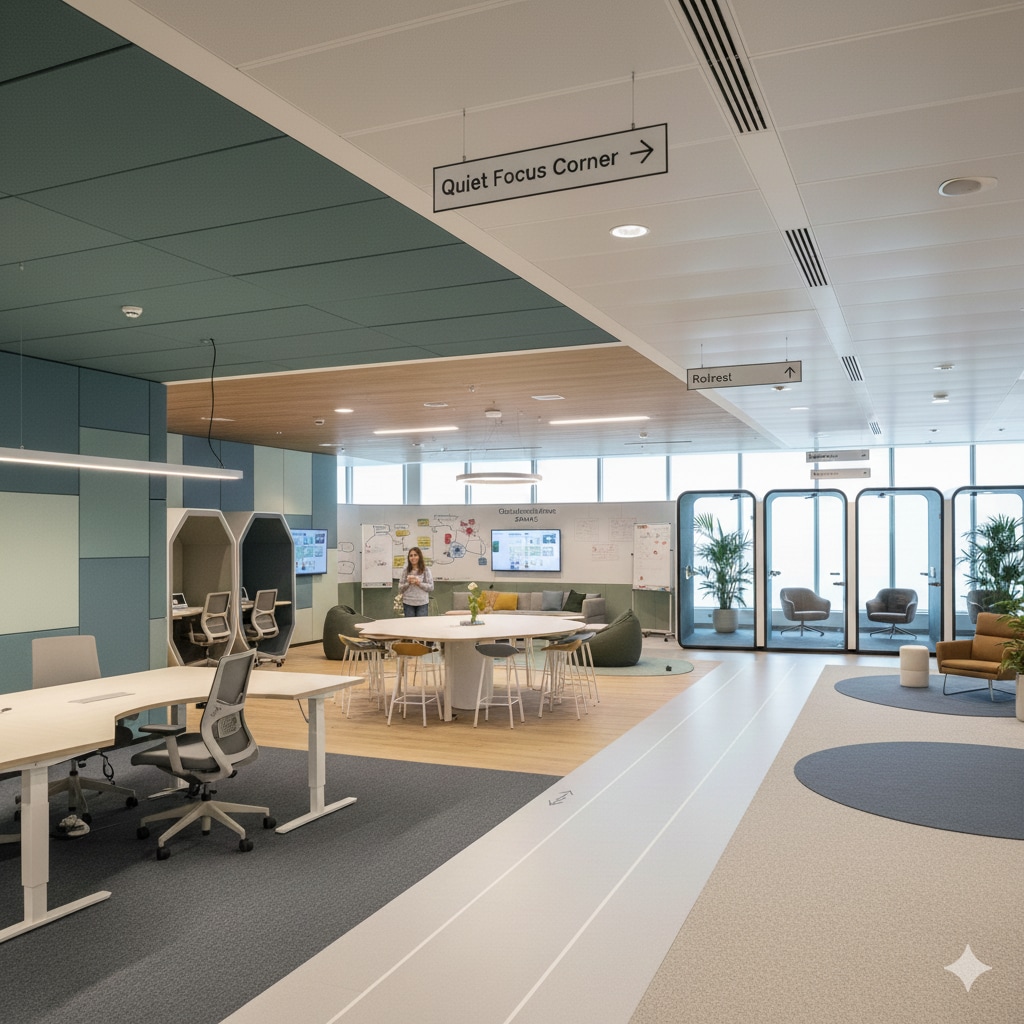
So it is crucial to understand that an inclusive workspace goes beyond the policies, but also how the interior itself is designed. Maanoj Tomar, founder of AFC Furniture Solution, brought in his insights to suggest practical strategies with us that management can utilise to make offices supportive for everyone, including neurodivergent employees:
1. Sensory sensitivity
- It is about reducing overstimulation from noise, bright lights, and visual clutter. The environment should feel gentle and steady, not overwhelming.
- Examples: Acoustic panels to soften noise, matte surfaces to avoid glare, calm colour palettes, soft partitions to reduce disturbance.
2. Flexible seating options
- Different bodies and nervous systems have different comfort needs; sitting still in one rigid posture for 8-9 hours is unrealistic.
- Let employees choose how they sit, move, and work rather than forcing their bodies to adapt to the furniture.
- Examples: height-adjustable desks, standing workstations, lounge seating, cocoon-like pods, and chairs that adjust to body movement.
3. Zoning for different work modes
- Not all work happens at the same energy level; some tasks need collaboration, others need deep focus.
- The space should support both social interaction and uninterrupted concentration, depending on what the task needs.
- Examples: dedicated quiet-focus corners, collaboration tables, brainstorming zones, and semi-private booths.
4. Clear spatial organisation
- A workspace should be easy to understand when you enter, where to go, where to sit, and where to step away.
- Reduce mental load so employees don’t feel lost, overwhelmed, or disoriented in the environment.
- Examples: clear pathways, simple layout flow, visual cues, signage that guides without cluttering.
5. Movement and stimulation support
- Some people focus better when they can move slightly, especially those with ADHD or sensory needs. Movement should be natural, supported, and not feel ‘disruptive’ or judged.
- Examples: chairs that allow micro-movement (gentle rocking/back support), sit-stand stools, stretch-friendly open areas.
6. Privacy and retreat spaces
- Everyone needs a moment to reset, especially in open offices where stimulation is constant. Give employees permission and space to recharge when they feel overwhelmed.
- Examples: acoustic pods, privacy chairs, phone booths, small quiet rooms for stepping away.
Manooj explained the challenges if workplace design is not inclusive, “For someone who is neurodivergent (for example, ADHD, autism, sensory processing sensitivity, or anxiety), an office can quickly become overwhelming, too much noise, bright lighting, stiff chairs, or constant movement around them. This can cause stress, physical discomfort, fatigue, and difficulty focusing.”
Note to readers: This article is for informational purposes only and not a substitute for professional medical advice. Always seek the advice of your doctor with any questions about a medical condition.