admin
admin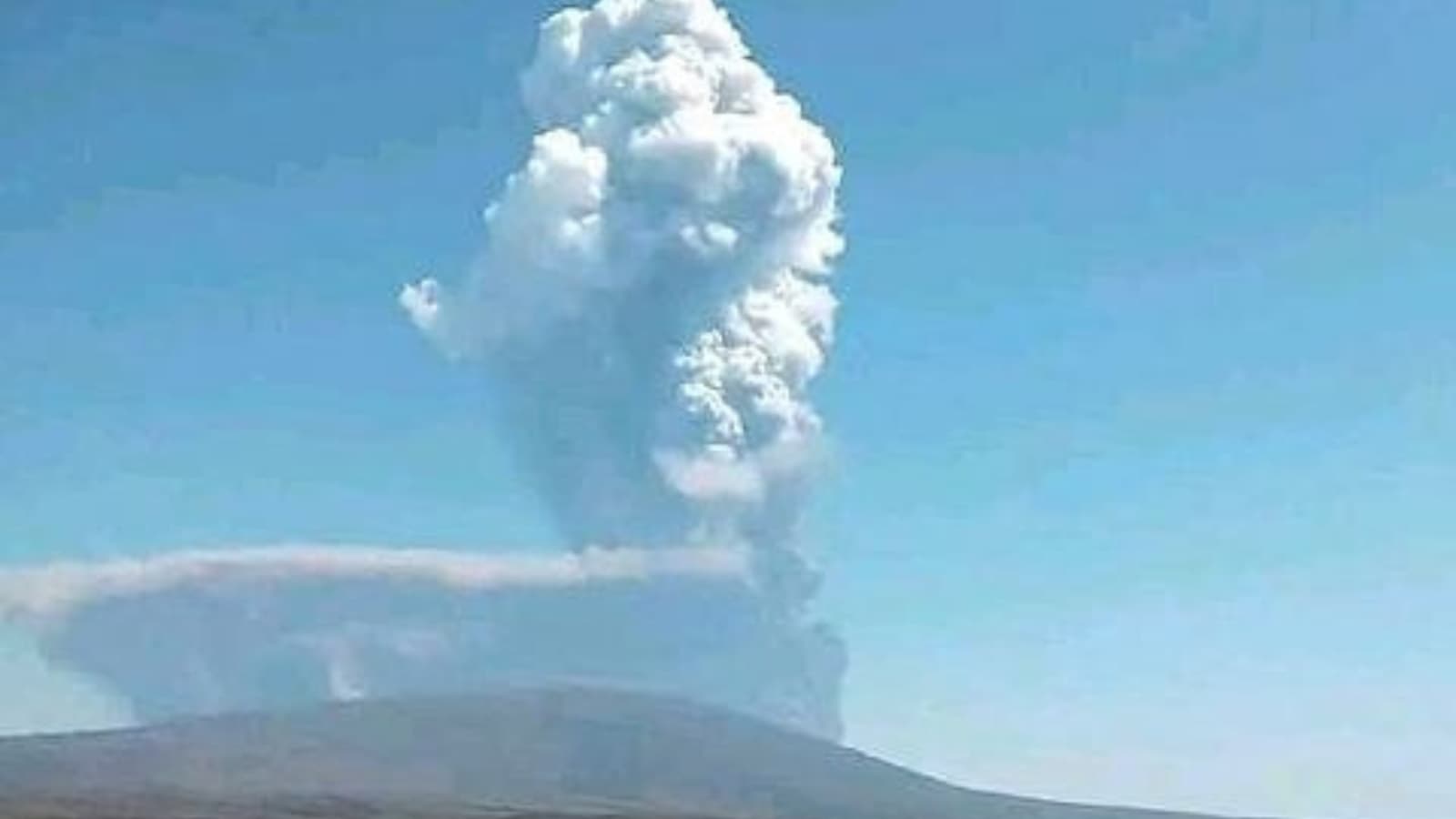
The Hayli Gubbi volcano that exploded on Sunday, spewed sulphur dioxide-rich ashes 14 km high into the atmosphere. The volcanic eruption led to the nearby village of Afdera getting completely covered in ashes. The village was evacuated in time. The plume, however, rose further and moved north-westwards towards the Himalayas, raising an alarm in North India over the already alarming AQI level.
The AQI in Delhi on Tuesday rose to 435 at 8 AM. With Delhiites already dealing with itchy throats and watery eyes due to the high air pollution, the news of the arrival of the volcanic ash plume from Ethiopia sparked further concerns. However, the India Meteorological Department (IMD) has said there is no need for any worry.
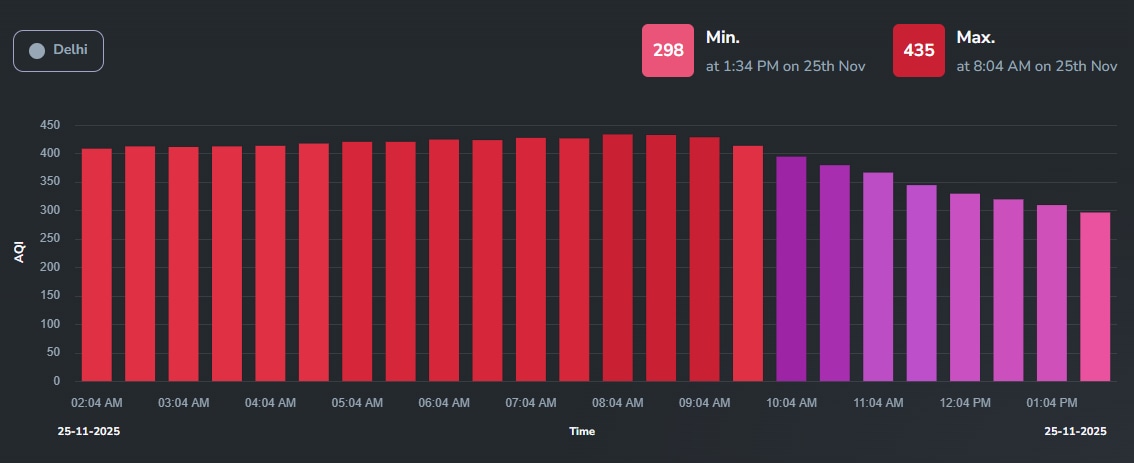 Delhi AQI levels on Tuesday (Source: aqi.in)
Director General of Meteorology at the India Meteorological Department Dr Mrutyunjay Mohapatra, said, “The volcanic eruption released ash slowly moved from Ethiopia towards Yemen and Oman, and then advanced towards the Arabian Sea. By yesterday (Monday) evening, it reached the Gujarat-Rajasthan region. Gradually, by midnight, it moved over Delhi and North India, and is now travelling over Eastern India.” He said the volcanic ash plume will be limited to the atmosphere’s upper troposphere and will have no bearing on the weather or air quality at the surface.
He said on Tuesday afternoon the volcanic ash plume was moving towards eastern India at speeds of 100-150 kmph. “We estimate the volcanic ash plume to move out of the entire Indian region into China by 7:30 PM-8 PM,” he added.
Why has Ethiopia’s volcanic ash plume led to flight disruptions in India?
Mohapatra said the ash cloud is limited to the upper troposphere of the atmosphere. The upper troposphere comprises the lowest layer of the atmosphere. It extends from 8 km to around 15 km (around 50,000 feet) into space.
VIDEO | Delhi: Ash clouds from volcanic activity in Ethiopia are drifting towards China and will move away from India by 7.30 pm.
Director General of Meteorology at the India Meteorological Department Dr Mrutyunjay Mohapatra, says, “In Ethiopia, the volcanic eruption released… pic.twitter.com/AObMqzSD59
— Press Trust of India (@PTI_News) November 25, 2025
For context, commercial passenger aircraft usually fly at heights between 25,000 feet to 42,000 feet. Thus, several flights from multiple flights in India were disrupted. The DGCA in a detailed advisory asked airlines to alert it of any significant ash plume that aircraft may spot during their flights to and from India.
Volcanic ash could get inside engines and clog components. This may lead to engines overheating and various parts burning out. Volcanic ash often contains silicates that burn at high temperatures. This may lead to fusing of various parts under the high heat of the engines.
Mohapatra said the volcanic ash plume will not have any impact on the weather and air quality at the surface level.
Story continues below this ad
Track the latest updates on Ethiopia’s Hayli Gubbi volcanic ash plume’s movement in India here.