admin
admin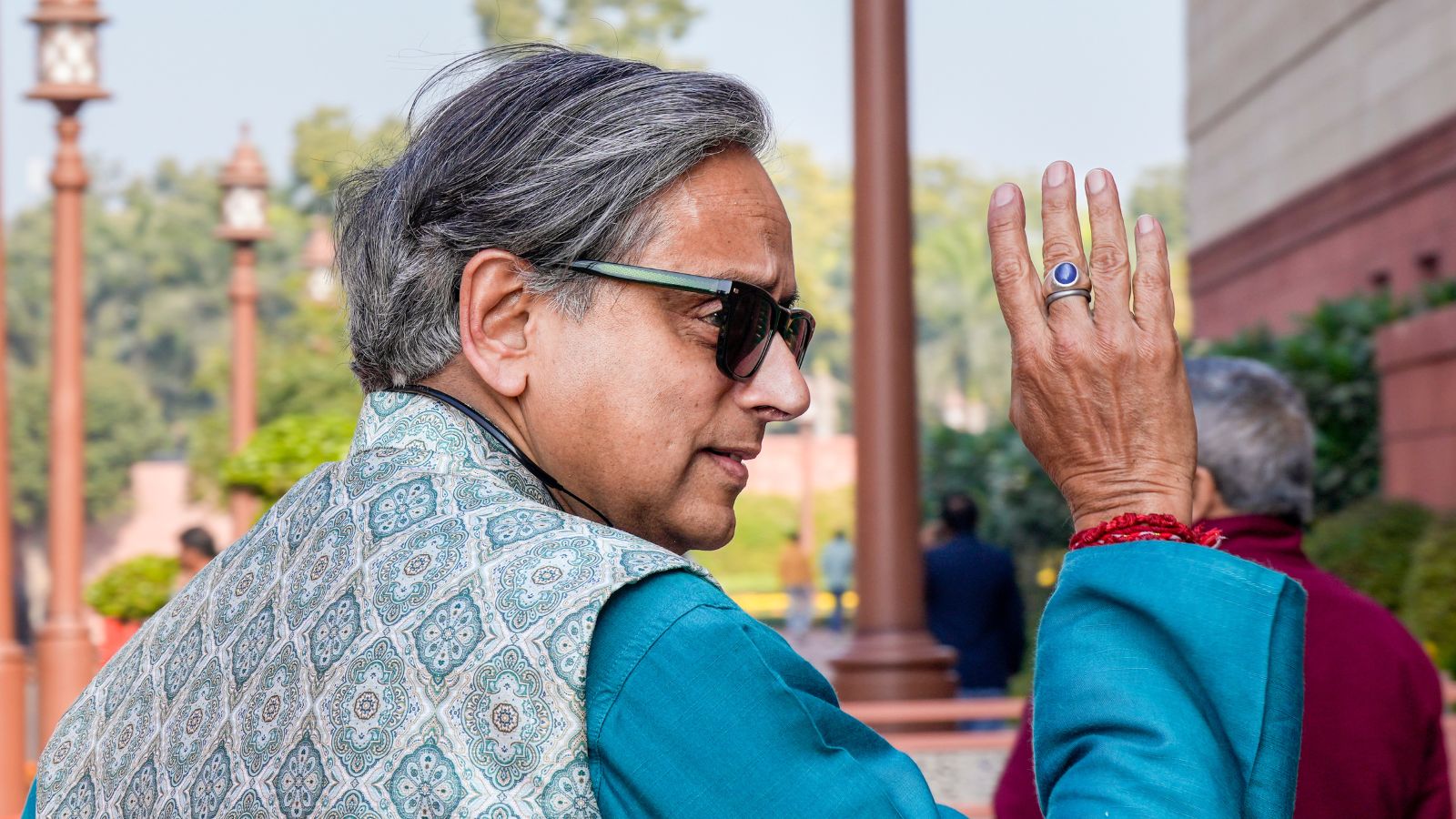
Calling it an “assault on the very spirit and philosophical foundation” of the guarenteed rural employment architecture, opposition leader Shashi Tharoor questioned the introduction of the proposed legislation, the VB–G RAM G Bill, that will replace the existing MNREGA. Tharoor said the Viksit Bharat – Guarantee for Rozgar and Ajeevika Mission (VB-G RAM G) Bill represents a “deeply regrettable and retrograde step for our nation and for our nation’s commitment to the welfare of its most vulnerable citizens”.
The Bill under fire from the Congress leader proposes a host of changes including raising the guarenteed employment days from 100 to 125, shifting 40 per cent of funding burden to states and a pause in work during the agriculure season.
Speaking in the Lok Sabha, the Thiruvananthapuram MP listed three reasons for his opposition to the proposed Bill.
1. Tharoor said the BJP-led Union government’s proposal to remove ‘Mahatma Gandhi’ from the name of the country’s rural employment scheme was not merely an administrative tweak, but an “assault on the very spirit and philosophical foundation of this crucial programme.”
“My first objection, as with others, is the ill-advised decision to remove the name of the Father of the Nation, for the reasons already stated, which I will not repeat,” he said. Underscoring how Mahatma Gandhi’s “vision of Ram Rajya was never a purely political project”, Tharoor said removing the name “is to strip the bill of its moral compass and historical legitimacy”.
I would like to oppose the introduction of the proposed bill, the VB–G RAM G Bill, which represents a deeply regrettable and retrograde step for our nation and for our nation’s commitment to the welfare of its most vulnerable citizens.
My first objection, as with others, is the… pic.twitter.com/oUKoGulN4L
— Congress (@INCIndia) December 16, 2025
Gandhi’s vision “was a socio-economic blueprint rooted in the empowerment of villages, and his unwavering faith in Gram Swaraj was central to that vision,” he said.
“The original Act, by bearing his name, acknowledged this profound connection—that true employment guarantee and upliftment must flow from the grassroots, embodying his principle of placing the last person first. To remove the name of Mahatma Gandhi is to strip the bill of its moral compass and historical legitimacy,” Tharoor said.
2. The second issue, according to Tharoor, who chairs the Standing Committee on External Affairs, was the proposed financial restructuring in the Bill. Under G RAM G, the central government has shifted 40 per cent of the financial burden to of the scheme to the states.
Story continues below this ad
This, Tharoor said, undermined the federal spirit of the original scheme.
 Congress MP Shashi Tharoor during the Winter session of Parliament. Tharoor said Mahatma Gandhi’s vision “was a socio-economic blueprint rooted in the empowerment of villages, and his unwavering faith in Gram Swaraj was central to that vision”. (PTI File Photo)
“The proposal to impose 40 per cent of the financial burden directly on state governments is not merely fiscally irresponsible; it is a measure that threatens to make the entire programme unviable. This sudden and massive shift in liability will inevitably make implementation impossible for poorer states,” he said. He said this shift will “lead to delays in wage payments, a reduction in the number of workdays, and ultimately the destruction of the scheme itself”.
“This is a clear violation of fiscal federalism, which is why I believe we lack the legislative competence to undertake such a change,” he added.
3. The third point of contention according to Tharoor was that the Bill made the scheme contingent upon executive notification. This allowed the Union government to decide when and where it will operate. “This fundamentally alters the very nature of the programme,” he said.