admin
admin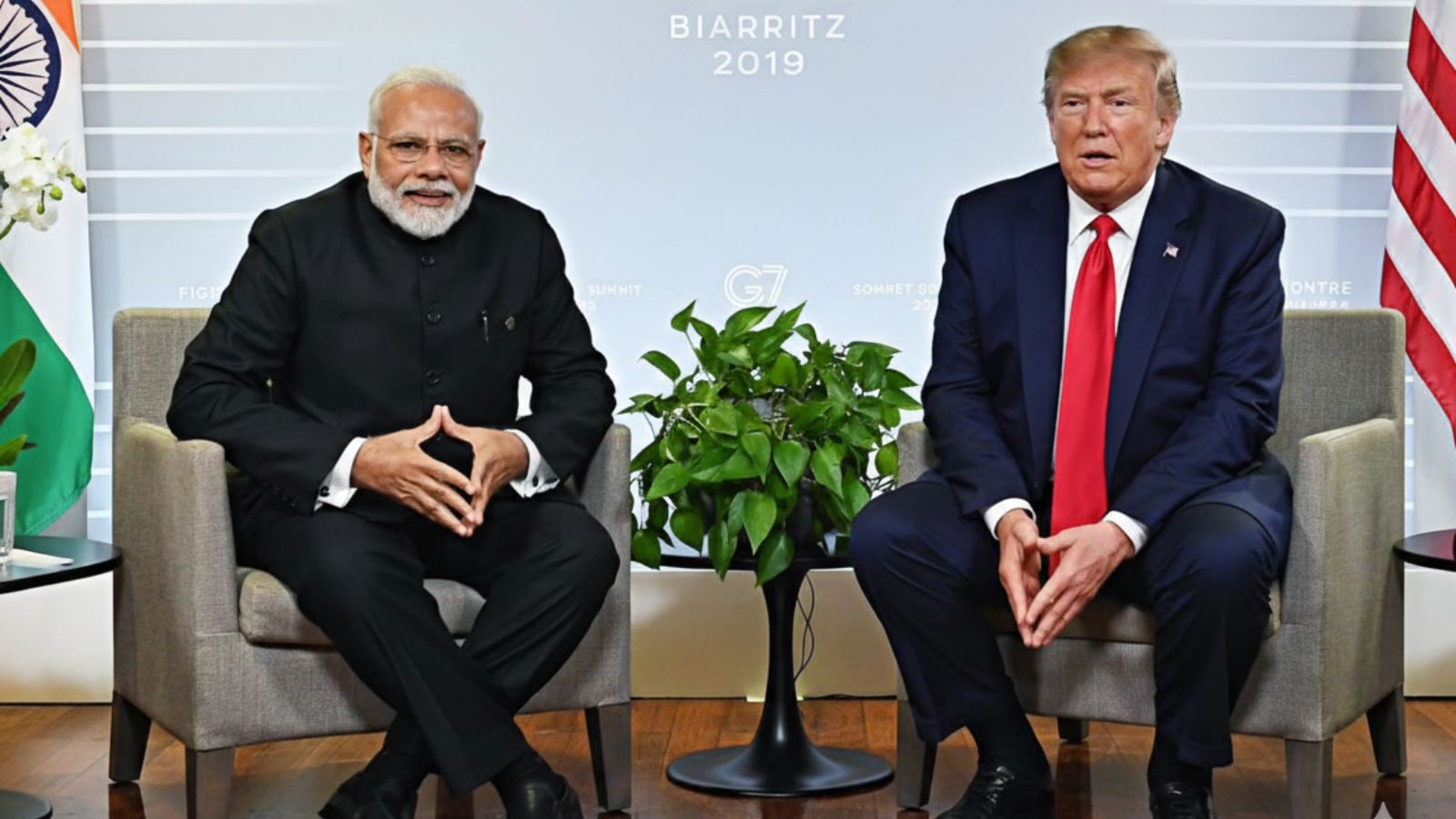
The relationship between India and the United States is a defining dynamic of the 21st century and is witnessing major flashpoints due to tariffs, immigration and fast-changing geopolitical engagement. The Indian Express‘ Flora Swain spoke to Dhruva Jaishankar (Executive Director of the Observer Research Foundation America) about his testimony before the US House of Foreign Affairs Committee on ‘U.S.–India Strategic Partnership: Securing a Free and Open Indo-Pacific’ on December 10. Edited excerpts:
You testified before the US House Foreign Affairs Committee on the evolving Indo-US ties. Is there a risk that the Trump administration could push India away?
As I said in my testimony, I think there is a risk of that happening. In some ways, we’ve had the biggest test of the US-India relationship in 2025 since 1998. But, at the same time, there is a possibility of reclaiming some of that. President Trump and Prime Minister Modi spoke on the phone on December 12 and both described it as a warm engagement. So it would seem to have been quite a productive discussion. I think there is some willingness on both sides to gain back some of that ground. So it’s still possible to turn things around. It will.
It has obviously affected public opinion in India, which I think had been over time growing more positive and more trust has been gained. And now there is, I think, a very real concern that the United States under President Trump or under a future administration could use leverage in various ways. One thing I think worth noting is that despite all the political difficulties — which are real — this has actually been an extraordinarily productive year in a few areas in the India-US relationship.
First is on defence. We’ve had normal military exercises involving all three services and the US Space Force. We’ve had a new 10-year defence framework agreed upon. We’ve had some new defence sales approved. It’s been a landmark year for India-US space cooperation… AI sector has seen quite significant investments, including by Google in Vishakhapatnam and in India, a $15 billion investment in an AI data centre. There’s a major LPG deal for 10 per cent of India’s LPG requirements next year. So all of that has strangely enough continued, despite these high-level political tensions.
What distinguishes Trump’s second term from his first?
The biggest one, and this is not just with respect to India, the biggest one is this is really much more Trump’s personality at play here and defining the US policy (and) US posture. He and his party have a slim but a majority in both houses of Congress, so he can pass legislation the way that he could not have in his first term. His advisers around him are people who are willing to go along with his personal views on a lot of matters. So in some ways, this is very much an undiluted Trump world-view that we are seeing playing out. And this is actually very starkly reflected in the US national security strategy that was just released. The contrast with the December 2017 national US National Security strategy from the first Trump administration is quite distinct.
What are the most urgent flashpoints in the relationship?
The biggest one is I think we need a solution to the tariff issue. 50 per cent tariffs on India are unsustainable. It hurts investors, consumers, and manufacturers in both countries. Even at 25 per cent, it would put India at a comparative advantage relative to other manufacturers. But 50 per cent at this point in time seems like an act of political hostility. And so the faster that (tariff) can come down, the better it would be for those countries.
Story continues below this ad
Second, is this US-renewed engagement with the Pakistan military. India deems the Pakistan military, the army and especially the ISI responsible for fostering terrorism in the region at the expense of Indian lives. But US military assistance to Pakistan has come down quite significantly. I think that’s not often well-known and well-appreciated. In the last five years, it has been less than 1 per cent of what the US provided in the first 10 years of this century. So there has been a big decrease, in fact more than 80 per cent of Pakistan’s arms imports now are coming from China. So there has been a big switch. But I think that the reengagement with the Pakistan military at the highest levels is complicating US-India engagement.
The third factor that the US makes a bigger deal of is India’s relations with Russia. We talked about the trade and tariff issue, but that is I think one-third of the issue and India is continuing to say explain the context of its own engagements with Russia. And it is a strategic angle to it, there is a defence and security angle to it, and there’s a commodity and energy angle to it.
How many alarm bells rang in Washington when President Vladimir Putin visited New Delhi?
Actually, not as much as you might think. A little bit. One of the members of Congress mentioned that it caused some heartburn, I think was the word he used. But not as much as you would expect. And I think it’s for a few reasons. First is Putin already made a visit to the US to Alaska to meet with President Trump.
Story continues below this ad
Second, I think there’s also a growing, not completely universal, but growing understanding, in the US Congress on the strength and history of the India-Russia relationship. So it’s not a surprise. I think there were no major defence deals announced. A labour mobility agreement signed between India and Russia, but there wasn’t a major new defence deal or nuclear space or strategic technology. (What) President Putin received in India didn’t really substantively deviate or change from what had been expected in the India-Russia relationship.
Why does it appear that the United States is punishing India over its Russia ties?
So India slightly got caught in (what was) a little bit outside of India’s control initially, which was President Trump had expected that he could broker. He thought he had got Ukraine and many of the European countries on board on the outlines of a ceasefire agreement. But to his surprise, this summer he faced a lot more obstinance. He wanted to create leverage with Russia. But the United States does not possess economic leverage because in some ways the US-Russia economic relationship is very weak-to-nonexistent.
So they decided to focus on Russian energy exports because the Russian economy is so dependent on its three largest exporters: China, India and the European Union. They did not want to add extra sanctions on Europe, particularly European countries that are continuing to import energy, mostly gas, from Russia or on China. In fact, Secretary of State Marco Rubio said quite publicly and this got some attention in India. Doing that to China would have negative economic consequences.
So in some ways, India was a bit unfairly singled out in August for additional tariffs that came into force in September. So there was a realisation after a few months of this that India was not going to budge; it was continuing to import. It matters a lot for India’s energy security to continue that import of Russian oil and it also wasn’t making much of a difference in President Putin and Russia’s calculations. So I think, there was a realisation that this was not a particularly useful strategy.
Story continues below this ad
How does India view the H-1B visa issue?
India considers immigration to be a sovereign issue. India does not believe other countries should have a say in its own immigration policy.
Similarly, the Indian government doesn’t have a say when other countries decide their own immigration policy. Where the H-1B announcement came in became an issue was a few areas. One, the nature of the announcement was sudden and the vagaries around it risked initially in the first day or two separating families. There was some miscommunication around that and people on H-1B’s who were outside the country could not travel in without paying a very high fee.
On that issue, the Indian government weighed in. Other issues are really about Indian businesses. So the Indian government says this is between Indian businesses and the US government; this is not our issue.
But then there’s a third factor, which is the truth, that a hostile immigration environment for workers inhibits students. The Indian view is that that’s actually a loss to the US. We’ve seen this year alone a bit of a drop in applications for the next year to US universities. And again, Indian students are now looking elsewhere, to Germany, to Canada, to Australia, to elsewhere. So I think that that’s where the H-1B issue comes in. But ultimately, this is, you know, the way the US, the US Immigration architecture is ultimately a domestic and sovereign issue for the US to deal with.