admin
admin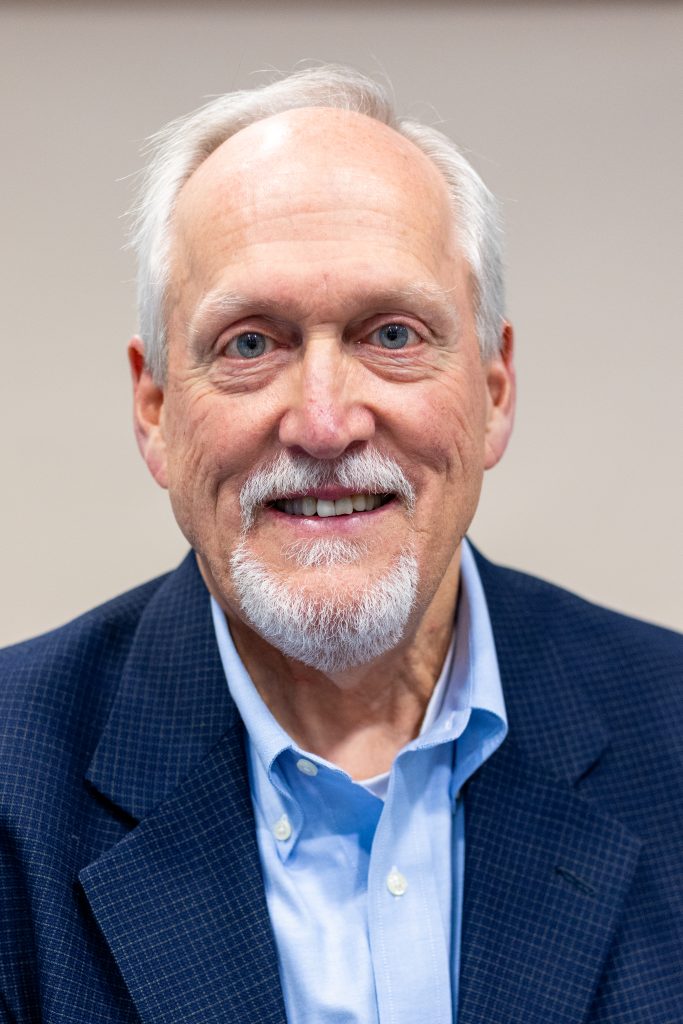
By GEORGE BEAUREGARD
How A.I. could have personalized my 2005 cancer journey
I don’t think I’m in the minority of Baby Boomer physicians when it comes to my curiosity and ambivalence about the progressing application of A.I. in medicine. But that curiosity isn’t just prospective, it’s retrospective too. In 2005, I became an outlier who perhaps needed something other than the standard of care for a disease.
During the fall of 2005, I first saw a single drop of blood hit the toilet water while I was urinating in my bathroom. After hitting the water, the rose-colored bead slowly sank, twisting and contorting, dissipating like a puff of smoke. The evidence was fleeting—gone in seconds. If I were a spectator rather than the source, I might have admired its visual artistry. There was no associated pain.
A single thought ran through my mind: Did I just pee blood? I thought I had perhaps imagined it.
I was 49 years old and didn’t have what were considered risk factors for kidney or bladder cancer: smoking, obesity, advanced age, high blood pressure, or exposures to cadmium, trichloroethylene, or herbicides. But I was adopted and lacked any knowledge whatsoever about my family history. Did I have a grim genealogy? What was perhaps significant, however, was that both of my adoptive parents had developed different types of urogenital cancer. That led me to speculate that environmental factors related to materials in our house and/or the land it sat on or around it had perhaps played a role.
I tried to dismiss any concerns, but the adage “painless hematuria is cancer until proven otherwise” ran through my mind in chyron-like fashion.
The episodes continued and worsened, prompting an ultrasound, the report of which read: “…a soft tissue density is seen in the base of the bladder toward the right. While this could represent thrombus, I cannot rule out a primary mucosal lesion. The lesion measures approximately 4 X 5 cm in diameter.”
I consulted a urologist colleague, who performed a cystoscopy. His comment about what he saw: “As you know, you have a mass in your bladder. I got a very good view of it. It’s pretty angry-looking, so I suspect it’s not benign. I tried to remove as much as I could. It would’ve been pretty risky to scrape deeper and risk puncturing your bladder. I know I didn’t get all of it.” A TURBT soon followed. The pathology showed a high-grade urothelial carcinoma extensively invading the lamina propria and muscularis propria. There was multifocal lymphovascular invasion, so I probably had a more advanced subgroup than the localized SEER stage.
At that time, the relative five-year survival rate for stage II muscle-invasive bladder cancer was about 45 percent.
Overwhelmingly, bladder cancer is an age-related malignancy. So, there I was, 49 years old, with a cancer whose median age of incidence—septuagenarians— was much older than mine. A WTF moment.
One that started me thinking about how much time I had left.
So, I had cancer, but in some ways felt cautiously optimistic. I had access to Boston-based academic centers and specialist colleagues who were willing to see me quickly, and good insurance.
But getting the diagnosis was only the beginning. I saw three expert urologists, each of whom recommended a radical cystectomy, small bowel resection, and construction of an orthotopic ileal neobladder. Convergence. Certainty for me.
In the mid-2000s, roughly five hundred thousand new research publications were indexed on PubMed. Back then, oncologists would typically start their research on a complex case with the NCCN/ASCO Guidelines (synthesized evidence), check the supporting RCTs (gold standard), meta-analyses, and possibly consult ClinicalTrials.gov for new or ongoing studies before making a treatment recommendation.
I also saw three expert medical oncologists from different renowned academic medical centers. A memorable comment from one of them was: “The wolf is already out of the cage,” meaning that the likelihood of extensive microscopic disease beyond the bladder was high.
Each of them recommended what was known and available at the time: a different “one-size fits seventy-year-olds” chemotherapy regimen, in terms of the types and numbers of agents used (doublet, triplet, quartet) and the timing of their administration relative to the surgery (neoadjuvant, adjuvant, or half and half). Conflicting opinions. Divergence. Uncertainty for me.
Lacking firm evidence about which regimen conferred a longer survival benefit left me with the equivalent of what felt like a dartboard toss. I wondered whether my choice would leave me underwater but able to surface eventually, as opposed to drowning. My decision-making process ended up being chiefly driven by intuition. I told myself, make the choice, and don’t look back.
In 2005, the benefit of adding trastuzamab (Herceptin) in treating HER-2 positive breast cancer had already been established. The oncologist I chose had a conversation with a colleague at the University of Michigan, an investigator focused on HER2 and bladder cancer. My cancer cells’ FISH data demonstrated a subclone of HER2 amplified cells; the percentage was uncertain, but low. After a discussion about the harm-benefit ratio of adding Herceptin to my regimen, I agreed. For me, that decision wasn’t to satisfy an academic curiosity, but a survival advantage one.
So, here I am, and, for the most part, a grateful (and I think lucky) 20-year survivor.
But how things in oncology have changed since then, as cancer care is progressively shifting from the old generic nuclear bomb approach to a stealth bomber one.
In today’s oncologists’ black bag, new and enhanced tools are at their disposal. Enhancements in NGS, ctDNA and cfDNA assays, CAR-T cell therapy, qPCR and RT-PCR, spatial transcriptomics, epigenetic profiling technologies, mass spectrometry-based proteomics, epigenetic profiling technologies, and more. The advancing frontier of medicine.
While having many more sophisticated tools is nice, if the diagnostician or repair person doesn’t know exactly which one will work the best for a single person’s unique mixture of cancer characteristics, they’re back to scrambling through the medical literature, remembering what worked (or sort-of worked) in other “like” patients, pattern recognition, guidelines, and intuition.
In the pursuit of precision medicine, a powerful ally—A.I.—is accelerating from the sidecar to the prime mover, driven by large language models that can gather, absorb, and collate heretofore unimaginable amounts of different, clinically meaningful data points, and synthesize them, predict and steer treatment options away from unseen and unanticipated future blind alleys and rabbit holes, and tailor treatment recommendations for an individual patient. And make course corrections as needed along the way. Interpreting the ciphers of medicine. At warp speed.
Fine scalpels, not blunt instruments, guided by iterative learning and adaptation.
While I’m thankful to still be here, I’ve wondered what a data-driven personalization platform would have recommended for my anomalous N-of-1 situation back then.
I’ll never know, but my optimism and hope for more gains in the future effectiveness of cancer care customized to individuals is growing. While it’ll never be perfect, it’ll likely mean that better patient outcomes will be realized.
One important thing remains: getting upstream of detecting meaningful cancer earlier at lower stages. Hope lives there, too.
George Beauregard, DO is an Internal Medicine physician & the author of Reservations for Nine: A Doctor’s Family Confronts Cancer. This came from his Substack