admin
admin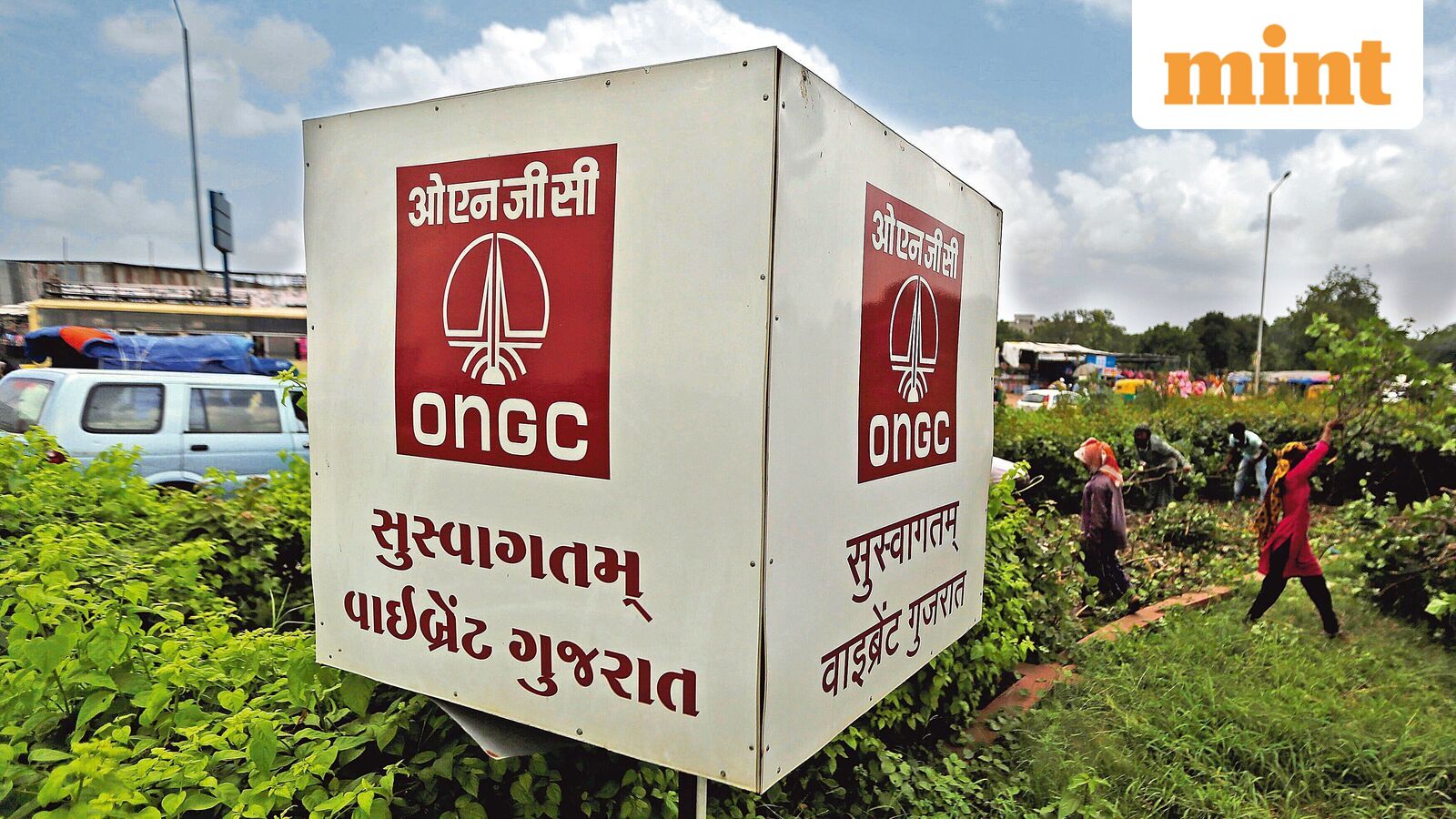
US-Iran war: While most oil and energy stocks took a beating amid Middle East tensions, ONGC’s share price showed resilience amid the sell-off. In one month, ONGC shares have shed around 3.50%, whereas the oil PSU major, IOC, has crashed by over 17%. Shares of Hindustan Petroleum Corporation Ltd (HPCL) and Bharat Petroleum Corporation Ltd (BPCL) crashed over 22% in one month, whereas GAIL India shares corrected more than 14% in one month.
According to Indian stock market experts, the US-Iran war and disruptions in the Strait of Hormuz have driven Brent Crude oil prices above $100 per barrel. As India meets nearly 85% of its oil demand through imports, imported inflation is expected to put margin pressure on oil PSUs. The falling Indian rupee is expected to do further damage to oil PSUs in India. Experts believe that strong fundamentals and ONGC’s integrated upstream model position it as the “lone performer” in a gloomy PSU landscape amid the US-Iran war.
Resilience in the ONGC share price
Highlighting the resilience shown by the ONGC shares during the US-Iran war, Seema Srivastava, Senior Research Analyst at SMC Global Securities, said that ONGC has emerged as a relative outperformer in India’s oil & gas sector amid the US–Iran war and global energy volatility, supported by strong Q3FY26 financials. The oil PSU reported net profit of ₹11,946 crore, up over 22% YoY, with revenues at ₹1.67 trillion, reflecting resilience despite a 15% drop in crude realisations. Crude output rose marginally to 4.59 MMT, while gas production remained stable, and a record dividend payout reinforced investor confidence.
“The geopolitical backdrop of war-driven crude upsurge and global gas shortages plays to ONGC’s strengths as an upstream producer, enabling it to capture higher realisations unlike downstream PSUs that face margin compression due to regulated pricing. While IOC, BPCL, and HPCL struggle with subsidy burdens and volatile refining margins, ONGC’s integrated upstream model positions it as the “lone performer” in a gloomy PSU landscape,” Seema Srivastava of SMC Global Securities said.
On triggers that enabled ONGC shares to stand against the US-Iran war-induced sell-off, Nitant Darekar, Research Analyst at Bonanza, said, “As an upstream producer, higher crude realisations flow directly to its topline, making it one of the few PSUs with a genuine earnings tailwind right now. The key risk, however, is policy — a government reinstatement of a windfall tax could meaningfully cap upside. ONGC remains a compelling buy on dips, but investors should watch New Delhi as closely as they watch crude.”
ONGC share price: Should you buy?
Whether one should buy ONGC shares, Seema Srivastava of SMC Global Securitiessaid that strategic projects such as KG-DWN-98/2 are expected to further lift production, enhancing its ability to capitalise on elevated energy prices.
“Risks remain from prolonged conflict and domestic price controls, but ONGC’s steady operations, strong dividend policy, and upstream leverage make it a rare bright spot in India’s energy sector, benefiting directly from crude upsurge and gas scarcity, the SMC Global Securities expert concluded.
ONGC share price: Technical outlook
Speaking on the technical outlook of the ONGC share price, Ganesh Dongre, Senior Manager — Technical Research at Anand Rathi, said that the ONGC share price is currently exhibiting the most promising technical configuration. On the Daily chart, ONGC is forming a bullish flag pattern, which typically signals strong upward momentum. The stock has also been consistently sustaining above the Fibonacci retracement level from its March low, which lies at ₹258, now acting as a key support zone.
“ONGC share is currently trading around ₹269, offering an attractive risk-reward ratio. A stop-loss can be comfortably placed at ₹255, while the medium-term upside potential lies between ₹276 and ₹290. This makes ONGC shares a compelling candidate for technically driven investors seeking bullish setups,” said Ganesh Dongre of Anand Rathi.
Disclaimer: This story is for educational purposes only. The views and recommendations above are those of individual analysts or broking companies, not Mint. We advise investors to check with certified experts before making any investment decisions.