admin
admin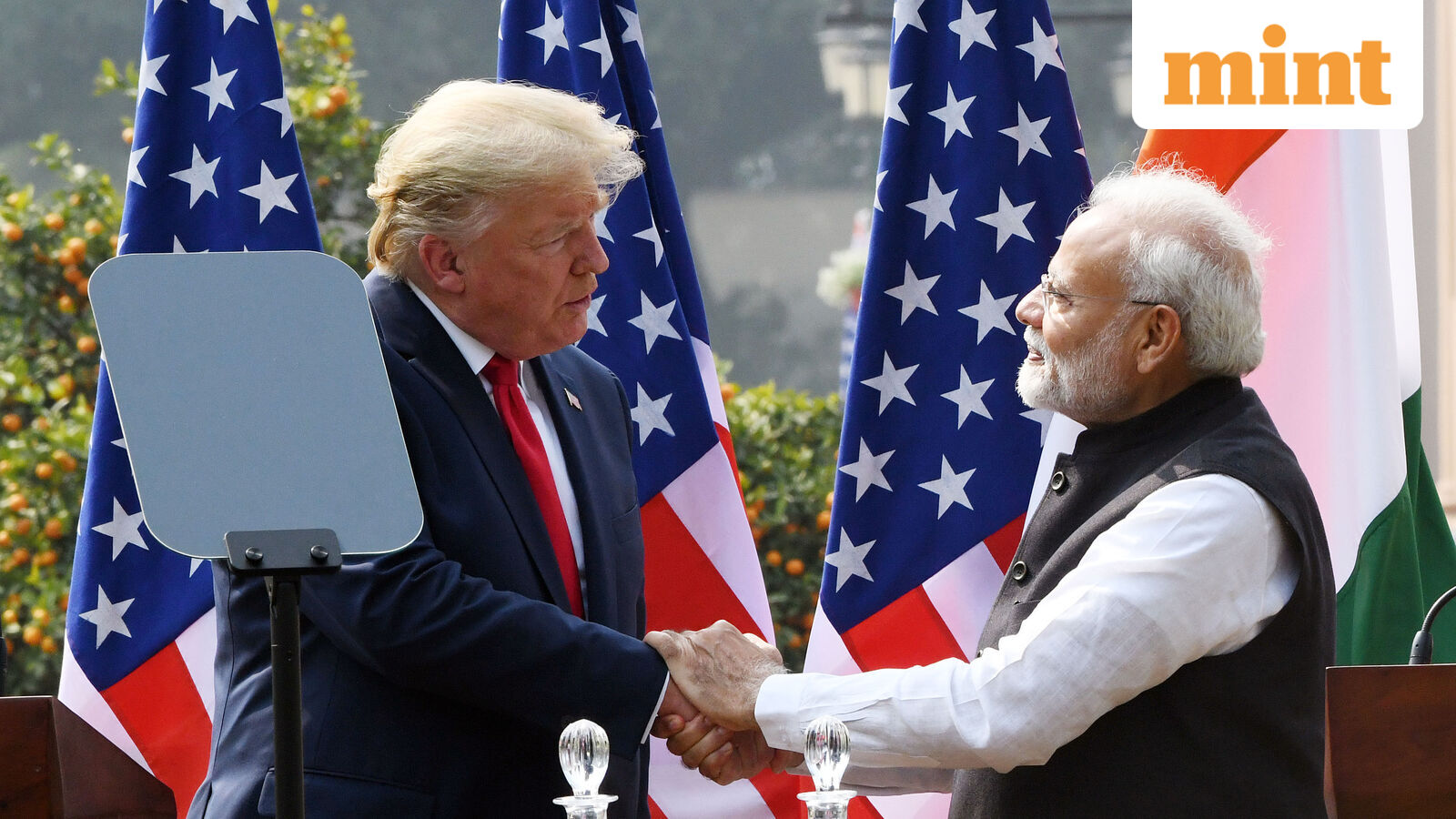
A long-awaited deal between India and the United States has finally seen the light of day. US President Donald Trump, on February 2, announced that Washington and New Delhi had reached a trade agreement following a conversation with Prime Minister Narendra Modi.
Trump announced a reduction in reciprocal tariffs, lowering them from 25% to 18%, and expanded economic cooperation between the two countries.
“We agreed to a Trade Deal between the United States and India, whereby the United States will charge a reduced Reciprocal Tariff, lowering it from 25% to 18%. They will likewise move forward to reduce their Tariffs and non-tariff barriers against the United States to ZERO,” Trump wrote.
Will the India-US trade deal drive the Indian stock market to record highs?
A trade deal between India and the US is a major positive. While markets will seek greater clarity on the proposed agreement, it removes a key overhang for domestic equities. This could support economic growth, lend stability to the Indian currency, and push markets higher amid a return of foreign institutional investors.
“India-US trade deal has gone through ups and downs like a roller coaster. While devil is in the details, it removes a hanging sword over rupee, equity and rates market. Let us hope that it is a win-win deal for both countries as they have a lot to gain through cooperation,” said Nilesh Shah, MD of Kotak Mahindra AMC.
“The reduction in tariffs from 25% to 18% under the newly signed India–US trade deal is a meaningful positive for Indian equities, both from a sentiment and earnings visibility standpoint. The sharp, nearly 600-point surge in GIFT Nifty reflects an immediate repricing of risk, driven by expectations of improved trade competitiveness, lower input costs for exporters, and stronger bilateral economic alignment between the two countries,” Sonam Srivastava, Founder and Fund Manager at Wright Research PMS, noted.
While the market was expecting tariffs to come down to the 15-20% range, what is encouraging is that the India–US relationship is now moving in a positive direction.
Following the India–EU free trade agreement, hopes were rife that New Delhi and Washington, too, would soon find common ground on tariffs.
“The reduction in tariffs from around 50% to nearly 18% has come in materially better than consensus expectations. When combined with the recently concluded India–EU trade agreement, this potentially represents one of the strongest external growth stimuli for the Indian economy in 2026,” said Trideep Bhattacharya, President and CIO- Equities at Edelweiss Mutual Fund.
Signals were already emerging from both sides, but the market remained sceptical, as multiple rounds of talks in the past had failed to deliver the desired outcome.
“The development is immensely positive for every Indian asset class. Even though full tariffs are not yet removed, the direction is positive,” said Garima Kapoor, Deputy Head of Research and Economist at Elara Capital.
Kapoor highlighted that her estimates indicate policy implied effective tariff rate on India post deal is at 14.1% if with Russia-related tariffs removal.
“The 18% tariff brings the rate in line with India’s peers that have nearly 20% rates. Removal of Russian oil is likely to happen, and a related penalty is likely to generate a positive tariff differential for India,” Kapoor said.
Sectors like gems and jewellery, textiles, apparel, machinery, electronics, and automobiles are likely to benefit.
According to Srivastava, export-oriented segments such as IT services, pharmaceuticals, speciality chemicals, auto ancillaries, and select engineering goods stand to benefit the most.
Srivastava highlighted that lower tariff barriers improve price competitiveness for Indian firms in the US market, which remains India’s largest export destination.
Over time, Srivastava believes this could translate into better order inflows, margin stability, and higher capacity utilisation. Domestic manufacturing themes tied to global supply chain diversification also get reinforced.
Srivastava further highlighted that the deal signals strategic continuity in India’s trade policy and strengthens India’s positioning as a preferred partner amid ongoing global trade realignments.
“While the near-term market reaction is understandably sharp, sustainability will depend on execution, sector-specific uptake, and whether earnings upgrades follow. Still, as a signal, this is a clear risk-on trigger,” said Srivastava.
At a time when earnings growth has been tepid, global cues and trade deals remain major triggers for the markets.
“It is possible that the domestic market breaks its range. Earnings have failed to provide a fresh trigger, which the market was expecting. So, global cues will now be key,” said Ajit Mishra, SVP of Research at Religare Broking.
“Foreign investors have largely stayed away due to global uncertainty. Any positive development on trade or liquidity could act as a sentiment booster and revive FII interest in Indian equities,” Mishra said.
India-US trade deal: Donald Trump to cut reciprocal tariffs to 18%
What should investors do now?
Experts suggest focusing on large caps, as they offer valuation comfort and tend to bounce back swiftly when sentiment improves.
“Large caps typically bounce back sharply once conditions stabilise. Leading large caps across key sectors offer this stability—particularly in banking and core industries. Even in difficult phases, their downside tends to be limited, and they recover faster when the market sentiment improves,” said VK Vijayakumar, Chief Investment Strategist at Geojit Investments.
“Earnings visibility is the key differentiator. That’s why large caps tend to outperform when uncertainty fades—they have the balance sheets and business scale to deliver consistent growth once conditions improve,” said Vijayakumar.
Read all market-related news here
Read more stories by Nishant Kumar
Disclaimer: This story is for educational purposes only. The views and recommendations expressed are those of individual analysts or broking firms, not Mint. We advise investors to consult with certified experts before making any investment decisions, as market conditions can change rapidly and circumstances may vary.