admin
admin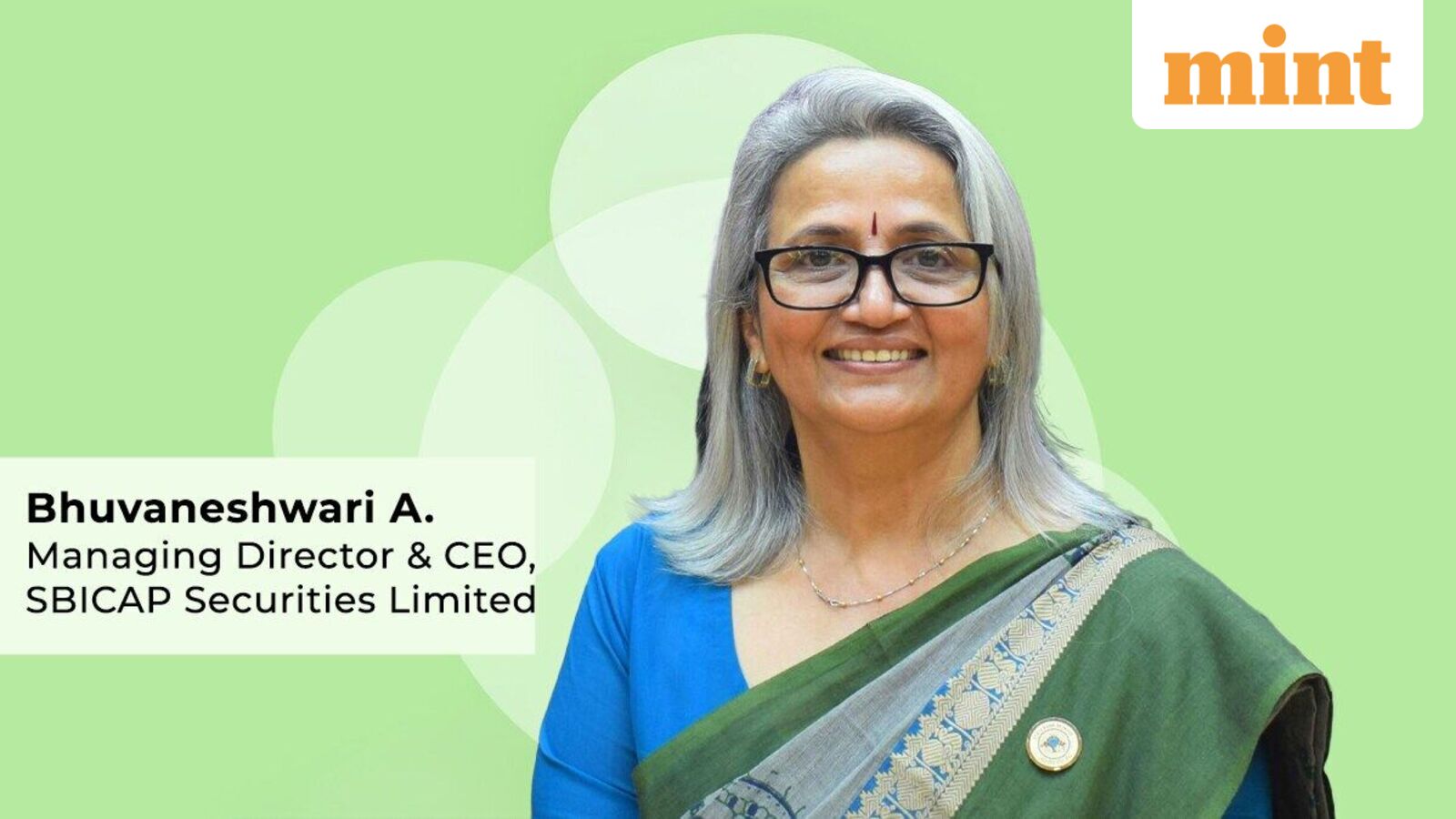
MD and CEO SBICAP Securitiesbelieves the Indian market is currently better positioned than it was in 2025 due to anticipated earnings growth, valuation normalisation, and a revival in domestic demand. In an interview with Mint, the MD and CEO of SBICAP Securities shared her market outlook, views on India’s growth–inflation dynamics, and expectations from the Union Budget 2026.
Edited excerpts:
Hopes are high that 2026 will outperform 2025 for the Indian equity markets. What are the key drivers for this optimism, and what risks remain?
We view 2026 with a sense of constructive optimism. The Indian market is currently better positioned than it was a year ago, supported by several fundamental tailwinds:
(i) Earnings acceleration: We anticipate a return to double-digit earnings growth for FY27 and FY28, providing a sharp recovery from the low single-digit growth seen in FY26.
(ii) Compelling valuations: The Nifty50 is currently trading at a one-year forward P/E of 19-20 times – a significant moderation from the 22-23 times levels seen during the September 2024 peak.
(iii) Valuation normalisation: India’s valuation premium over the MSCI EM index has compressed from 80% (September 2024) to a more sustainable 47% (December 2025), falling below the 10-year average of 57%.
(iv) Discounted externalities: Most headwinds, including the USD-INR volatility, geopolitical shifts, and FPI outflows, are now largely factored into current price levels.
(v) Consumption catalysts: A domestic demand revival is expected, driven by a cumulative 125 bps reduction in the repo rate, recent income tax reforms, and GST rationalisation, further supported by a healthy monsoon, which augurs well for the rural economy.
Key risks: While the outlook is positive, we remain vigilant regarding potential domestic liquidity support to the capital market, volatility in global crude oil prices, and any extended timelines in international trade negotiations.
How do you view the current market structure? Is this a phase for wealth creation or capital protection?
After a period of consolidation, where the market digested multiple global and domestic headwinds, the risk-reward ratio has turned decidedly favourable for the long-term investor.
We have moved past the valuation excesses of 2025. Today, the opportunity for wealth creation is abundant for those adopting a bottom-up approach across large, mid, and small-cap cohorts.
While we recommend that investors moderate their near-term expectations, a disciplined focus on fundamentally sound, profitable businesses should yield a healthy 12-14% CAGR over the long run—a return profile that remains highly attractive for capital market participants.
What is your assessment of India’s growth-inflation dynamics?
India remains the world’s fastest-growing major economy, firmly on the trajectory to become the third-largest global economy by 2030.
Subdued food prices have recently led to moderate inflation, which has temporarily impacted nominal GDP and corporate profit momentum.
We view this as a transitory phase. We expect inflation to stabilise within the 3-4% band in FY27, which will be supportive of a robust 10-11% nominal GDP growth in the medium to long term.
Why has private capex remained measured despite low interest rates and tax reforms?
Despite possessing healthy balance sheets, the private sector has maintained a cautious stance due to global policy uncertainties and a focus on optimising existing capacity.
However, we are seeing a strategic pivot. Investment is now flowing into high-growth frontiers such as new-age tech (data centres, AI, cloud), PLI-driven manufacturing, and the “premiumization” theme.
These sectors are expected to command the lion’s share of private capital expenditure in 2026.
What are your key expectations from Budget 2026?
As India accelerates toward becoming a $5 trillion economy, it is imperative that our capital markets evolve beyond transactional engagement to become enablers of long-term wealth creation for Indian households.
Our recommendations are not rooted in short-term tax relief but in building a robust, informed, and patient investor ecosystem that underpins capital formation.
(i) Encouraging patience over speculation (LTCG): While retail trust in equities is steadily growing, high portfolio churn continues to dilute long-term compounding.
We recommend a rationalised long-term capital gains (LTCG) tax regime for PAN-linked retail investors – not as a concession, but as a calibrated behavioural nudge.
Rewarding longer holding periods with reduced tax rates incentivises financial discipline, broadens participation, and supports market stability.
With the right thresholds, such a move can be revenue-neutral while structurally aligning household savings with India’s long-term growth.
(ii) Reducing friction for the everyday investor (STT): The current securities transaction tax (STT) structure adds significant friction, especially for retail investors and SIP-based participants.
We advocate a calibrated reduction in STT, particularly for delivery-based trades and ETFs.
This is not about fuelling leverage – it’s about lowering the cost of ownership for compliant, long-term investors. Enhanced participation and formalisation of savings into capital markets can more than offset near-term revenue considerations.
(iii) Democratising sovereign debt access (G-Secs): Despite offering safety and competitive yields, government securities (G-Secs) remain underpenetrated in retail portfolios.
We propose enabling G-Sec investments through SEBI-regulated brokers, leveraging existing KYC-verified platforms.
This integration can deepen the bond market, enhance yield discovery, and bring sovereign instruments closer to the common citizen, underpinned by coordinated oversight from the RBI and SEBI.
In essence, these recommendations aim to remove structural barriers, promote market participation, and unlock the power of domestic capital, so that every Indian saver has a real opportunity to become a long-term investor in India’s growth story.
Read all market-related news here
Read more stories by Nishant Kumar
Disclaimer: This story is for educational purposes only. The views and recommendations expressed are those of the expert, not Mint. We advise investors to consult with certified experts before making any investment decisions, as market conditions can change rapidly and circumstances may vary.