admin
admin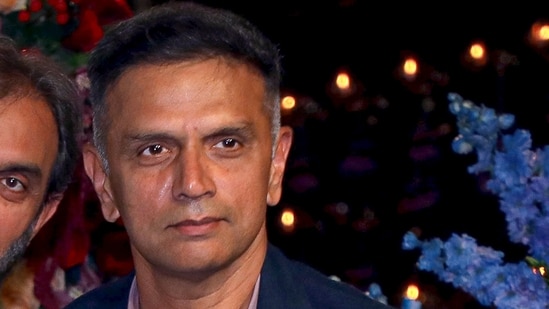
The Indian Test team has seen a significant decline over the past few years, with two home whitewashes serving as stark reminders of their struggles. In contrast, India’s dominance in white-ball cricket, particularly in T20Is, remains intact. Since Gautam Gambhir took charge, the team has suffered home defeats to New Zealand and further setbacks on Australian soil. Last year’s home series loss to South Africa further highlighted the inability of Indian batters to consistently adapt to the demands of modern Test cricket.
The retirements of key players such as Virat Kohli, Rohit Sharma, and Ravichandran Ashwin have left India in a challenging situation. This transition phase was laid bare during the series against South Africa, where the Indian batsmen struggled to cope with pressure, particularly in spin-friendly conditions, often appearing unsure of how to navigate the tricky pitches.
Former India coach Rahul Dravid spoke about the difficulties the team faces in Test cricket. He explained that players who participate in all three formats often find it hard to switch gears, pointing out that some batsmen reached a Test match just a few days before it began, only to realise it had been several months since they last faced a red ball.
“One of the things I understood as a coach, especially the guys that play all three formats, they keep moving from one format to the other,” Dravid said at the launch of the book The Rise of the Hitman: The Rohit Sharma Story in Bengaluru.
“There were times when we would get to a Test match three to four days before the match, and then when we start practising for the Test match, (and) when you look back at the last time that some of these guys had actually hit a red ball, it might have been four months ago or five months ago,” he added.
Dravid explained that preparing for turning tracks or seaming wickets in a Test match demands hours of focused practice—a luxury that is harder to find today. In his own playing days, with only two formats and no franchise cricket, he recalled having entire months to train with the red ball, allowing him to refine and perfect his techniques.
“That’s become really a challenge, how do you almost find the time to be able to develop some of the skills that are hard. To play on turning tracks, or play on seaming wickets, doing that for hours and hours in a Test match is not easy. It requires skill. In my generation, when there were only two formats in the game, and there wasn’t really the idea of franchise cricket, there were a lot of times where I would have a whole month of practicing for a Test series and I would be able to play with the red ball, and I would be able to develop my skills,” Dravid said.
Also Read – Abhishek Sharma saluted for pushing all-out attack to new extremes: ‘He has surpassed Chris Gayle’
India are still searching for reliable options in the middle order, as players like Sai Sudharsan and Karun Nair have struggled to deliver consistent performances when given opportunities in recent times.
“Shubman Gill would have realised how difficult it is”
The batting great further highlighted the challenge of balancing all three formats, noting that players often lack time to focus on red-ball cricket. He pointed to Shubman Gill, who recently played across formats, as an example of someone who has experienced just how tough it is to gear up for Test matches.
“Now, one of the things that has become a bit tougher in red-ball cricket is a lot of our guys who play all the three formats, or who play the amount of cricket that they are playing, sometimes don’t have the time to be able to practise red-ball cricket as much.
“I think Shubman has kind of alluded to it a little bit, just recently, because I think he’s one who experienced that. He’s one who actually played recently for us in all of the three formats so I think he would have realised how difficult it is for him to actually gear up for the Test formatm” he concluded.