admin
admin
Nagpur: Shubman Gill, the player groomed as the all-format skipper and seen as the T20 World Cup vice-captain-to-be, was surprisingly considered not fitting into the team formation for the title defence at home. If Gill felt snubbed, then skipper Suryakumar Yadav will feel the heat as he looks to find his form in the final warm-up T20 series against New Zealand.
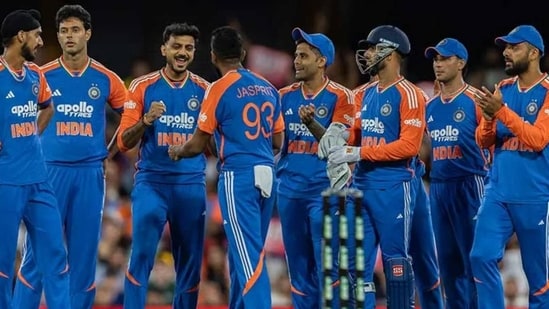
Surya had spoken when the World Cup squad was picked about having two-three playing combinations in store. The hosts are expected to try them out in the five-match dress rehearsal that begins in Nagpur on Wednesday.
Gill lost his place to Sanju Samson. The aggressive wicketkeeper-batter, who warmed the bench through the 2024 winning run, is finally getting his due. After a few series of experimenting by slotting Samson at No.3, 5 and even lower, Surya, as promised, has “taken care of Sanju” and restored him to opener.
That means Samson being reunited with Abhishek Sharma. Together, they make one of the most explosive opening pairs in the T20 game. Their high risk game sees their opening partnership very rarely extending to the middle overs, but their primary task is to swing the Powerplay decisively in India’s favour.
Ishan ahead of Shreyas
There will be at least one forced change in India’s team combination. Surya confirmed “Ishan Kishan will play at No 3” ahead of Shreyas Iyer, with Tilak Varma out of the first three matches. Kishan, who has fought his way back into international cricket, looked edgy in the nets facing Jasprit Bumrah on Monday. He will have to ward off nerves to show he is the same ball striker we knew from two years ago.
Iyer, for now, is more of a backup for Varma, with the latter’s rehab known to be shaping up well.
Surya has held himself back at No.4 following his extended lean run. “Runs will definitely come,” he told reporters on Tuesday. “At the same time, I don’t want to change my identity. What has given me success in the past 3-4 years, I would like to bat the same way. If performance does not come, I will go back to the drawing board and come out better.”
Bowling combinations
For a traditionally batting heavy side, bowling is India’s strongest suit. Among the different combinations on trial would mostly be with the ball.
Rinku Singh is all but likely to slot in at No.7 as finisher now that Jitesh Sharma has been axed and Washington Sundar is sidelined due to injury. It remains to be seen if a boosted lower middle opens up the possibility of the hosts ringing in their most aggressive bowling combination by playing Jasprit Bumrah, Arshdeep Singh, Varun Chakravarthy and Kuldeep Yadav together at some stage in the series.
If not compromising on batting depth remains a prerequisite, then Hardik Pandya’s return – he looked sharp bowling in the nets on Monday – and Shivam Dube’s improved bowling will see either Arshdeep or Kuldeep sit out.
Talking bowling combinations, data from the current T20 World Cup cycle suggests that Bumrah and Arshdeep not playing together does not hurt India’s pace bowling returns, but Chakravarthy and Kuldeep playing together helps their spin output.
When one of the spin duo doesn’t play or both don’t, the spin returns take a beating. Despite Kuldeep’s poor ODI series, this is something the Indian management would bear in mind. It may still be that in the current series, Kuldeep is protected from Daryl Mitchell, who had his measure in the ODIs.
Also, throw in the possibility of Harshit Rana, the bustling fast bowler with a growing reputation as an all-rounder, getting a look in. Fresh from his muscular six-hitting form in the ODI series, he could stake claim for No.8. That demonstrates how strong a squad India has, with specialised options for most playing positions. No team has ever defended a T20 World Cup, but India look very strong on paper.
Facing New Zealand, their bogey team in other formats, will be a good test for the T20 World Cup champions. The question is whether the hosts can find the right balance between the winning objective and building up for the World Cup in what promises to be an action-packed series.
The anticipation for a bilateral series could not be more fervent, starting with a packed 44,900-seater stadium in Jamtha, once a village but now a significant landmark on the outskirts of Nagpur.