admin
admin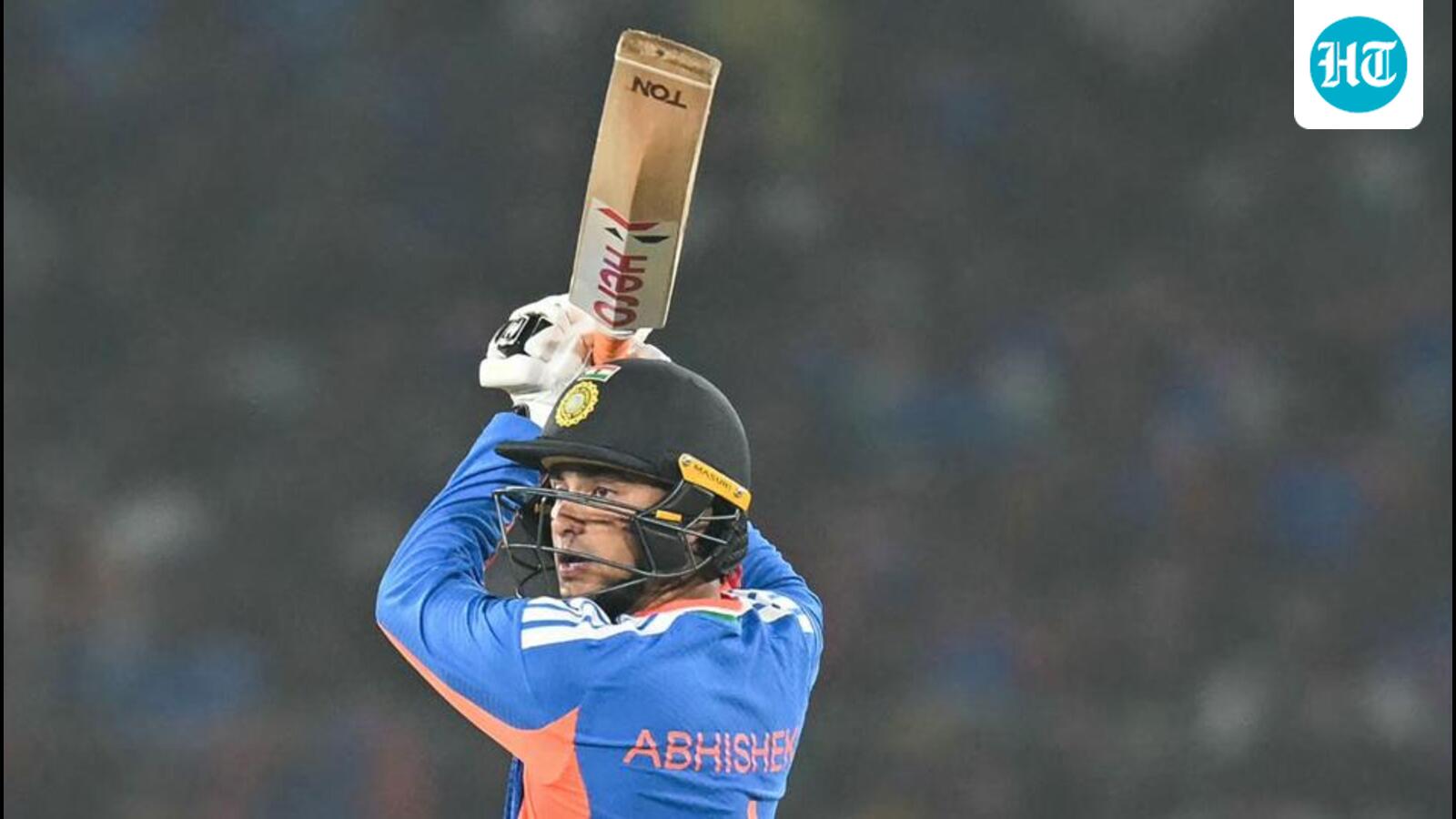
MUMBAI: “Teachers and roads are very similar,” says former India and Madhya Pradesh batter Amay Khurasiya, explaining the role of a coach. “They stay where they are, but people who walk on them get to their destinations.”
Khurasiya, 53, speaks from his experience as Madhya Pradesh Cricket Association’s academy coach, having helped shape the careers of top state players, including Rajat Patidar, Venkatesh Iyer, Avesh Khan, Ashutosh Sharma and Kuldeep Sen.
The supply line of quality players is vital to the health of any sports team. While the spotlight in elite sports is on chief coaches, quality academy coaches make contributions that are far-reaching.
Sir Alex Ferguson’s transformation of Manchester United into one of the most successful and powerful football clubs started with getting the club’s youth academy to produce quality players. Under him, youth team coach Eric Harrison developed one of the finest crops of young players in the English game. Dubbed ‘Fergie’s Fledglings’ they included David Beckham, Ryan Giggs, Paul Scholes and Gary Neville, who went on to become the nucleus of the team that won the treble in 1999 – Champions League, Premier League and FA Cup.
India is littered with cricket academies, but it is rare to find coaches with in-depth knowledge of what is needed to shape a world beater. For instance, no discussion on Sachin Tendulkar is complete without marvelling at the work of his coach, the late Ramakant Achrekar.
Among current players are two shining examples – Yashasvi Jaiswal in Tests and Abhishek Sharma in T20 cricket. The two left-handers stand out for their ability to dominate any opposition, in any condition. Their record speaks for itself. In a 28-Test career, besides his blockbuster 700-plus runs against England at home, Jaiswal has stood out in Australia and England, averaging an impressive 49.24.
In T20, Abhishek is counted among the best impact players, box-office stuff. His explosive batting with a strike rate of 188.03 after 33 T20Is is testimony to it.
For Jaiswal, the early work was put in by his childhood coaches, mainly Jwala Singh. However, he was stuck when he first entered IPL, unable to force the pace.
Enter Zubin Bharucha. Under him, Jaiswal went from one who averaged 13.33 (SR 90.91) in the 2020 season to one who blasted 625 runs in 2023 (avg 48.08, SR 163.61). The basics were established by Jwala on the maidans of Mumbai while Bharucha’s training at the Rajasthan Royals Centre of Excellence near Nagpur turned the opener into a world-beater.
Abhishek was taken under his wing by former India all-rounder Yuvraj Singh. No wonder that fans see shades of Yuvraj’s stroke play in his game.
While the professional coaches desperately seek silverware, for these coaches, it is about the quest to turn their wards into champions.
“I completely disagree with people who say what (game) you have, waise hi chalne do (just stick to their game). I am like, if you don’t have something, let’s go and acquire it and become a master at it. That’s the only way we are going to be a great player,” says Bharucha, a former Mumbai opener.
MENTOR YUVRAJ
Given his profile, Yuvraj can easily take up coaching IPL or state teams, but he is getting a kick out of helping batters get better. Abhishek is his pet project, but he also mentors other cricketers from northern India, even working on and off with Shubman Gill.
Yuvraj told Abhishek at the very outset: “I’m not getting you ready for the state, or IPL, or even to get an India cap. I am preparing you to win matches for India, I am sure about it.”
Abhishek often acknowledges Yuvraj’s significant role in his development into a formidable, fearless player.
The ODI legend is a demanding coach, and his tough love has kept Abhishek grounded. Big-hitting is his strength but in training videos, Yuvraj is often heard emphasising on being a versatile player. In a social media post on his birthday, Yuvraj reminded the young Punjab player about accumulating runs too. “Happy birthday Sir Abhishek. Hope you take as many singles this year as you knock out of the park,” Yuvraj wrote.
The same coach can train many others. Tendulkar was Achrekar’s finest ward, but his first international player was former India seamer Balwinder Singh Sandhu. At one time, he had three trainees in the Test team – Tendulkar, Vinod Kambli and Pravin Amre. He also produced dozens of first-class cricketers.
In Bharucha's case, Vaibhav Suryavanshi, Dhruv Jurel, Sanju Samson and Riyan Parag also train under him from time to time.
When Yuvraj was playing for India, he had a brief training session with Bharucha and the latter explained what the double World Cup-winner was doing right with Abhishek.
“What he is trying to do at least is (ensuring) the flow that is similar to what he had. Yuvraj had a beautiful, natural high bat swing with a beautiful flow and finish. I can see that fluency, you can see clearly that there’s a much more improved bat flow (in Abhishek).”
Bharucha explains the technical aspects. “First, his bat has gone wider. He used to hold the bat up closer to his body, and was very still. Now, he is rotating it a bit, pumping his hands. Just before he plays the ball, there is a slight wrist flick. It’s working for them. His onside game has improved. The moment you take the bat wider, the onside game opens up.
Eliminating errors and increasing scoring opportunities are focal points for Bharucha. “It means you have to judge the batter on his ability to hit everywhere… which shot he has and which he doesn’t have. Scoring opportunities means you should be able to hit in every location. Jaiswal had no onside play when he came to us, no reverse sweep or upper cut. If you are going to open up your onside play, you will go from good to great. At the same time, you are putting in the high volume (in training), you are (also) eliminating errors.”
What sets apart a player who turns world class from others is the gift to soak in information. The turning point for Jaiswal and Abhishek came during the Covid pandemic. Amidst the lockdown, they found help from coaches like Bharucha and Yuvraj, who could devote all their time to them.
“Yashasvi during Covid was living at the RR academy, practicing day and night,” Bharucha said. “In a simplistic way, let’s say someone in India has played 1,000 balls in a season, our players have faced 10,000 balls. Also, there is the technical element. We are constantly changing the pitch, changing the bat size and the nature of the ball. You get the element of variability, so there is no such ball that they have not played that they are going to get in a match.”
Teen batting sensation Suryavanshi is gaining from Bharucha’s guidance. The Bihar player had potential when RR picked him at the auction, and Bharucha has helped turn him into an intimidating batter at every level – be it IPL, India Under-19, the 2025 Asia Cup Rising Stars, or List A.
KHURASIYA'S WORK
Khurasiya was head coach of the MP academy from its launch in 2007 to 2019. The former prolific MP batter, a Level 3 coach from the National Cricket Academy, was also a former NCA zonal head.
“Balance is the key, be it skiing, table tennis, badminton. It is all about regaining balance after playing the shot, or having it while playing. When you lose the balance, you lose a lot of it. So, balance of your body and what is between your ears (mind) is the key as you progress,” says Khurasiya, who last year coached Kerala to the Ranji Trophy final.
Ultimately, success boils down to the curriculum of such coaches. Khurasiya set up facilities to hone different skills. “As an academy coach, you can be more of a task master because you have a lot of time to work on the players.
“I used to have a batsman’s lab and a fast bowlers lab. Arshad Khan and Avesh could bowl 145kph-plus. Kuldeep also came at that time. They all went through a speed enhancement programme. It was done in consultation with a physio and trainer because load management was a key aspect.”
As Bharucha says: “Eventually, revolution can only come when you systemise your innovation… There is no choice, that person will improve.”