admin
admin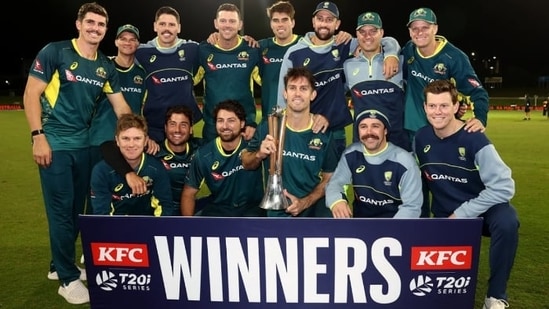
Australia’s provisional T20 World Cup 2026 squad isn’t just a list of names, it is a well planned selection. With group-stage games in Sri Lanka, Australia have leaned into levers that usually decide tournaments there: batting depth, and spin variety.
Australia Squad for T20 World Cup 2026
Mitchell Marsh (c), Xavier Bartlett, Cooper Connolly, Pat Cummins, Tim David, Cameron Green, Nathan Ellis, Josh Hazlewood, Travis Head, Josh Inglis, Matthew Kuhnemann, Glenn Maxwell, Matthew Short, Marcus Stoinis, Adam Zampa.
Below is a SWOT analysis breakdown of what this squad can do, where it can crack, and how conditions can amplify either outcome.
Strengths of Australia for T20 World Cup 2026
Power throughout the batting order
The headline is power at the top without a soft lower order. Travis Head and Mitchell Marsh can force tempo early and disrupt the plans of the opposition. Cameron Green and Glenn Maxwell can pivot between absorb-and-explode, which is vital on pitches where a reckless 40/3 can become 140 all-out. Tim David, Marcus Stoinis, Cooper Connoly or Matthew Short extend the batting so opponents can’t simply wait out two batters and attack the rest.
Flexibility in the line-up
The second strength of the Australian team is flexibility by design. Marsh, Green, Maxwell, Stoinis, Short and Connolly provide real all-rounder density, letting Australia add a bowler without cutting batting or add batting without running out of effective overs. That opens multiple XI builds:
- On a turner: Zampa + Kuhnemann + Connolly, with Maxwell/Short as match-up fillers.
- On a flatter strip: one of Connolly/Kuhnemann can give way to extra pace and the batting still runs deep
Bowling variety
The bowling variety in the line-up, especially spin, is the third pillar. Zampa remains the strike leggie; Kuhnemann and Connolly add left-arm orthodox angles; Maxwell/Short can plug match-ups when a batter is lining up a specialist. If the senior quicks are fit, Pat Cummins and Josh Hazlewood give powerplay control, while Nathan Ellis gives death-overs clarity with his variations.
Weaknesses of Australia for T20 World Cup 2026
Fitness sensitivity
This squad is fitness sensitive. Cummins and Hazlewood aren’t just quality – they are the overs that reduce variance. If either is limited, pace depth tightens quickly and Ellis/Bartlett become non-negotiables, shrinking tactical freedom and making match-ups easier for opponents to plan against.
Backup wicketkeeper
Wicketkeeping cover is another risk. As selected, Josh Inglis is the only specialist keeper. One injury or illness and Australia are forced into compromises that can ripple into batting order and bowling balance, exactly the kind of disruption you don’t want in a short tournament.
Middle overs wicket takers
On flatter pitches, teams will plan heavily for Zampa. Australia have control spin, but a consistent second middle-overs wicket source is less obvious. Kuhnemann can put the squeeze on, Connolly can work the angles, Maxwell can disrupt rhythms – but they don’t always guarantee wickets, and T20 games often swing on two quick wickets.
Opportunities for Australia in T20 World Cup 2026
The venues
Sri Lanka is the opportunity multiplier. If pitches grip and totals sit in the 145-170 range, Australia’s spin menu can become a huge weapon. Left-arm orthodox can be especially valuable on used surfaces: it breaks rhythm, changes the hitting zones, and creates mis-hits when batters try to force pace. That also allows Australia to hold Ellis for the most valuable moments instead of using him as a firefighter.
Match-up advantage
Australia can become a match-up bully. Zampa can attack rebuild phases, Kuhnemann/Connolly can target right-hand heavy line-ups, Maxwell/Short can steal the rhythm. Used well, that is phase control that wins you tournaments.
The breakout stars
There is a breakout window too for Australia. Bartlett and Connolly don’t need to dominate; they need a few high-leverage moments that can flip tight matches. Australia’s squad shape gives them room to back a youngster without compromising balance.
Threats for Australia in T20 World Cup 2026
Mismatch of conditions
The biggest threat is conditions mismatch. Heavy dew for flatter decks can turn Sri Lanka into a pace-and-power tournament. Australia’s batting will travel, but defending big totals demand elite pace execution – again tying outcomes to Cummins/Hazlewood availability and sharpness.
Early Vulnerability
A second threat is early vulnerability. One close loss can distort qualification routes; If Australia start underpowered due to managed quicks, they may spend the group stage chasing net run-rate rather than dictating games.
Australia’s X-Factor for T20 World Cup 2026
Cooper Connolly could be the X-factor for Australia. He changes Australia’s Sri Lanka equation without forcing a trade-off. As a left-arm spin option who can also bat with intent, he gives Marsh a genuine flexible option for slow, gripping wickets: he can be used early if there is turn, held back as a match-up tool against right-hand clusters, or even deployed to steal on over when teams are lining up Zampa.
The real value is structural – Connolly lets Australia play an extra spinner while keeping their batting depth intact, which is exactly how you win tight games in big tournaments. If he lands one high-leverage spell or a 15-ball cameo, he can swing the game’s momentum.
Best Possible Playing XI of Australia for T20 World Cup 2026
Travis Head, Mitchell Marsh (c), Cooper Connolly, Josh Inglis (wk), Cameron Green, Glenn Maxwell, Tim David, Pat Cummins, Josh Hazlewood, Adam Zampa, Nathan Ellis