admin
admin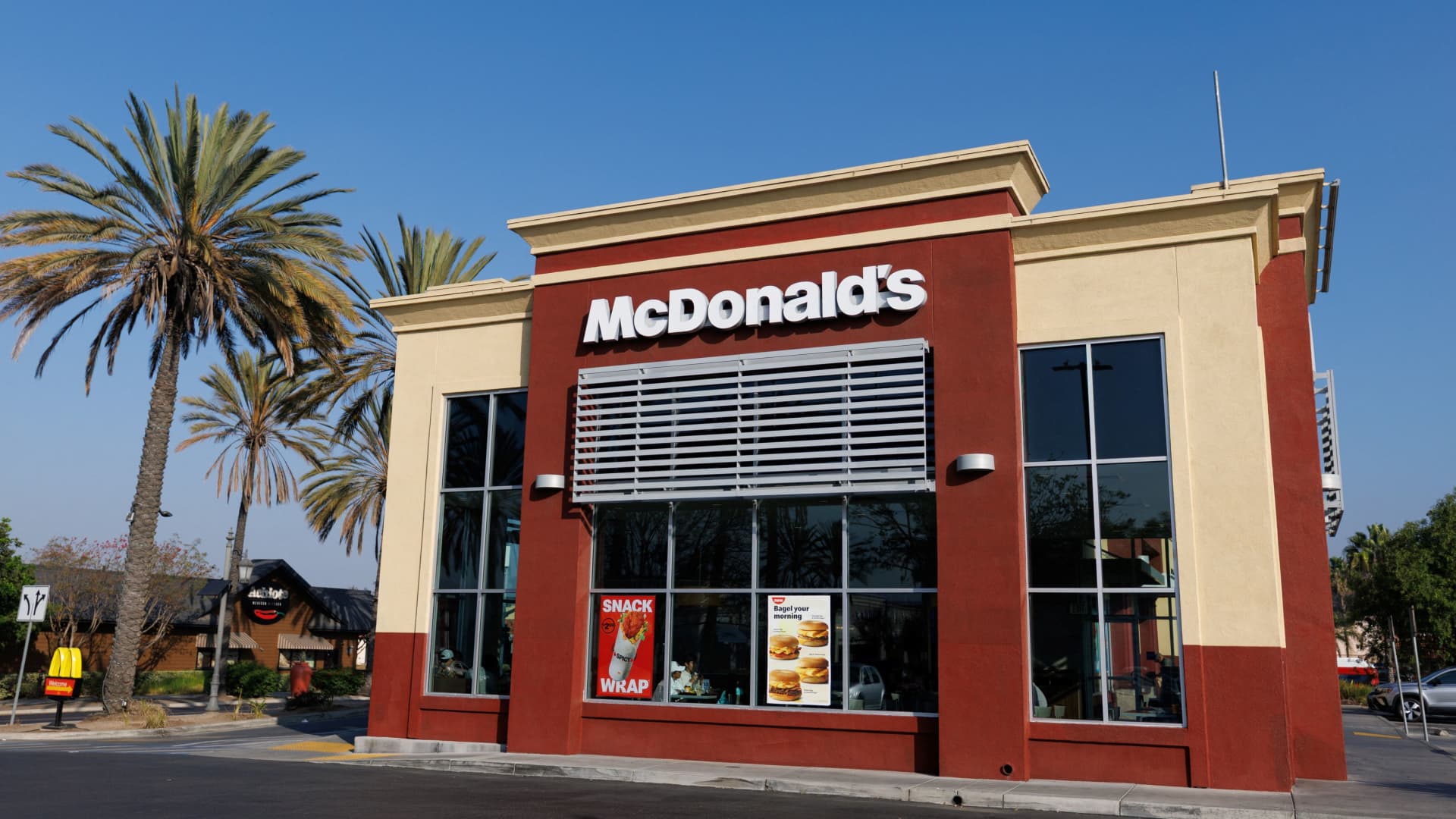
McDonald’s restaurant in San Diego, California, U.S., Oct. 31, 2025.
Mike Blake | Reuters
“Value” was the buzzword du jour for restaurant executives that lasted all year — and it will likely stick around in 2026, too.
Over the last year and a half, diners, particularly those who make less than $40,000 a year, have been eating out less frequently and spending less money when they do. Higher costs, like rent and child care, have put pressure on consumers’ wallets. Plus, uncertainty about the economy, President Donald Trump’s higher tariffs, layoff fears and immigration crackdowns have all hurt their willingness to spend.
As diners strain under pressures on their wallets, restaurants, takeout and food delivery is the category where discretionary spending is most likely to fall, according to the EY-Parthenon U.S. Consumer Sentiment Survey. Nearly a quarter of respondents said that they would first cut spending on eating out, ahead of entertainment, travel and home maintenance.
It’s no surprise, then, that data from Black Box Intelligence shows that traffic to restaurants open at least a year fell every month this year through November, with one exception: July. That month, guest count ticked up 0.1%.
To win back a shrinking pool of diners, restaurants have responded by doubling down on efforts to offer diners more “value.” In the fast-food segment, that means combo meals and value menus.
For casual-dining chains, value has translated into appetizer deals, marketing that compares the narrowing price gap with fast food, and a focus on the in-restaurant experience. And fast-casual chains have responded by emphasizing their quality while trying to stay away from the so-called value wars.
“This is the most intense discount environment since the Great Recession,” Cava co-founder and CEO Brett Schulman said on the company’s earnings conference call in November.
McDonald’s value push
To understand the industry’s evolving value strategy, look no further than McDonald’s, the largest U.S. restaurant chain by sales and often a bellwether for the consumer economy.
The burger giant briefly became the poster child for higher fast-food prices in 2024, leading the company to make a rare public rebuttal against social media posts claiming that its prices had more than doubled since 2019. But that didn’t stop consumers from viewing its prices as too high, which put the company on the defensive. In 2024, it launched a $5 value meal in the U.S. in a bid to attract the low-income consumers who had been cutting back on their visits.
As the value gap closed between casual-dining chains like Chili’s and fast-food restaurants, McDonald’s and its peers haven’t benefitted from the spending pullback the way they typically would when consumer spending falls, according to Moody’s analyst Michael Zuccaro.
This year, McDonald’s further stepped up its emphasis on value. It extended the $5 value meal months longer than expected and added a buy one, get one for $1 deal for select menu items in January. In September, the chain brought back its Extra Value Meals, which save customers 15% on combo meals compared with buying the entree, fries and drink separately.
The chain’s efforts have succeeded in winning back some customers, plus attracting new diners. In the third quarter, it reported U.S. same-store sales growth of 2.4%.
“I think sometimes there’s this idea that value only matters to low-income (consumers),” CEO Chris Kempczinski said on the company’s earnings call in early November. “But value matters to everybody, whether you’re upper income, middle income, lower income, feeling like you’re getting good value for your dollar is important.”
Plus, McDonald’s has other promotions that also seem to offer value. The chain is currently offering a Grinch Meal, which comes with an entree, dill pickle McShaker fries, a drink and collectible socks.
“This time of year, you’ve got promotional things that you can do that really promotes value. You can get a free pair of socks,” said Jay Bandy, president of Goliath Consulting Group, which has worked with Church’s Chicken and Zaxby’s, among others.
McDonald’s fast-food rivals have followed its lead, offering their own more sophisticated value options for price-conscious customers. For example, Yum Brands’ Taco Bell followed up the introduction of its $7 Luxe Cravings boxes in 2024 by adding $5 and $9 versions earlier this year.
“The numbers that I’ve seen is (Taco Bell has) converted a lot of their customers to the higher-price boxes, and that’s what you want. If you can’t grow your traffic, you’re getting them to stop spending $7 and start spending $9,” Technomic analyst Rich Shank told CNBC.
Broadly, operators have to balance discounts that will attract customers with the razor-thin margins common in the industry. Usually that means companies offer value items that get customers into the drive-thru lane, and then dangle tantalizing enough options as an add-on, whether it’s a McFlurry or a premium entree.
“It’s hard to sell things in the (quick-service restaurant) world for $5 and make your margins,” Bandy said. “Those chains are hoping that somebody in the car is also ordering a full price value meal at $9 so they can balance it out, so that’s part of the strategy there.”
McDonald’s, which franchises about 95% of its restaurant footprint, has helped its operators offset the hit to their margins by chipping in with corporate marketing support and co-investing in the discounts on the Extra Value Meals. Longtime partner Coca-Cola contributed marketing funds as well, making the deals more attractive to franchisees.
“McDonald’s offering subsidies to franchisees is definitely unusual, and (it shows) that they have high conviction that what they’re doing is really going to help repair the value perception to lead to a healthier trajectory as we get to 2026 on same-store sales,” TD Cowen analyst Andrew Charles told CNBC.
Heading into 2026, McDonald’s will stop providing corporate support to its franchisees by the end of the first quarter, CFO Ian Borden told analysts in early November.
Just as corporate support dries up, the company will start holding franchisees accountable for the value that they offer diners at their restaurants. Operators will still have the ability to set their own prices, but new franchising standards will assess if operators’ prices are too high, particularly if it is affecting their restaurants’ traffic or customer satisfaction scores.
In other words, after more than year offering the carrot to operators, now comes the proverbial stick. The only thing that isn’t changing about the strategy is the focus on value.
Fast-casual’s struggles
A customer carries a Chipotle bag in San Francisco, California, US, on Friday, Jan. 31, 2025.
David Paul Morris | Bloomberg | Getty Images
While fast food has aimed to compete on price, the fast-casual segment has largely stayed out of the value wars this year, to the detriment of sales.
Cava, Sweetgreen and Chipotle Mexican Grill all reported underwhelming results for the last two quarters. Executives blamed younger consumers who have pulled back on spending. The demographic has a higher unemployment rate than the broader population, plus student loan repayments resumed in the spring, putting more pressure on their wallets.
And as the pool of diners has shrunk, fast-casual chains have faced increasing pricing competition from both fast food and casual-dining chains.
“Fast casual has followed quick-service’s playbook in 2025. What I mean by that is that they focus on limited-time offering, they focus on increased advertising, they focus on speed of service. But the last tenet of quick service that fast casual has not yet followed is value. And I think a lot are going to try to avoid it as long as they can,” said Charles.
For most fast-casual chains, the only widely available discount is on their stock price.
Cava’s Schulman, for example, flatly said on the company’s latest earnings call that the Mediterranean chain isn’t planning to get into discounts.
Chipotle has similarly resisted any calls for discounts, although recent promotions like its “Unwrap Extra” series timed for the holiday season offer buy-one, get-one deals. Executives have instead leaned into emphasizing the chain’s quality and relative value.
“We are still a 20% to 30% discount to our fast-casual peers in the sector,” Chipotle CEO Scott Boatwright said on the company’s conference call in late October.
Sweetgreen has become the outlier. The salad chain is planning to target infrequent members of its rewards programs with discounts. Earlier this month, it rolled out a ‘Tis the Seasoned Harvest Bowl with Blackened Chicken that’s only $10 for loyalty members, a discount of roughly $6.
But it is more difficult for fast-casual chains to compete in the value wars. For one, the category, best known for its so-called slop bowls, doesn’t have the same obvious value items as other restaurant segments. Casual-dining can discount appetizers, while fast food can throw in a free cheeseburger.
Plus, once chains start leaning into lower prices, it can be difficult to stop because customers expect the deals and aren’t willing to pay full price. For now, most fast-casual restaurant executives seem unwilling to take the hit to their profit margins.
“I think it’s getting more difficult for fast casual to show value, because then they’re pushing down to (quick-service restaurant) prices, and they can’t afford to,” Goliath’s Bandy said.
Panera Bread is one fast-casual chain that is trying to crack the value code. The privately held chain is working on a barbell menu strategy, which offers diners options on both the low- and high-price end. Still, Panera CEO Paul Carbone told CNBC in November that the chain hadn’t yet cracked the code.
The winners in value
An aerial view of a Chili’s restaurant on December 13, 2024 in Rohnert Park, California.
Justin Sullivan | Getty Images
While restaurants are still waging the value wars, at least one early winner has emerged.
Brinker International’s Chili’s has reported double-digit same-store sales and traffic growth every quarter of the calendar year. The casual-dining chain’s unlikely comeback follows a successful turnaround led by CEO Kevin Hochman and savvy, well-timed marketing that positioned its $10.99 Big Smasher meal against fast-food prices. The virality of its Triple Dipper promotion further fueled the chain’s soaring sales growth.
Chili’s has succeeded in luring high-income diners to its restaurants who are trading down from the fine-dining segment. But the chain is also gaining market share with customers who make less than $60,000 a year, showing that its value messaging is resonating across a broad swath of consumers.
Then there’s Darden Restaurants, the parent company of Olive Garden, LongHorn Steakhouse and other well-known full-service chains. The restaurant company has been raising its menu prices by levels less than the rate of inflation and leaning into promotions, like Olive Garden’s popular Never Ending Pasta Bowl and a $55 three-course meal at Ruth’s Chris. Darden has also been rolling out the option of smaller portions at a lower price for select menu items at Olive Garden; the company isn’t planning on promoting the lighter portions menu for fear of sales cannibalization, but it is improving the chain’s affordability scores.
Thanks to all of those efforts, Darden is seeing high-income consumers trade down into its casual-dining chains and a traffic bump from diners who are at least 55 years old, CEO Rick Cardenas said on the company’s conference call on Thursday. Darden’s same-store sales increased 4.3% in its latest fiscal quarter, and every restaurant division reported same-store sales growth. Still, investors haven’t rewarded their success; the stock has risen just 1% so far this year.
TD Cowen’s Charles named Burger King and Taco Bell as two of his winners — largely because they didn’t have to lean on value to same extent to report domestic same-store sales growth that topped McDonald’s results.
“I think that value is really a losing track, just given the fact that you’re doing lower margin, you’re degrading the brand. It’s not really the best strategy that restaurants can go with,” he said.
Where are the value wars headed?
For now, it looks unlikely that most restaurants will ditch their value-focused strategy, although they will face more challenges ahead.
Economists aren’t expecting any sudden improvements in the economy. Costs — particularly beef — are still rising, which means restaurants will have to choose between preserving their profit margins by hiking menu prices or holding onto customers. And the value wars will likely intensify, particularly in January, when diners are trying to stick to New Year’s resolutions, adhere to stricter budgets or stay warm during winter storms.
The seasonal traffic dip in January and February could be even steeper this year, thanks to inflation, the uncertain job market and other economic uncertainties, Technomic’s Shank said.
Moody’s has a negative outlook for the overall restaurant industry, Zuccaro said, citing declining traffic and higher labor and commodity costs.
“While inflation has eased, it’s not coming down,” he said. “Beef is going to take some time.”
Plus, the consumer mindset has changed.
For years, Technomic has tracked consumers’ stance on the components of value. Traditionally, price fell below quality and service. But now, those components are all about even.
“It’s certainly a price-point driven market,” Shank said.
Even value winners like Chili’s and Darden won’t be able to rest on their laurels in the new year. Zuccaro anticipates that the chains that have done well will be under pressure to keep up their results, particularly as underperformers steal from their playbooks and attempt to win back their market share.
“The whole pie is not growing, and it’s just a matter of the companies being able to do all these things right to get their slice — and get a bigger slice of it,” he said.