admin
admin
Sleep is the core pillar of health. Nevertheless, Gen Zs, those born between 1997 and 2012, seem to be grappling with challenges that no other generation has faced to this extent. While older generations may chalk it up to poor habits or a lack of discipline, the truth is far more intricate. Gen Z is contending with relentless digital exposure and levels of anxiety and depression that were unheard of in the past.
A 2022 study published in ScienceDirect has revealed that many in this cohort are getting around six hours of sleep per night. This is far below the recommended eight to ten hours for adolescents and young adults. (Also read: Bengaluru nutritionist shares 3 superfoods every woman over 40 should eat daily for better health: From flax seeds to… )
Chronic sleep deprivation among Gen Z isn’t just about late-night scrolling or poor habits. It significantly affects mental health, cognitive function, and overall wellness. To understand why this generation struggles with rest, Dr Megha Agarwal, Consultant Psychiatrist at Kailash Deepak Hospital, Anand Vihar, New Delhi, shares with HT Lifestyle the digital, social, and biological factors shaping their sleep patterns.
Digital disruption and the “always-on” culture
“One major contributor to Gen Z’s sleep challenges is the pervasive use of digital technology,” says Dr Agarwal. “Devices like smartphones, tablets, and laptops continue to stimulate the brain even after dark. Blue light exposure affects melatonin production, pushing back the natural urge to sleep.”

She adds, “Social media, streaming platforms, and online gaming often lead to what researchers call ‘sleep procrastination,’ where teens and young adults sacrifice rest for late-night engagement.”
Studies show that putting down devices an hour before bed can give teenagers an extra 21 minutes of sleep per night, nearly two hours over a school week. Yet, the fear of missing out (FOMO) and addictive algorithms make it increasingly challenging to switch off, creating a vicious cycle of sleep deprivation.
How stress and lifestyle affect Gen Z’s sleep
Gen Z faces unprecedented stress, Dr Agarwal explains: “This generation reports the highest levels of psychological distress globally. Economic uncertainty, academic pressure, and social comparisons raise cortisol levels, which disrupt circadian rhythms and sleep quality.”
She notes, “Sleep deprivation worsens mental health. It increases the risk of depression, anxiety, and even suicidal ideation. Adolescents need 8–10 hours of sleep, but most average only 6.5–7.5 hours, leading to cognitive impairments, mood swings, and weakened immunity.”
“Puberty naturally delays the internal body clock, making young adults biologically predisposed to staying up later,” Dr Agarwal explains. “Early wake-up times, extracurriculars, part-time jobs, inconsistent sleep hygiene, high caffeine intake, and lack of wind-down routines compound the problem.”
Sedentary lifestyles and limited daytime light exposure also reduce the sleep drive, making it harder for Gen Z to maintain consistent patterns. “The result is a generation frequently exhausted, struggling to concentrate, and underperforming academically and professionally,” she adds.
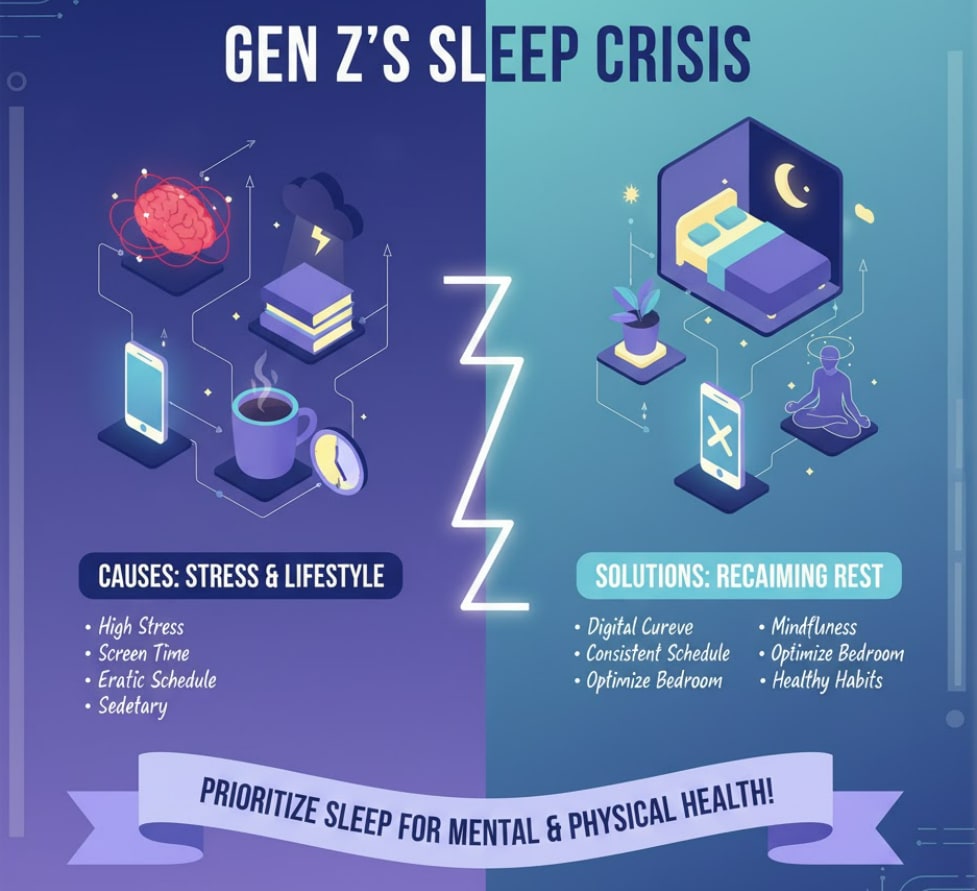
What can Gen Z do to reclaim healthy sleep
Beyond lifestyle factors, sleep disorders are increasingly diagnosed among adolescents and young adults. “Insomnia, sleep apnea, restless leg syndrome, parasomnias, and narcolepsy can all worsen mental health if left untreated,” says Dr Agarwal.
Insomnia, for example, can lead to weight gain, depression, and poor concentration, while sleep apnea may cause daytime fatigue, memory issues, and high blood pressure. Diagnostic tools like polysomnography, EEGs, and genetic tests, combined with treatments such as CBT-I, melatonin supplements, and better sleep hygiene, can restore healthier sleep patterns.
“Addressing Gen Z’s sleep crisis requires a multi-pronged approach,” Dr Agarwal advises. “Digital curfews, blue light filters, and screen-free hours before bed reduce overstimulation. Mindfulness exercises, meditation, and deep-breathing techniques calm the nervous system and improve sleep quality.”
Environmental factors matter too. Comfortable mattresses, cool and dark bedrooms, consistent wake-up times, and nutritious diets rich in fibre, calcium, magnesium, and vitamins all contribute to better rest. Even small adjustments, like 30 minutes of sunlight exposure or a gentle bedtime routine, can make a measurable difference.
Dr Agarwal stresses, “Solving Gen Z’s sleep issues goes beyond individual habits. Schools and workplaces should respect circadian biology, delay start times, and promote awareness about healthy sleep.”
Note to readers: This article is for informational purposes only and not a substitute for professional medical advice.