admin
admin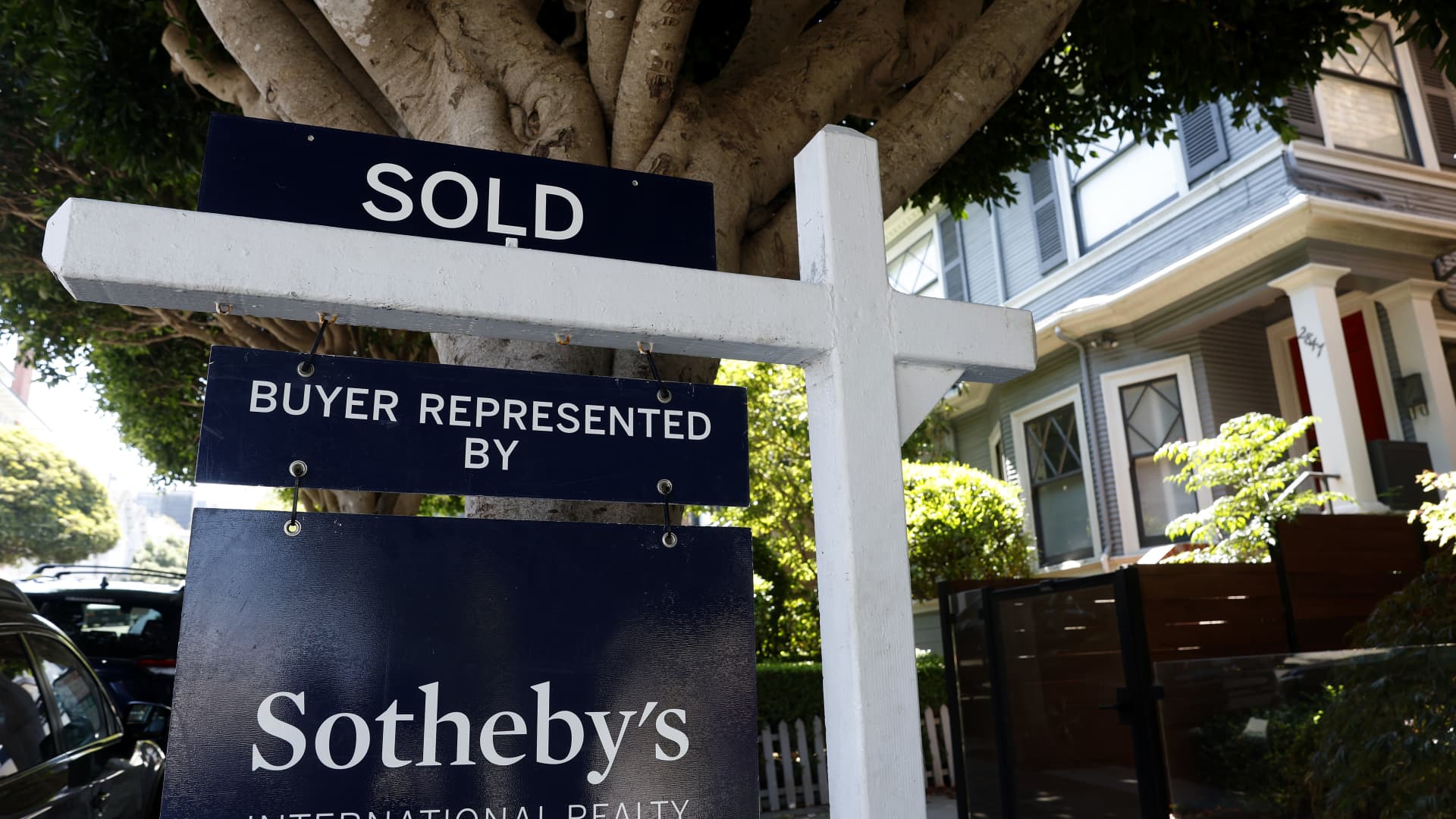
A sold sign is posted in front of a home for sale on Aug. 27, 2025 in San Francisco, California.
Justin Sullivan | Getty Images
A version of this article first appeared in the CNBC Property Play newsletter with Diana Olick. Property Play covers new and evolving opportunities for the real estate investor, from individuals to venture capitalists, private equity funds, family offices, institutional investors and large public companies. Sign up to receive future editions, straight to your inbox.
Real estate investors, both individual and institutional, bought one-third of all single-family residential properties sold in the second quarter of 2025. That is an increase from 27% in the first quarter, and the highest percentage in the last five years, according to a report from CJ Patrick Co., using numbers from BatchDataa real estate data provider. Investors accounted for 25.7% of residential home sales in 2024.
While the share of sales is higher, the raw numbers are lower. Investors in the second quarter of this year bought 16,000 fewer homes than a year ago, but home sales overall were much weaker this year than last year. That accounts for the gain in the investor share. Investors continue to own about 20% of the 86 million single-family homes in the country.
“While investors purchased more homes than they sold in the second quarter, they did sell over 104,000 homes, with 45% of those sales going to traditional homebuyers,” said Ivo Draginov, co-founder and chief innovation officer at BatchData. “So in addition to the important role investors continue to play providing necessary liquidity to a weak home sales market, they’re also bringing much-needed inventory – both rental properties, and homes for owner-occupants – to the market.”
While large institutional investors continue to get most of the headlines in the single-family rental space, small investors account for more than 90% of the market. These are individuals owning 10 properties or less. The largest investors, those with 1,000 or more properties, make up just 2% of all investor-owned homes.
Unlike individuals, institutional investors are now selling more homes than they buy and have been for six consecutive quarters. The nation’s largest landlords, Invitation Homes, Progress Residential, American Homes 4 Rent and FirstKey Homes, all sold more homes in the third quarter of this year than they purchased, according to an analysis from Parcl Labs.
“They’re not exiting the space, just diverting capital into build-to-rent communities. But this shift means less competition for small investors and traditional homebuyers, while also adding more rental supply, which is needed in today’s market where younger adults often opt to rent since they can’t afford to buy a home,” said Rick Sharga, founder and CEO of CJ Patrick Co.
Looking regionally, Texas, California and Florida have the highest number of investor-owned homes. This is largely because they are also the most populous states. The states with the highest percentage of investor-owned homes are Hawaii, Alaska, Montana and Maine. These are also heavy tourism states.
Investors have always focused on lower-priced homes because those can offer the best profits in resale years later. In the second quarter of this year, investors paid an average of $455,481 per home — well below the national average price of $512,800, according to the CJ Patrick report. It was, however, the highest average investor price in the past six quarters, since home prices overall continue to climb.
Investor homes are typically either smaller or in less expensive housing markets. Large investors bought even cheaper homes than the overall pool, with their average purchase price at $279,889. Their average sale price was $334,787. Institutional investors are concentrated most in the Midwest and South, where prices are below the national average.