admin
admin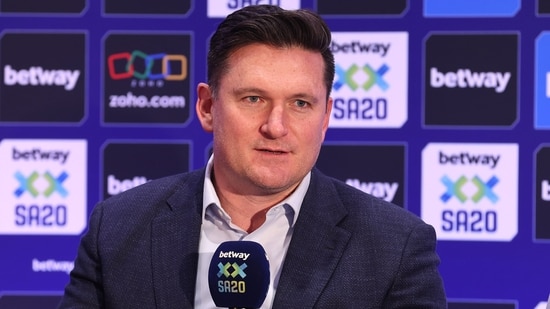
Unlike most South African summers, there were no international fixtures scheduled for the festive season this year. A gap in the current FTP, finalised in 2022, meant the SA20, only three years into the cricketing calendar, was handed its biggest responsibility yet.
The ongoing fourth season delivered several firsts: its maiden Super Over, a first-ever hat-trick, high-scoring thrillers, tight finishes and a noticeable rise in spectator turnout. However, the shift from its familiar January–February window to a Boxing Day start also brought challenges, with unseasonal rain across parts of the country leading to five matches being abandoned without a result.
Yet, the weather disruptions did little to stall the league’s momentum. SA20 commissioner Graeme Smith revealed that despite the setbacks, the season has turned out to be “commercially the strongest” since the league’s inception.
“I think, firstly, we’ve seen real growth in the first two weeks. Viewership, crowd attendance, the atmosphere, and the quality of cricket have all been very good, which was really exciting. Unfortunately, you can’t always predict the weather, and when unseasonal fronts move through parts of South Africa, it becomes a challenge—especially when you’re playing a game a day and travelling around the country,” Smith told Indian media on the sidelines of the rain-washed-out game between Durban Super Giants and Sunrisers Eastern Cape at Kingsmead Stadium.
The SA20 has 12 league games left until January 19, followed by the playoffs and the final on January 25, and Smith is hopeful of a strong finish to the season.
“Right now, we just have to stay positive. There’s still a lot of cricket left; we’re only halfway through the season. You can sense the tension and excitement building again—people are talking about coming to games. Even in matches affected by rain, the fact that crowds stayed on shows the product has stepped up another level this year. Our job is to stay positive, keep pushing, and aim for a strong finish.”
‘Commercially, this has been our strongest year yet’
For Smith, the true marker of a successful season lies in the quality of cricket. While the fourth season has recorded four more sold-out games than last year, the South African legend believes the rise in on-field standards is the league’s biggest achievement.
“We obviously track a lot of metrics. Ticketing is a big one for us, and we’ve seen a significant increase—four more sold-out games than at the same stage last year and around a 27–28 per cent rise in ticket sales in the first half of the season. Viewership is up in India and in South Africa, and digital growth is also strong. But for me, one of the most important markers is always the cricket. The pitches have been more consistent than last year, and we’ve seen closer games—super overs, hundreds, hat-tricks, and plenty of last-over finishes. The quality of cricket has been excellent, and hopefully over the next two weeks it stays the same or even improve,” he explained.
Even if the festive-season window played a role in boosting ticket sales, SA20 remains South Africa’s only domestic tournament with sustained support across every season. Despite five rain-affected no-results, three in Durban, the 2025–26 edition has been a commercial success. Smith, though, is playing the long game, with a vision focused on creating a strong pipeline of South African talent, akin to the IPL’s impact on Indian cricket.
“We’ve been fairly consistent with our window. This year was an anomaly because of South Africa’s tour of India and the World Cup in February, so it made sense to start earlier. Normally, we begin around January 9 or 10 after the New Year’s Test. In terms of growth, a key focus is expanding the pool of South African players. If you want to add teams in the future, you need another 20–25 high-quality local players to maintain competitiveness. Commercially, this has been our strongest year yet, with strong corporate and global broadcast support. Now it’s about building on that momentum,” he said.
The other aspect is what Smith has touched upon often over the last four years, and stands of great importance in creating an authority in the global cricket calendar is finding the right window. It subsequently gives a clearer picture to the international stars to get their schedule free for the SA20.
“Not being in a clean window always creates challenges. Sometimes players are under contract elsewhere and can’t return, like during the Ashes. What’s encouraging is the feedback we’re getting—players love coming here. It’s competitive cricket, great conditions, strong crowds, and a good lifestyle. Credit also goes to the franchises, who play a big role in attracting and retaining international talent,” he added.
All of these factors will be crucial if SA20 are to sustain their momentum in an increasingly crowded franchise-cricket landscape. Competition is only set to intensify, with the semi-privatised Hundred launching its first season next year—several teams already co-owned by IPL franchises—while discussions around privatisation continue in the BBL and New Zealand explore the possibility of a franchise league of their own. Together, these developments add to the competitive pressure on SA20, particularly within the southern hemisphere calendar.
“That’s always a challenge, especially in the southern hemisphere where there’s so much cricket happening. You look at India right now—there’s the Women’s IPL, an India–New Zealand series, and we’ve also competed with the Ashes. But from the beginning, we’ve never had a clean window. We’ve always had to build against busy schedules, and we’ve proven we can be successful in that environment. Our focus is on developing the best product possible—competitive cricket, full stadiums, and a great fan experience. Hopefully, with some good weather over the next two weeks, we can build momentum. You can feel how a run of close games changes the atmosphere, and we’re hoping for that stretch now.”