admin
admin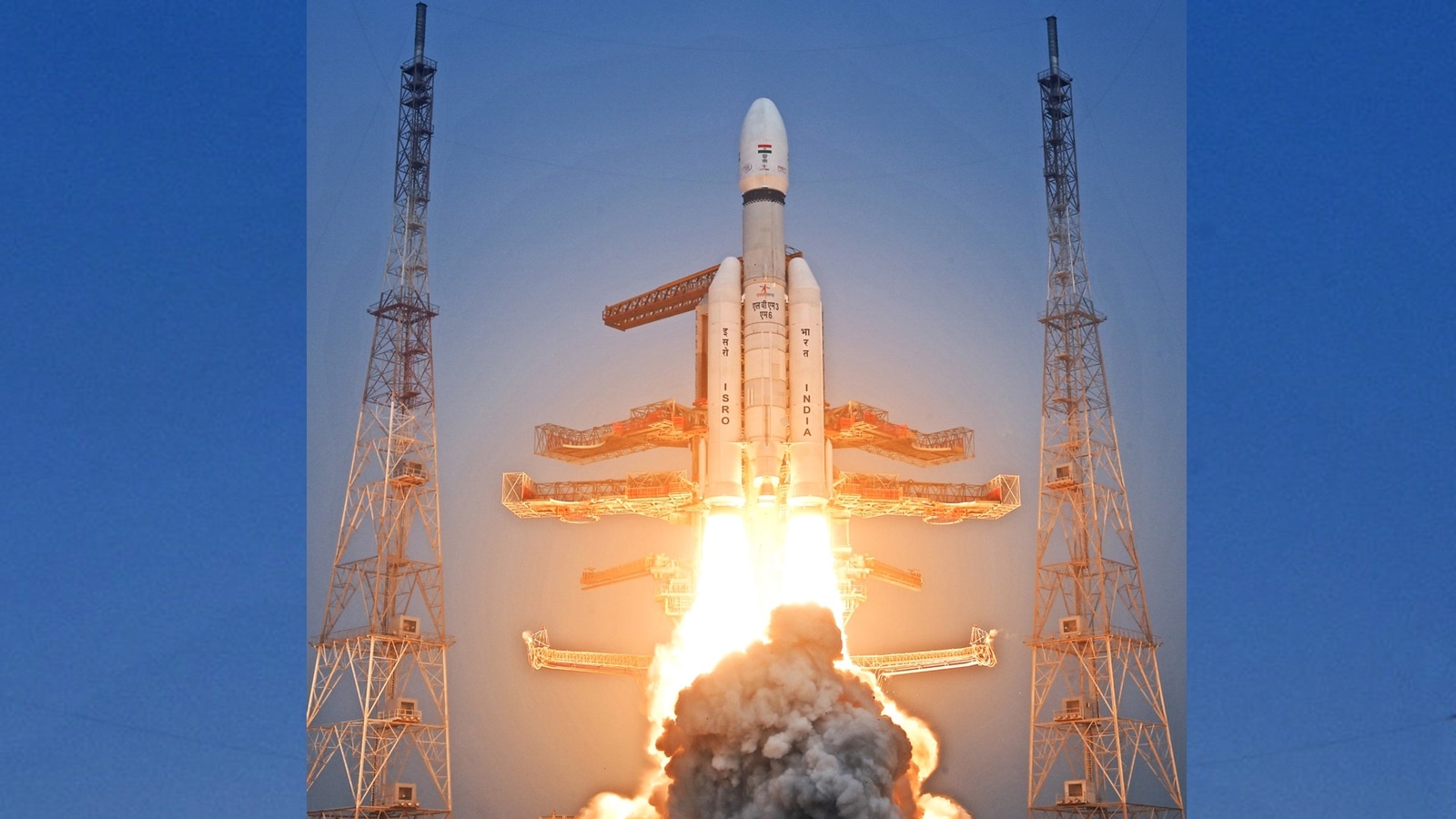
India’s heaviest launch vehicle LVM-3, in its third commercial mission, placed US communication satellite Bluebird Block-2 in a precise orbit early Wednesday morning. Weighing around 6,100 kg, it was the heaviest satellite launched by an Indian rocket.
“This (the LVM3-M6 mission) was the ninth consecutive successful launch for LVM-3, demonstrating a 100% reliability… The satellite was placed with less than 2-km deviation from the planned orbit, which is one of the best performances among launch vehicles in the global arena… This gives us great confidence for the Gaganyaan mission,” said ISRO chairperson V Narayanan after the successful launch.
A modified version of the same launch vehicle — a human-rated version with more safety — will carry Indian astronauts to space.
PM Narendra Modi wrote on X: “The successful LVM3-M6 launch, placing the heaviest satellite ever launched from Indian soil, the spacecraft of USA, BlueBird Block-2, into its intended orbit, marks a proud milestone in India’s space journey. It strengthens India’s heavy-lift launch capability and reinforces our growing role in the global commercial launch market.”
Even as he acknowledged that there had been some delays with the mission initially targeted for the beginning of the month, M Mohan, managing director of ISRO’s commercial arm NSIL (NewSpace India Limited), which brought in the launch to the country, said, “We are happy that we were able to give them a Christmas gift.”
What a moment! Relive the #LVM3M6 liftoff highlights here:
For More information Visit:https://t.co/PBYwLU4Ogy
#LVM3M6 #BlueBirdBlock2 #ISRO #NSIL pic.twitter.com/hc4SoI5DI5— ISRO (@isro) December 24, 2025
The Bluebird Block-2, developed by the US company ASTSpace Mobile, is a part of a low-earth orbit constellation that will provide direct-to-mobile connectivity. This means the satellites would directly communicate with commercially available cell phones instead of specialised ground stations from where the data is further disseminated.
Mark McLaren from ASTSpace Mobile said: “Thank you for the excellent ride.”
The launch was significant because of the weight of the payload, with India previously having to contract out its own heavier launches to private players such as Ariane Space and SpaceX. The heaviest satellite flown by ISRO — using the same vehicle — were two sets of 36 OneWeb satellites, each totalling more than 5,700 kgs.
Story continues below this ad
The space agency also broke its record for the heaviest satellite placed in the distant geosynchronous transfer orbit last month with the launch of CMS-03 using the same vehicle. The satellite weighed 4,410 kg. Previously, ISRO’s heaviest satellites such as 5,854 kg GSAT 11 and 4,181 kg GSAT-24 were launched by Ariane space. The space agency also used the service of Elon Musk’s SpaceX last year to put in orbit the 4,700 GSAT-20 satellite.
The occasion was also significant considering it was a commercial launch. India’s workhorse PSLV — ISRO’s smaller but tried and tested vehicle — undertook most of the launch of the 434 foreign satellites that India has performed so far. While LVM-3 has undertaken two previous commercial missions — launching two sets of OneWeb satellites in 2022 and 2023 — those came to India after Russia refused to launch it amidst its conflict with Ukraine, and with European private launcher Ariane-5 being out of commission.
Chairperson Narayanan also highlighted the short time between the two LVM-3 missions demonstrating ISRO’s capability of conducting missions in quick succession.


© The Indian Express Pvt Ltd