admin
admin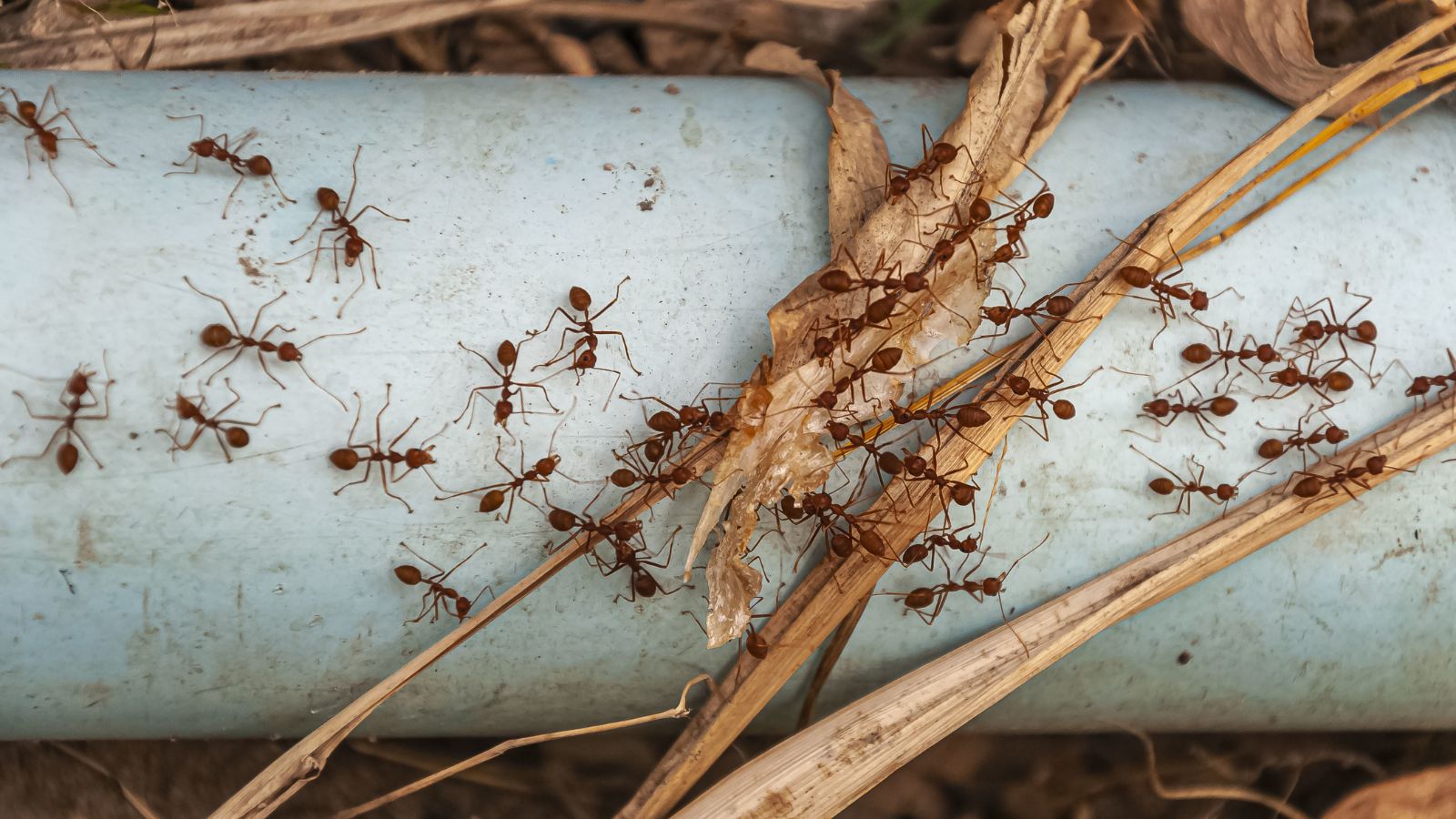
Strength is often seen as the key to survival, but evolution does not always reward the toughest individual. New research on ants reveals that some of the planet’s most successful societies emerged not by building stronger individuals, but by deliberately making them cheaper and more expendable, a strategy that allowed colonies to grow larger, cooperate more effectively, and ultimately dominate a wide range of environments.
A study published on December 19 in the Science Advances journal shows that many ant species have evolved by deliberately cutting back on individual protection. Instead of building heavily armoured workers, these ants produce cheaper, less-protected individuals and channel the saved resources into growing much larger colonies. According to the researchers, this tradeoff has paid off handsomely, both in terms of social complexity and evolutionary success.
Choosing numbers over toughness
The research reveals that some ants invest far less in their cuticle, the hard outer layer of the exoskeleton that functions as body armour. While the cuticle protects ants from predators, dehydration and disease, it is also costly to produce, requiring scarce nutrients such as nitrogen and minerals.
Also Read: Dying but duty-bound: Fatally ill ants emit alarm scent to shield their nestmates
By reducing how much each worker invests in this protective layer, colonies free up resources that can be used to produce more ants. The result is a workforce that is individually more vulnerable but collectively far more powerful.
“There’s this question in biology of what happens to individuals as societies they are in get more complex,” Evan Economo, senior author of the study and chair of the Department of Entomology at the University of Maryland, was quoted as saying by the Science Daily website. “For example, the individuals may themselves become simpler because tasks that a solitary organism would need to complete can be handled by a collective.”
In evolutionary terms, Economo explained, individuals can become “cheaper”: they require fewer resources to build and can be produced in much larger numbers, even if they are less physically robust.
Story continues below this ad
“That idea hasn’t been explicitly tested with large-scale analyses of social insects until now,” he added.
Why ants make the perfect test case
Ants are uniquely suited to exploring how complex societies evolve. Depending on the species, colonies may consist of a few dozen individuals or scale up to many millions, all operating as coordinated social units.
“Ants are everywhere,” the website quoted lead author Arthur Matte, a PhD student in zoology at the University of Cambridge, as saying. “Yet the fundamental biological strategies which enabled their massive colonies and extraordinary diversification remain unclear.”
The research team set out to test whether colony size was linked to how much ants invest in their cuticle, a hypothesis that had long been discussed but never rigorously examined across a wide range of species.
Story continues below this ad
Measuring the cost of armour
To investigate, the scientists analysed a large dataset of 3D X-ray scans from more than 500 ant species. Using these scans, they measured each ant’s total body volume and the volume devoted specifically to the cuticle.
The results showed striking variation. In some species, the cuticle accounted for as little as six per cent of body volume, while in others it reached up to 35 per cent. When these measurements were fed into evolutionary models, a clear pattern emerged: species that devoted less of their bodies to cuticle consistently formed larger colonies.
This finding highlights a fundamental biological tradeoff. Building thicker armour protects individuals, but it also limits how many workers a colony can afford to maintain. Reducing armour, by contrast, makes each ant more fragile but allows the colony to grow dramatically.
Strength through cooperation
Thinner cuticles may leave ants more exposed, but the authors argue that this vulnerability is offset by the power of collective behaviour. As colonies grow larger, ants rely increasingly on cooperation: shared nest defence, coordinated foraging, and a refined division of labour.
Story continues below this ad
“Ants reduce per-worker investment in one of the most nutritionally expensive tissues for the good of the collective,” Matte explained. “They’re shifting from self-investment toward a distributed workforce, resulting in more complex societies.”
Matte compared this pattern to the evolution of multicellularity, where individual cells can become simpler because survival depends on the collective rather than the individual. “Cooperative units can be individually simpler than a solitary cell, yet collectively capable of far greater complexity,” he said.
The study also uncovered a surprising link between reduced cuticle investment and higher diversification rates, a measure biologists often use as a proxy for evolutionary success. Ant lineages that built cheaper workers tended to give rise to new species more frequently.
Economo noted that very few traits have been directly linked to diversification in ants, making this result particularly striking.
Story continues below this ad
How less armour may lead to more species
Exactly why lighter armour accelerates diversification remains an open question, but the researchers point to several plausible explanations. One is that ants with lower nutritional requirements can thrive in environments where key resources are scarce.
“Requiring less nitrogen could make them more versatile and able to conquer new environments,” Matte said. He began developing the research while interning in Economo’s lab at the Okinawa Institute of Science and Technology.
Another possibility is that as ant societies became more complex, group-level defences such as collective nest protection and social disease control reduced the need for heavy individual armour. This may have set up a self-reinforcing cycle: cheaper workers allow colonies to grow larger, and larger colonies further reduce the pressure on individuals to be well protected.
“I think of this as the evolution of squishability,” Economo was quoted as saying. “Many kids have discovered that insects aren’t all equally robust.”
Story continues below this ad
The authors suggest that other social insects, including termites, may have followed similar evolutionary paths, though further research is needed to confirm this.
Lessons beyond the ant world
The implications of the findings extend far beyond entomology. The researchers draw parallels with human history, particularly warfare, where heavily armoured knights were eventually outmatched by larger numbers of specialised soldiers such as archers and crossbowmen.
Economo also pointed to Lanchester’s Laws, mathematical principles developed during World War I, which describe how large forces of weaker units can overwhelm smaller forces of stronger ones.
“The tradeoff between quantity and quality is all around,” Matte was quoted as saying. “It’s in the food you eat, the books you read, the offspring you want to raise. It was fascinating to retrace how ants handled it through their long evolution.”
Story continues below this ad
By sacrificing individual protection, ants unlocked the power of numbers and, in doing so, built some of the most successful societies the natural world has ever seen.